Of all the ruminants we build accommodation for, calves are likely the trickiest to get right, simply because older animals will put up with less-than-ideal conditions, whereas calves need several boxes ticked for them to reach their potential.
These include:
Correct ventilation.Comfortable, warm bedding.No draughts.The shed must also be easy for the farmer to clean/bed up pens without mixing batches of animals.
Ventilation is hard to get right in a calf shed. Too little air getting in/ out through outlet and sheds become stuffy.
Too much air coming in and the shed can become cold. The fact that calves will double in size over the rearing period, as well as the ever-increasing stocking density of the calf shed as the calving season progresses means that what might work in early February won’t work in the month of April.
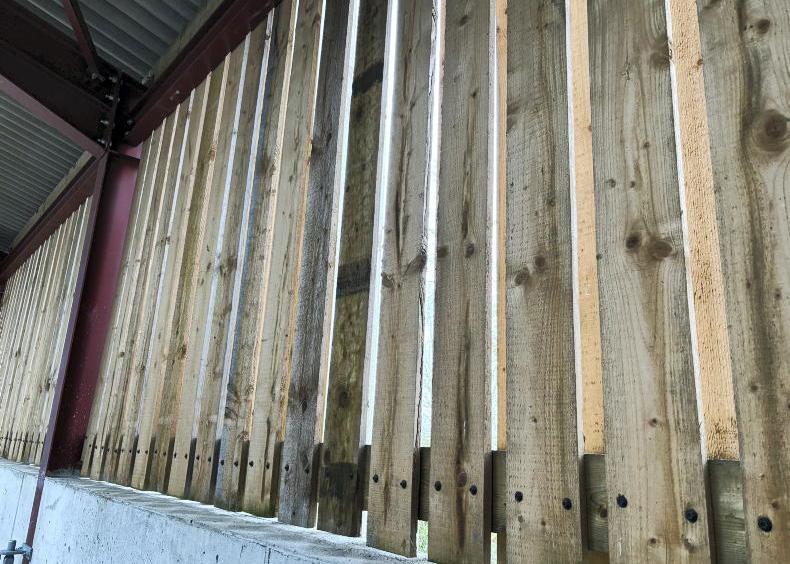
Yorkshire boarding is probably the gold standard when it comes to allowing cool, clean air into a shed in a controlled manner.
There is a defined difference between space boarding and Yorkshire boarding, with space boarding being a single row of spaced laths, while Yorkshire boarding is a double row of staggered slaths, with the alternate row of laths covering the gap of the other row, preventing wind driven rain/ snow entering.
Some farmers who have used Yorkshire boarding either side of the timber purlins along the sides of a shed have experienced excess draughts, with the 6’’ gap (6’’x3’’ purlin most commonly used) being too much.
A better option is to leave a gap of just 2’’ (50mm) between the staggered laths to better control the air movement. Using a 4’’ (100mm) wide lath with a 1’’ (25mm) gap between laths will give a void space of 20%, which usually suffices.
A central raised canopy is optimum as opposed to spaced sheeting for an air outlet, as young calves will not have enough heat to keep rain out of the shed. Where there is execessive down draughts from air inlets along the side of the shed, creating a micro climate through hanging stock board/ ply wood/ insulated board along the back wall of the shed will help keep calves warmer and more comfortable.
Straw is by no means cheap but something which can not be replaced for its benefits when to comes to calf housing.
A deep bed of clean fresh straw will keep calves warm and dry, reducing the amount of energy a calf spends on keeping their body temperature at optimum. Calves have an ambient temperature of 18°c, meaning no energy is spent cooling or warming themselves when the air temperature is this.
In spring in Ireland, temperatures will be below this though it can be combatted by what is called the ‘nesting effect’.
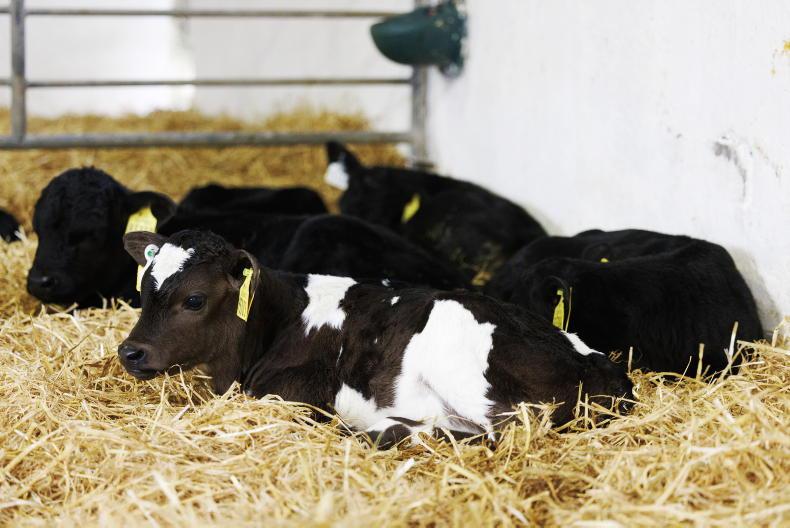
A clean, deep, dry bed of straw will result in calves wasting less energy keeping themselves warm. \ Donal O' Leary
The nesting effect is where a calf in a deep bed of dry straw insulates themselves, reducing the need to use energy to warm themselves, with calves comfortable in temperatures as low as 8°c.
Wet and dry areas are a useful means of keeping calf sheds clean while reducing straw usage, where feeding is completed on an unbedded concrete/ slatted floor, with a straw lie back to the rear of the pen. Having a good camber on the bedded floor will reduce bedding usage.
A slope of 1:20 is the spec set by the Department, though a slope of 1:15 is sufficient in most cases.
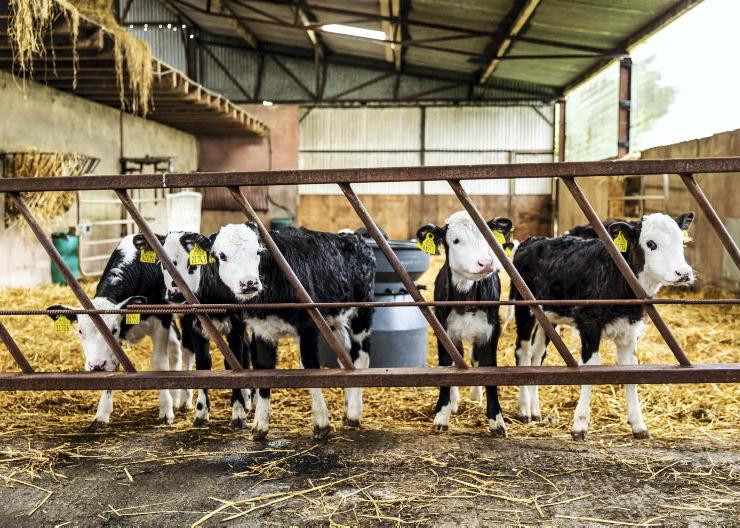
Calves require a pen space of 1.7m2 each. In a standard bay of 4.8m long and a pen depth of 6m giving a gross floor area of 28.8m2, a pen should only be stocked at 16 calves.
This includes the wet and dry areas, with a total floor space of 2.3–2.5m2/calf floor area (including the feed passage).
Overstocking pens will increase the disease pressure on calves, especially in younger animals. Using an outdoor lounging area of a woodchip pad, or access to a paddock for older calves, will also help reduce disease pressure on pens.
Passageways in between pens should not be less than 1.2m to allow for servicing with milk carts etc. Areas where access with a tractor/telehandler for cleaning out/bedding etc. must be a minimum of 3m wide.
Designing penning in such a way that calves can be locked into either the wet or dry area without mixing animals or having to move them out of the shed is a priority.
The gates that divide the wet area should fold back and lock calves into the dry area, giving unrestricted access to the wet area for cleaning out, and vice versa for cleaning out wet bedding in the lie back.
The easier it is to clean out a calf shed, the more often this will be done, leading to better hygiene. Clean, fresh water is a must and should be available in all pens. Bowls should be regularly checked for cleanliness.
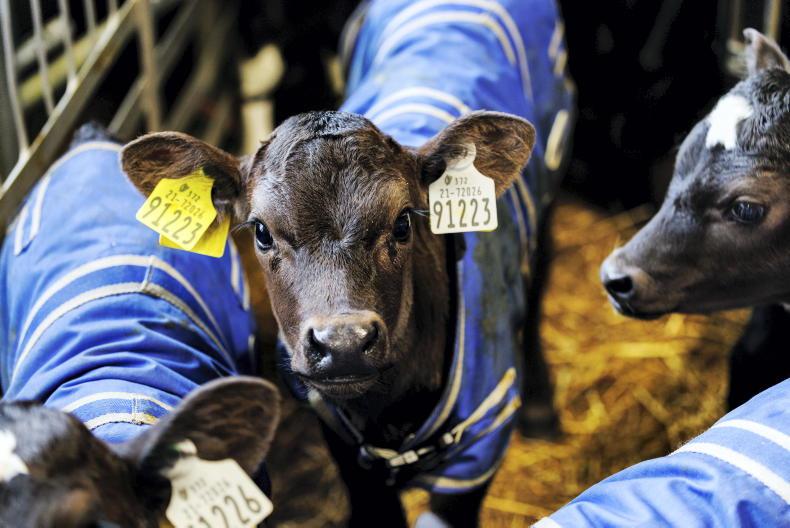
A kitchen area is a luxury for some but a necessity for larger calf rearers. Having fridges/freezers for colostrum/vaccines, water heaters for milk powder or cleaning, storage for tags/ calf coats, sink etc all lead to a more organised and smoother rearing season.
Of all the ruminants we build accommodation for, calves are likely the trickiest to get right, simply because older animals will put up with less-than-ideal conditions, whereas calves need several boxes ticked for them to reach their potential.
These include:
Correct ventilation.Comfortable, warm bedding.No draughts.The shed must also be easy for the farmer to clean/bed up pens without mixing batches of animals.
Ventilation is hard to get right in a calf shed. Too little air getting in/ out through outlet and sheds become stuffy.
Too much air coming in and the shed can become cold. The fact that calves will double in size over the rearing period, as well as the ever-increasing stocking density of the calf shed as the calving season progresses means that what might work in early February won’t work in the month of April.
Yorkshire boarding is probably the gold standard when it comes to allowing cool, clean air into a shed in a controlled manner.
There is a defined difference between space boarding and Yorkshire boarding, with space boarding being a single row of spaced laths, while Yorkshire boarding is a double row of staggered slaths, with the alternate row of laths covering the gap of the other row, preventing wind driven rain/ snow entering.
Some farmers who have used Yorkshire boarding either side of the timber purlins along the sides of a shed have experienced excess draughts, with the 6’’ gap (6’’x3’’ purlin most commonly used) being too much.
A better option is to leave a gap of just 2’’ (50mm) between the staggered laths to better control the air movement. Using a 4’’ (100mm) wide lath with a 1’’ (25mm) gap between laths will give a void space of 20%, which usually suffices.
A central raised canopy is optimum as opposed to spaced sheeting for an air outlet, as young calves will not have enough heat to keep rain out of the shed. Where there is execessive down draughts from air inlets along the side of the shed, creating a micro climate through hanging stock board/ ply wood/ insulated board along the back wall of the shed will help keep calves warmer and more comfortable.
Straw is by no means cheap but something which can not be replaced for its benefits when to comes to calf housing.
A deep bed of clean fresh straw will keep calves warm and dry, reducing the amount of energy a calf spends on keeping their body temperature at optimum. Calves have an ambient temperature of 18°c, meaning no energy is spent cooling or warming themselves when the air temperature is this.
In spring in Ireland, temperatures will be below this though it can be combatted by what is called the ‘nesting effect’.
A clean, deep, dry bed of straw will result in calves wasting less energy keeping themselves warm. \ Donal O' Leary
The nesting effect is where a calf in a deep bed of dry straw insulates themselves, reducing the need to use energy to warm themselves, with calves comfortable in temperatures as low as 8°c.
Wet and dry areas are a useful means of keeping calf sheds clean while reducing straw usage, where feeding is completed on an unbedded concrete/ slatted floor, with a straw lie back to the rear of the pen. Having a good camber on the bedded floor will reduce bedding usage.
A slope of 1:20 is the spec set by the Department, though a slope of 1:15 is sufficient in most cases.
Calves require a pen space of 1.7m2 each. In a standard bay of 4.8m long and a pen depth of 6m giving a gross floor area of 28.8m2, a pen should only be stocked at 16 calves.
This includes the wet and dry areas, with a total floor space of 2.3–2.5m2/calf floor area (including the feed passage).
Overstocking pens will increase the disease pressure on calves, especially in younger animals. Using an outdoor lounging area of a woodchip pad, or access to a paddock for older calves, will also help reduce disease pressure on pens.
Passageways in between pens should not be less than 1.2m to allow for servicing with milk carts etc. Areas where access with a tractor/telehandler for cleaning out/bedding etc. must be a minimum of 3m wide.
Designing penning in such a way that calves can be locked into either the wet or dry area without mixing animals or having to move them out of the shed is a priority.
The gates that divide the wet area should fold back and lock calves into the dry area, giving unrestricted access to the wet area for cleaning out, and vice versa for cleaning out wet bedding in the lie back.
The easier it is to clean out a calf shed, the more often this will be done, leading to better hygiene. Clean, fresh water is a must and should be available in all pens. Bowls should be regularly checked for cleanliness.
A kitchen area is a luxury for some but a necessity for larger calf rearers. Having fridges/freezers for colostrum/vaccines, water heaters for milk powder or cleaning, storage for tags/ calf coats, sink etc all lead to a more organised and smoother rearing season.






SHARING OPTIONS