


1. Sheds and facilities
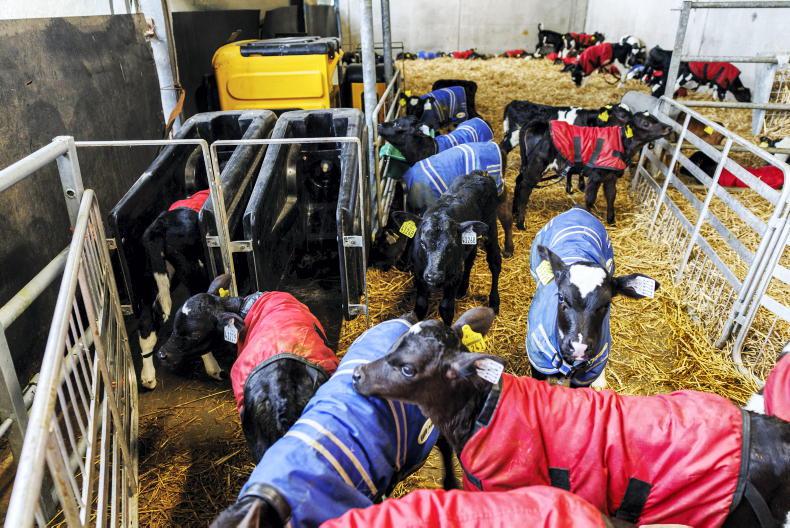
On week one of the calf series, Martin Merrick went through the key boxes sheds must tick when rearing calves in them. When building a calf shed, the main areas to get right are correct ventilation, comfortable, warm bedding and no draughts.
Over-stocking of calf pens will lead to an increase in disease pressure; aim to have a shed that has a dry area for the calf to lie, while also having a non-bedded area for feeding.
A good bed of straw is best to keep the calf at the optimum temperature of 18°C, while also ensuring the air flow is correct – too little will lead to respiratory diseases and too much will make it cold in spring.
2. Commercial Beef Value (CBV)
Adam Woods covered understanding the CBV on week two of our calf rearing series in more detail. The CBV is an index that genotyped non-pedigree cattle will receive from ICBF. It can allow farmers to select genetically superior calves when purchasing. The index is comprised of a number of traits, including carcase weight (35%), feed intake (24%), factory spec (12%) carcase confirmation (11%), finishing age (10%), carbon (7%) and docility (1%). Animals are categorised in stars, with five-star representing the top 20% of cattle, and one-star being the bottom 20%.
Farmers, where possible, are encouraged to buy high-CBV calves. However, this is not always possible as the calves must have a genotype, so dairy farmers who are not in the National Genotyping Programme are unlikely to genotype beef calves.
Farmers can see the CBV on mart boards or use the ICBF Mart tracker, where daily cattle logs will appear for marts and farmers can see where CBV calves are being sold.
3. Buying and getting home
Have sheds washed and disinfected prior to the arrival of calves, to minimise any disease transfer that may have built up in the shed from the previous year. Sourcing calves from a herd with a low level of disease presence is the best practice and farmers should build relations with dairy farmers.
Purchasing of calves at marts, while it’s done by many, carries a greater risk of importing diseases onto the farm – potentially purchasing calves from a number of different farms. Aim to transport calves between 12pm and 2pm, as calves will have rested after their morning feed. Ideally, calves should be purchased in groups and remain in that group up until turnout.
4. Calf budget
Many farms will buy calves every year and stick to the same prices the last number of years.
With the sharp increase in beef prices over the last two years, it is important farmers have a budget to ensure calves are purchased and will leave a profit down the line. Every farm will be different; some farmers will aim to have most of the cattle slaughtered before the second winter, while others will opt for a heavier carcase animal that will need to be housed and fed until 20-22 months.
Every farm should conduct a budget related to their system on how much they can pay for calves.
5. Health plan
The best way to aid immunity to diseases is ensuring all calves receive colostrum within two hours of birth.
This can be difficult to manage where farmers are buying calves as opposed to farmers calving the cow. Where there is rotavirus or cryptosporidium present on farms, vaccination must be considered to increase the immunity of the calf.
This is difficult on farms not calving the cows as the vaccination must be given to the cows three-weeks prior to calving, but relationships could be built with dairy farms to encourage vaccination where yearly purchases are taking place.
6. Vaccinations
Improving colostrum management is the single best thing farmers can do to improve calves’ immunity to any diseases.
Every farm will have a different disease burden and should consult their vet about a vaccination plan, however, there are a number of main vaccines farmers should consider. Vaccination against respiratory disease is generally the most important after scour vaccines. These vaccines can be given as live, which are intranasal and faster immunity, or inactive, which will require two injections four-weeks apart.
Other vaccines farmers need to consider include IBR, clostridial disease and bluetongue. Consulting your vet and having a vaccination plan in place is crucial to achieving a trouble-free spring rearing calves.
7. Labour
On many farms, springtime puts a heavy strain on labour, particularly on dairy farms where large numbers of cows’ calf in a short time.
Planning for enough help for the busy period is easier said than done, however, there are a number of things farmers can do: having adequate calving and rearing facilities for calves; planning in advance of the calving/rearing period to make sure supplies are stocked up and no unnecessary journeys taken during the busy period; investing in technologies such as calving cameras and automatic calf feeders can help reduce the labour workload in spring.
8. Weaning tips
The aim is to wean calves at a weight of 90kg to 100kg and some farmers will begin weaning the heaviest calves at 10 weeks while giving lighter calves that extra week or two of milk to reach the weight.
Weaning should be based on how much concentrate the calves are eating, introducing concentrate at the young age will help develop the calves rumen and lead to an easier transition from a liquid diet. Concentrate should be offered from five days old and target calves to eat 2kg/day at weaning with a minimum of 1kg/day of concentrates to be consumed by each calf prior to weaning.
Clean water and roughage is often overlooked and is every bit as important as concentrates, ensuring ad lib access to straw and a constant supply of clean water will help wean the calf from milk to grass.
9. Grazing tips
Once calves are weaned, attention turns to getting them turned out to grass – the aim is to have calves eating 2kg/day of concentrates post weaning and to maintain this for a period at grass.
Avoid grazing reseed or lush grass in the first few weeks post turnout to reduce the chances of summer scour. Instead target calves to older swards where more fibre will be present and, in some cases, offering straw to calves while at grass for the first few weeks will help adapt them to a grass diet.
While at grass for the first season worm build up needs to be monitored with regular testing and calves dosed accordingly. There is added benefit to breaking the grazing of calves on a rotational system with older stock to clean off worms present.
10. Hygiene
While it is always preached that hygiene in the calf shed is very important to minimise disease, keeping the shed tidy and dry throughout the rearing period is important too – while not forgetting about feeders and drinkers.
Regularly cleaning down milk feeders and meal troughs will help reduce the build-up of bacteria, which can affect calves’ health.
Water troughs in the shed also need to be regularly cleaned to keep calves healthy and thriving, as dirty water will cause sickness and reduce the intake of calves.



SHARING OPTIONS