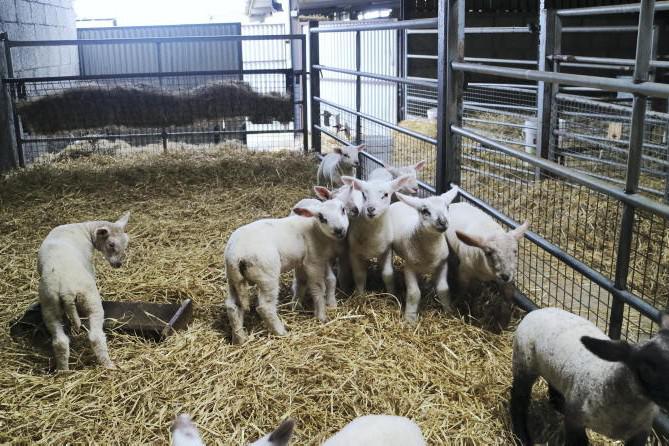
Artificial rearing: costs of milk replacer can quickly escalate where rearing lambs artificially and not keeping a tight rein on feeding levels or the duration of feeding.
Reducing the temperature of artificial milk offered to lambs from 28°C to 30°C back to 18°C to 20°C after 10 days and a further reduction back to the environmental temperature (cold water from a tap) will significantly reduce volumes fed.
This will also encourage lambs to eat higher quantities of concentrate and should limit milk intake to in the region of 400g daily over the final two-week feeding period. While, if left unchecked, lambs consuming warm milk will be consuming in the region of 600g daily.
Teagasc advice is for weaning to take place at approximately five weeks of age provided lambs are fit to be weaned. In this regard, lambs should be consuming at least 250g of concentrates on three consecutive days and weigh at least 9kg liveweight. Where this is not the case then weaning should be delayed until lambs reach these targets.
Offering lambs access to a fresh supply of water is critical while access to hay/silage/straw will aid rumen development. A decision can be made whether to retain lambs indoors and finish intensively or turn outdoors and supplement with concentrates.It is highly beneficial to ensure that lambs being reared artificially have access to ewe colostrum in their first feeds.
Research undertaken in UCD shows lambs which received ewe colostrum finished 24 days quicker (390g v 325g) than lambs which received no ewe colostrum and instead received a colostrum alternative.
Male lambs will also achieve higher performance and this should be considered when selecting lambs to rear artificially.
Creep feeding lambs: this week’s sheep feature on page 32 details options for flocks currently lambing and facing a shortage in grass supplies or a nutritional deficit.
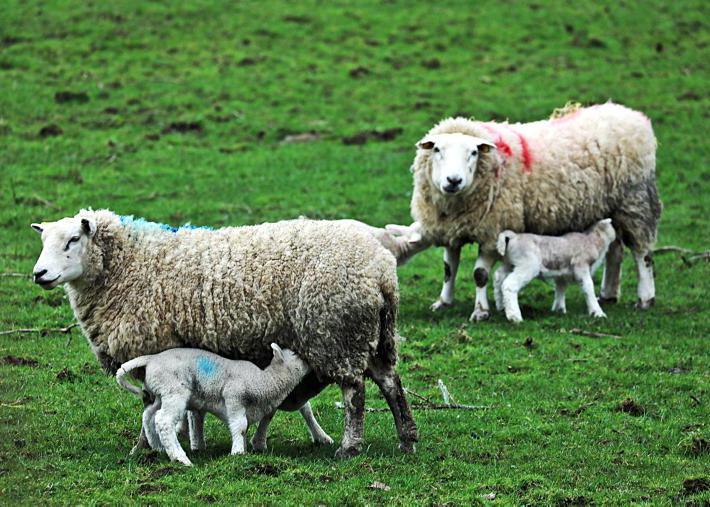
Where ewes have moved beyond peak milk yield and lambs are aged five to six weeks of age, there is a greater economic response to be achieved from offering concentrates directly to lambs as opposed to ewes.
The economics will be improved where lambs can be finished out of the system before the seasonal decline in farmgate returns. It will also be influenced by being able to ideally offer lambs a restricted volume of feed over ad-lib feeding, but this is not a straightforward practice where dealing with significant numbers and feeding in creep feeders.
Where grass supplies are particularly tight and there is split early and mid-season lambing flocks in place then there is potentially an option of weaning early-born lambs and finishing intensively. Lambs can be weaned where they are consuming at least 250g/day concentrates on three consecutive days. Early weaning also opens up the opportunity of feeding lambs a restricted level of concentrates.
Milk lambs: a number of factories are also in the market for milk lambs in the lead up to Easter. This could be an option for some flocks with early born lambs with the target carcase weight ranging from 10kg to 14kg.
Lambs at these weights will typically kill out at 50%, plus, with fat cover a critical component to get right. Decisions will ultimately come down to the price per kg offered and farm circumstances.
Artificial rearing: costs of milk replacer can quickly escalate where rearing lambs artificially and not keeping a tight rein on feeding levels or the duration of feeding.
Reducing the temperature of artificial milk offered to lambs from 28°C to 30°C back to 18°C to 20°C after 10 days and a further reduction back to the environmental temperature (cold water from a tap) will significantly reduce volumes fed.
This will also encourage lambs to eat higher quantities of concentrate and should limit milk intake to in the region of 400g daily over the final two-week feeding period. While, if left unchecked, lambs consuming warm milk will be consuming in the region of 600g daily.
Teagasc advice is for weaning to take place at approximately five weeks of age provided lambs are fit to be weaned. In this regard, lambs should be consuming at least 250g of concentrates on three consecutive days and weigh at least 9kg liveweight. Where this is not the case then weaning should be delayed until lambs reach these targets.
Offering lambs access to a fresh supply of water is critical while access to hay/silage/straw will aid rumen development. A decision can be made whether to retain lambs indoors and finish intensively or turn outdoors and supplement with concentrates.It is highly beneficial to ensure that lambs being reared artificially have access to ewe colostrum in their first feeds.
Research undertaken in UCD shows lambs which received ewe colostrum finished 24 days quicker (390g v 325g) than lambs which received no ewe colostrum and instead received a colostrum alternative.
Male lambs will also achieve higher performance and this should be considered when selecting lambs to rear artificially.
Creep feeding lambs: this week’s sheep feature on page 32 details options for flocks currently lambing and facing a shortage in grass supplies or a nutritional deficit.
Where ewes have moved beyond peak milk yield and lambs are aged five to six weeks of age, there is a greater economic response to be achieved from offering concentrates directly to lambs as opposed to ewes.
The economics will be improved where lambs can be finished out of the system before the seasonal decline in farmgate returns. It will also be influenced by being able to ideally offer lambs a restricted volume of feed over ad-lib feeding, but this is not a straightforward practice where dealing with significant numbers and feeding in creep feeders.
Where grass supplies are particularly tight and there is split early and mid-season lambing flocks in place then there is potentially an option of weaning early-born lambs and finishing intensively. Lambs can be weaned where they are consuming at least 250g/day concentrates on three consecutive days. Early weaning also opens up the opportunity of feeding lambs a restricted level of concentrates.
Milk lambs: a number of factories are also in the market for milk lambs in the lead up to Easter. This could be an option for some flocks with early born lambs with the target carcase weight ranging from 10kg to 14kg.
Lambs at these weights will typically kill out at 50%, plus, with fat cover a critical component to get right. Decisions will ultimately come down to the price per kg offered and farm circumstances.







SHARING OPTIONS