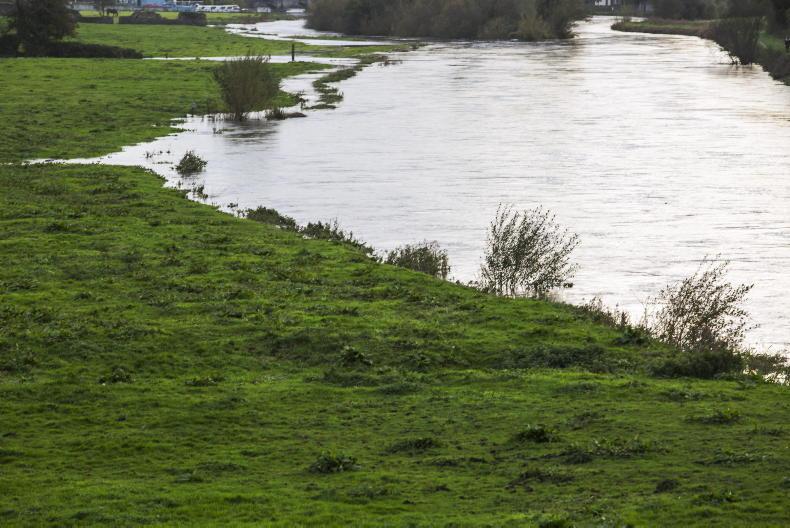
Excess nitrate concentrations in Ireland’s rivers in the south and east of the country are contributing to unsatisfactory ecological conditions in the estuaries and coastal waters of these regions. Intensive agricultural activities that lead to surplus N are an economic risk for farms and lead to an environmental impact on both groundwater and surface waters (streams, rivers, lakes, estuaries).
Spatial or distribution information on within-farm nitrogen management can provide an opportunity to identify N surplus “hotspots” or sub-zones within a farm.
To determine the most appropriate scale, or scales, at which nitrogen (N) surplus within a nutrient intensive dairy system could be managed, nitrogen balance (NBAL) needs to be calculated at each scale.
The study showed that N imported in inorganic fertiliser and N exported in milk sold were the primary drivers of NBAL and nitrogen use efficiency (NUE) across all scales – farm, field, and platform. This was followed by N imported in concentrate feed and N exported in silage at field scale.
These are the main “levers” that can be used to alter the N balance and use efficiency for a pasture-based dairy farm. Our study showed a 31% difference between farm and field scale mean NBAL. This difference suggests there are significant losses of N between the field and the farm scale.
These losses can be attributed in part to the methodology of the study but also to the environmental and management strategies the alter the N cycle on a dairy system.
Distribution of N within the farm
Dairy field NBAL was higher than silage fields, not significantly higher than non-dairy fields. Non-dairy fields had a higher NBAL than silage fields. NUE was different between each platform.
Nitrogen balance for dairy fields, non-dairy fields, and silage fields were 149, 139, and 82 kg N ha-1. Silage fields had the highest NUE of all platforms (71% compared to 54% and 37% for dairy and non-dairy fields). Spatially, N management at farm and field scale largely track with the trends observed for the dairy platform. This reflects the fact that the dairy platform makes up 57% of the farm area on average.
The second insight is that dairy fields and non-dairy fields exhibit similarly high N surplus despite differing grassland utilisation strategies in terms of grazing intensity and N imports.
Environmental and
management factors
Considering all environmental and management factors together except for soil fertility (gradient, drainage class, sward composition, reseed interval, utilisation strategy).
Fields with the highest N surplus range (157-169kg N ha-1) had a moderately drained soil drainage class and a two-cut harvest herbage utilisation strategy. Fields with the lowest N surplus range (133-145kg N ha-1) had a well-drained soil, a high composition of PRG and were used for grazing only.Fields with an intermediate N surplus range between 145 and 157kg N ha-1 had a moderately drained soil, a medium composition level of PRG, and a grazing and harvest combination utilisation strategy.The study indicates there is significant scope for improvement in N management in the following strategies.N import was not significantly different between clover incorporated and clover absent swards, meaning that inorganic and organic fertiliser application rates were not adjusted to account for the contribution of N via clover.Our study found that just 6% of fields were optimal for soil fertility (optimal pH, P and K levels); 27 out of 484 fields.N surplus was greater and NUE slightly lower on fields reseeded between five and 10 years, as shown by the N import in inorganic and organic fertiliser, was the highest of all reseed categories.Long-term nitrogen planning
To improve N use on farms our field scale results suggest that N management practices can be optimised by reducing variability in fertiliser inputs, concentrate use, improving soil fertility, and adjusting inputs relative to sward composition and age, all of which would take considerable time for a farmer to adopt and implement successfully.
Summary
N surplus “hotspots” or sub-zones within a farm can be identified by measuring N balance at multiple scales. Mitigation of N surplus can be achieved through strategies accounting for soil fertility, clover presence in swards, and age of the sward at individual field level. There is a need for longer-term N management planning to implement these strategies and ensure N loss reductions are reached, in line with N-related policy.
Excess nitrate concentrations in Ireland’s rivers in the south and east of the country are contributing to unsatisfactory ecological conditions in the estuaries and coastal waters of these regions. Intensive agricultural activities that lead to surplus N are an economic risk for farms and lead to an environmental impact on both groundwater and surface waters (streams, rivers, lakes, estuaries).
Spatial or distribution information on within-farm nitrogen management can provide an opportunity to identify N surplus “hotspots” or sub-zones within a farm.
To determine the most appropriate scale, or scales, at which nitrogen (N) surplus within a nutrient intensive dairy system could be managed, nitrogen balance (NBAL) needs to be calculated at each scale.
The study showed that N imported in inorganic fertiliser and N exported in milk sold were the primary drivers of NBAL and nitrogen use efficiency (NUE) across all scales – farm, field, and platform. This was followed by N imported in concentrate feed and N exported in silage at field scale.
These are the main “levers” that can be used to alter the N balance and use efficiency for a pasture-based dairy farm. Our study showed a 31% difference between farm and field scale mean NBAL. This difference suggests there are significant losses of N between the field and the farm scale.
These losses can be attributed in part to the methodology of the study but also to the environmental and management strategies the alter the N cycle on a dairy system.
Distribution of N within the farm
Dairy field NBAL was higher than silage fields, not significantly higher than non-dairy fields. Non-dairy fields had a higher NBAL than silage fields. NUE was different between each platform.
Nitrogen balance for dairy fields, non-dairy fields, and silage fields were 149, 139, and 82 kg N ha-1. Silage fields had the highest NUE of all platforms (71% compared to 54% and 37% for dairy and non-dairy fields). Spatially, N management at farm and field scale largely track with the trends observed for the dairy platform. This reflects the fact that the dairy platform makes up 57% of the farm area on average.
The second insight is that dairy fields and non-dairy fields exhibit similarly high N surplus despite differing grassland utilisation strategies in terms of grazing intensity and N imports.
Environmental and
management factors
Considering all environmental and management factors together except for soil fertility (gradient, drainage class, sward composition, reseed interval, utilisation strategy).
Fields with the highest N surplus range (157-169kg N ha-1) had a moderately drained soil drainage class and a two-cut harvest herbage utilisation strategy. Fields with the lowest N surplus range (133-145kg N ha-1) had a well-drained soil, a high composition of PRG and were used for grazing only.Fields with an intermediate N surplus range between 145 and 157kg N ha-1 had a moderately drained soil, a medium composition level of PRG, and a grazing and harvest combination utilisation strategy.The study indicates there is significant scope for improvement in N management in the following strategies.N import was not significantly different between clover incorporated and clover absent swards, meaning that inorganic and organic fertiliser application rates were not adjusted to account for the contribution of N via clover.Our study found that just 6% of fields were optimal for soil fertility (optimal pH, P and K levels); 27 out of 484 fields.N surplus was greater and NUE slightly lower on fields reseeded between five and 10 years, as shown by the N import in inorganic and organic fertiliser, was the highest of all reseed categories.Long-term nitrogen planning
To improve N use on farms our field scale results suggest that N management practices can be optimised by reducing variability in fertiliser inputs, concentrate use, improving soil fertility, and adjusting inputs relative to sward composition and age, all of which would take considerable time for a farmer to adopt and implement successfully.
Summary
N surplus “hotspots” or sub-zones within a farm can be identified by measuring N balance at multiple scales. Mitigation of N surplus can be achieved through strategies accounting for soil fertility, clover presence in swards, and age of the sward at individual field level. There is a need for longer-term N management planning to implement these strategies and ensure N loss reductions are reached, in line with N-related policy.






SHARING OPTIONS