


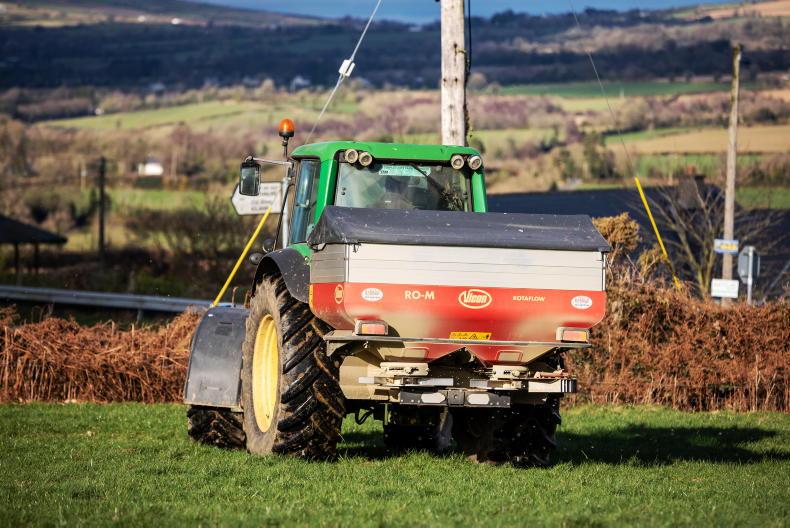
The main reason the conversation around early spring nitrogen reared its head, is due to cuts in nitrogen allowances that have taken place over the last number of years. Every kilo of N product is being more heavily scrutinised and so it should be.
There has to be a return on investment for every input on the farm and nitrogen should be no different.
Without doubt nitrogen spread in early spring has a lower response rate than the same nitrogen spread later in the year. There’s no-one arguing that point. However, lower response rate certainly doesn’t mean it’s ineffective.
Several Teagasc and international studies show that once soil temperature is above 5°C, nitrogen becomes effective in grass growth and plant tillering. At the moment soil temperatures are currently averaging over 6°C and rising.
The response rate at these temperatures is around 10-15kg of dry matter for every kilo of nitrogen that’s applied.
In late spring and early summer, the response rate is of course much higher at 30-40kg DM for every 1kg/N but by that time, conditions for grass growth are naturally far superior anyway.
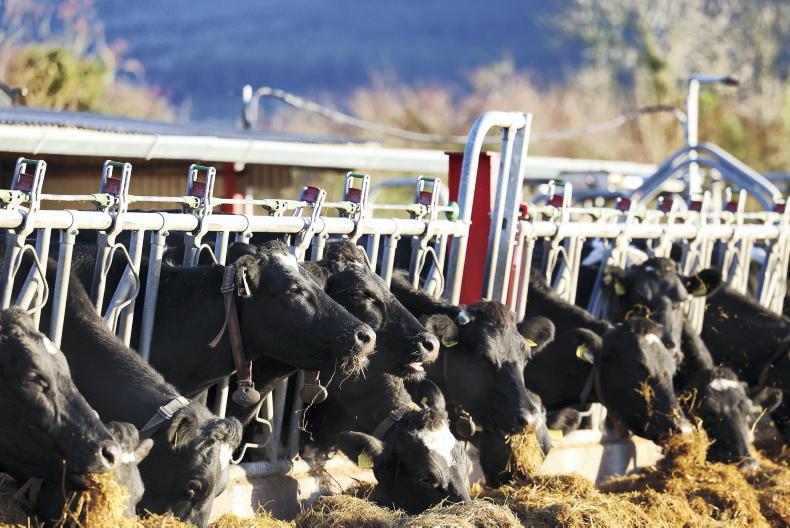
The value of early spring grass is also higher than the value of grass later in the year. The reason being; it’s an extremely high energy feed at a time that cows are already in a negative energy balance as they recover from calving and try to prepare themselves for breeding.
Not to mention the cost savings on silage and meal as well as the improved cow performance and health benefits of being at grass.
By holding off on nitrogen spreading until soil temperatures are higher later in the spring, there has been a window of opportunity missed to grow one of the highest energy and cheapest feeds a farm can get its hands on.
On top of growing more grass and saving cost, nitrogen in early spring will help grazed swards to bounce back quicker and start the re-growing process. This has a knock-on effect on the annual tonnage grown on the farm.
Grazed paddocks will recover quicker meaning they will have higher covers earlier in the second rotation and therefore can be grazed earlier. This will help to increase the number of grazing’s per paddock across the year and as a result improve total annual dry matter production.
Application rates
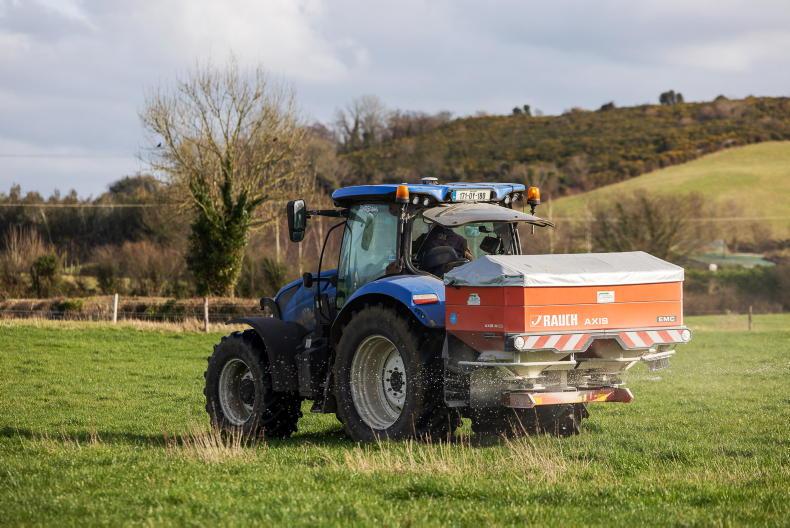
There is a limit to the amount of nitrogen that can be spread in early spring. Going over 23 units/acre of a nitrogen fertiliser in the month of February should not happen.
Anything more is going to leach out of the soil and into water courses causing serious environmental issues.
Picking suitable times to spread is also important. Not many farms have gone out with fertiliser yet as ground conditions have been too difficult.
Watch the weather forecast and wait for a 48-hour window of dry weather to get the product out.
Just because the whole farm might not be ready for travelling doesn’t mean holding off is the right call. Selecting only drier paddocks or those that have been grazed can be an option.
Where slurry tanks are full and storage is under pressure, slurry can be an excellent substitute for chemical N.
Ideally the slurry will be tested and the exact nutrient breakdown known but 1,000 gallons of dairy cow slurry spread using low emission slurry spreading equipment, will typically be equivalent to a bag of 9-5-30. At 2,500 gallons/acre that’s just under 23 units/acre of chemical N.
Nitrogen spread in the month of February and early March, once done appropriately, has significant benefit in terms of cost saving, cow performance and total dry matter production regardless of what anyone may argue.





SHARING OPTIONS