


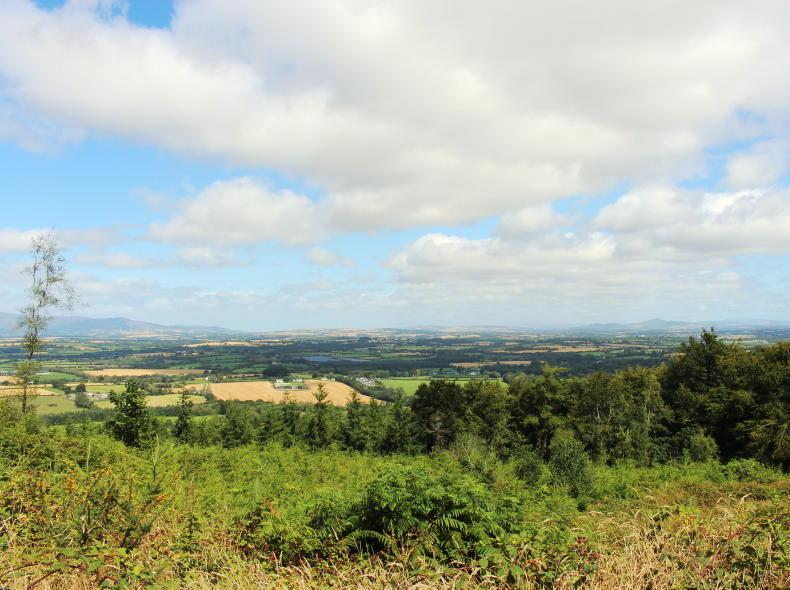
One of the hallmarks of the Forestry Programme (2023-2027) is flexibility. There are 10 Forest Types (FT) available, along with two native tree area (NTA) schemes (Table 1) and a choice of over 30 tree species. So the range of options is wide, to suit a variety of sites and scale – from 0.1ha upwards.
Species and schemes
Because of Ireland’s limited range of native tree species, there is a high dependence on non-native, naturalised and exotic tree species.
Although the species menu is generous, growers should tread carefully when selecting the right trees, as the decision will dictate the quality of their woodlands for generations, along with wood and non-wood outlets for their produce.
The choice of trees will also depend on the landowner’s objective. It should be remembered that the forest owners cannot opt for a sole commercial objective, because there is a mandatory requirement that caps commercial species to 65% of all afforestation sites, with the remainder comprising broadleaves and open biodiverse areas.
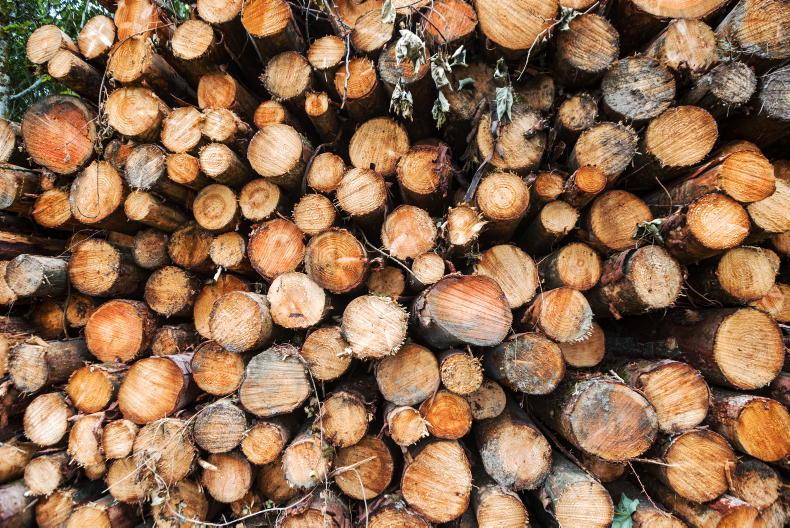
If a return on investment within a generation is the sole objective, then conifers tick all the boxes, including early revenue on a wide range of sites, with tried-and-trusted markets for the end product.
Sitka spruce, Norway spruce and Douglas fir have major market appeal, while Scots pine produces lower yields than exotic conifers, but because it’s native, it qualifies for increased supports under Ireland’s Native Woodland Scheme.
While spruce and fir require rotations of 30-40 years, Scots needs 60 years to achieve maximum yield.
The increase of broadleaf planting demonstrates a desire for mixed species mainly native forests, which is now being achieved.
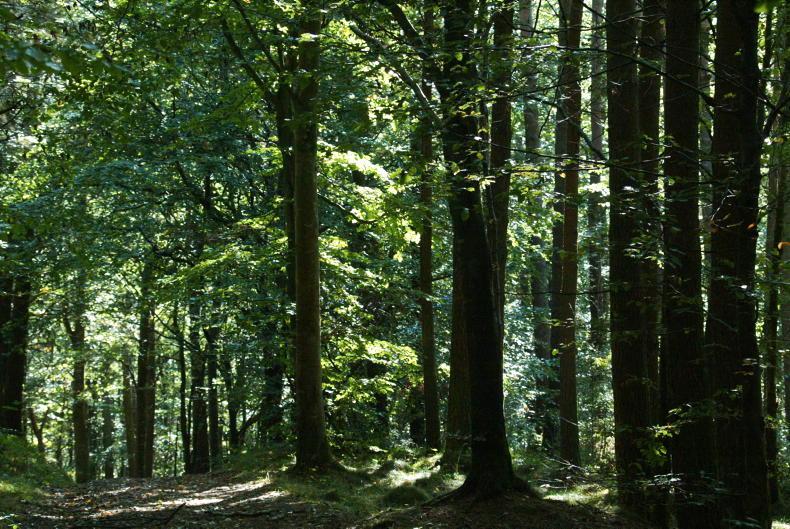
Forest owners who opt for broadleaves know that these plantations require intensive management over long rotations, up to and over 100 years for oak, while naturalised broadleaves such as beech require similar rotations.
Farmers who wish to combine forestry and farming might consider the State agroforestry initiative. This underutilised scheme integrates well with agriculture, especially grazing, silage and hay production. The scheme is suitable for native (oak and cherry) and naturalised (sycamore and sweet chestnut) broadleaves, while fruit and nut producing species are also considered.
Ultimately, the choice of species and management regime lies with the landowner. But the safest, and most satisfying approach, is to select trees – native and introduced – that have adapted well to conditions in your area.
That could result in one main species for a commercial crop and add species of choice including native broadleaves.
Species diversity can be achieved within an innovative commercial conifer-broadleaf mix which provides wood and non-wood benefits regardless of the FT chosen.
For example, farmers could opt for a native forest (FT1) in combination with a high yielding FT11 or F12 on a sufficiently sized holding to accommodate a mix of native and exotic species (Table 1).
A combined annual premium of up to €22,800/ha over 20 years is achievable plus the full cost of establishment.
A wise mantra for forest owners with one eye on the present and one on the future, might well be “spruce for us, pine for our children and oak for our children’s children.”


SHARING OPTIONS