It’s now eight months since the worst storm in living memory hit the country and its damage will unfortunately be etched into our memories for a long time to come.
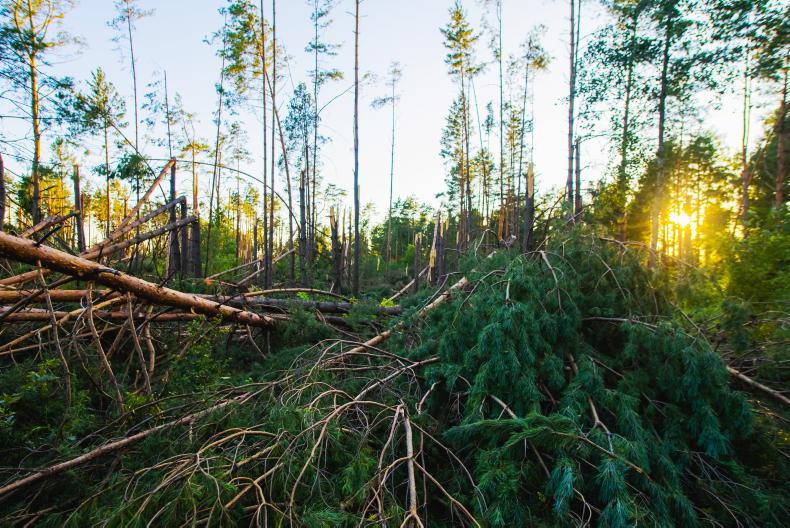
For us as foresters, dealing with the damage caused by storm Éowyn is completely new as well. Coping with this catastrophic windblow is now the new daily norm for those of us involved in harvesting.
While a few owners may have already harvested and sold their timber, there are still millions of tonnes to be recovered and sold.
Daunting
It can be overwhelming and daunting for forest owners faced with this scenario but to make it as simple as possible, we in Western Forestry Co-op have broken down the process into the following four clear steps.
Step 1: get your forest surveyed
Use a drone to get a survey of your forest. The drone has become one of the most important tools in assessing forest damage, as most forests are inaccessible and may be unsafe to access.
The damage then needs to be considered and discussed as the decisions you make will determine the management plan for your future forest.
There are a number of factors to take into consideration in order to determine the best course of action, such as:
The percentage of damage overall.The location of the damage.Is there still a viable crop left standing after the damaged areas are harvested?What age is the forest? For many unfortunately, future decisions are limited as over 90% of their forests may be damaged, so they are faced with a recovery operation to get the best out of a bad situation.
Step 2: obtain a felling licence
Make sure you have a valid felling licence. If you haven’t applied for a licence, this is your number one priority as no timber buyer will have any interest in your crop without a licence and, yes, you do need a licence even if your trees are lying on the ground.
If you have a thinning licence, you can apply to the Forest Service to have it converted to a clearfell as a matter of priority. Felling licences today last 10 years, so try and future-proof the licence, as you have to state the species you want to replant with and this will form part of your licence going forward.
The same advice applies to forest road licences because a felling licence is useless without a forest road for access.
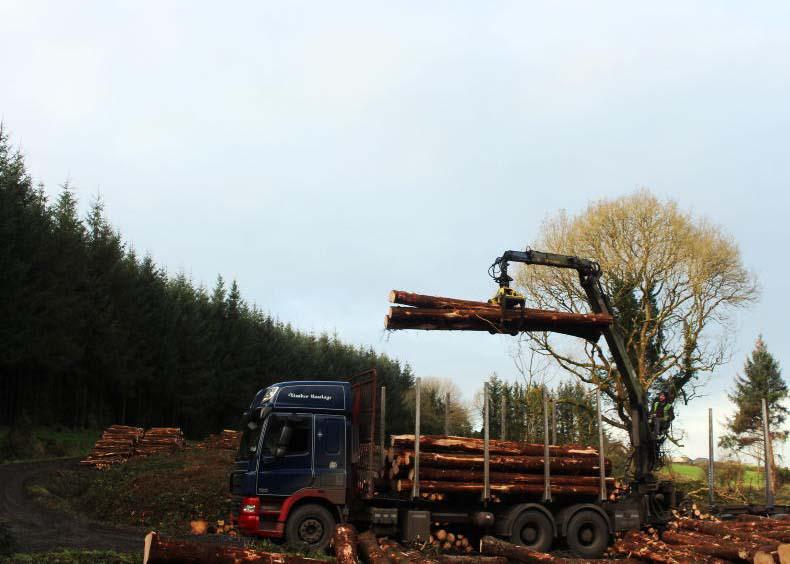
Step 3: harvesting the timber
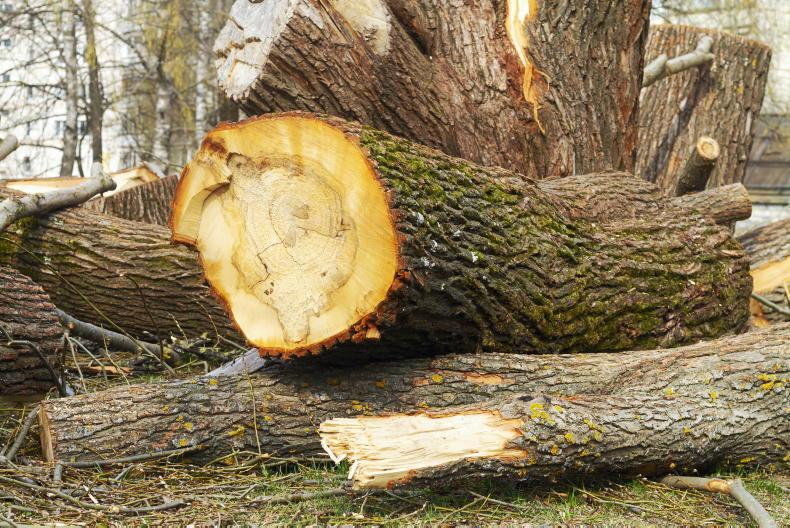
Many forest owners are very disappointed at the response and communication speed from forest companies and timber mills, but unfortunately the damage is too large for a rapid response.
Everyone in the sector including foresters, forest workers, harvesting contractors, haulage contractors, timber buyers, timber mills and Forest Service staff are working harder than ever before, but we are looking at years of harvest, all ready to go at once.
As a result, there are significant delays in getting the timber mobilised. There is also a shortage of resources so there is no miracle answer and only time will allow the sector to work its way through the task ahead.
As a forest owner, the best advice is to find a company or mill that you trust to harvest your timber.
For those lucky enough to have a long-standing relationship with customers, then maybe patience is the best option and wait until they are ready to provide a service to you. As with all natural disasters, there is always someone looking to take advantage of the situation so be very careful about selling your timber to someone that you don’t know.
No matter who you are selling to, make sure you have the basics on paper in contract form and you know how much you are being paid per tonne/m3.
Be clear on how your timber is sold, whether it is an average price for all products, an individual price for each product and if it is by m3 or tonne.
In a perfect world, you would price several companies and compare but in the present situation it is likely that some won’t be able to quote or provide a service due to pressure of work.
Step 4: replanting your forest
All forest owners affected by storm Éowyn are eagerly awaiting news of a State-supported reconstitution scheme, as replanting is a costly exercise.
We in Western Forestry Co-op advise forest owners to plant straight away after clearfell as delaying will only add to the cost. The minister has committed to a reconstitution grant and said that owners who replant will not be disadvantaged when the grant is introduced.
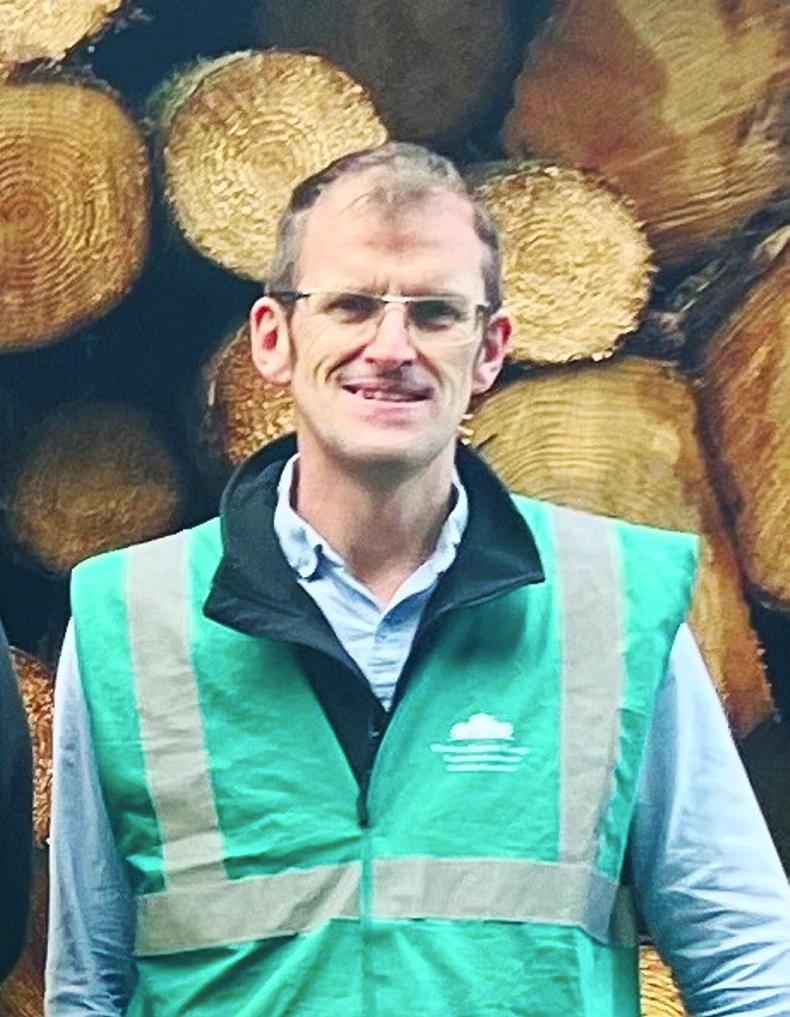
Victor Barber manages the harvesting team at Western Forestry Co-op.
Victor Barber manages the harvesting team at Western Forestry Co-op. A graduate of GMIT – now Atlantic Technological University – and University of Inverness, he is also a farmer with a keen interest in sheep and cattle breeding.
It’s now eight months since the worst storm in living memory hit the country and its damage will unfortunately be etched into our memories for a long time to come.
For us as foresters, dealing with the damage caused by storm Éowyn is completely new as well. Coping with this catastrophic windblow is now the new daily norm for those of us involved in harvesting.
While a few owners may have already harvested and sold their timber, there are still millions of tonnes to be recovered and sold.
Daunting
It can be overwhelming and daunting for forest owners faced with this scenario but to make it as simple as possible, we in Western Forestry Co-op have broken down the process into the following four clear steps.
Step 1: get your forest surveyed
Use a drone to get a survey of your forest. The drone has become one of the most important tools in assessing forest damage, as most forests are inaccessible and may be unsafe to access.
The damage then needs to be considered and discussed as the decisions you make will determine the management plan for your future forest.
There are a number of factors to take into consideration in order to determine the best course of action, such as:
The percentage of damage overall.The location of the damage.Is there still a viable crop left standing after the damaged areas are harvested?What age is the forest? For many unfortunately, future decisions are limited as over 90% of their forests may be damaged, so they are faced with a recovery operation to get the best out of a bad situation.
Step 2: obtain a felling licence
Make sure you have a valid felling licence. If you haven’t applied for a licence, this is your number one priority as no timber buyer will have any interest in your crop without a licence and, yes, you do need a licence even if your trees are lying on the ground.
If you have a thinning licence, you can apply to the Forest Service to have it converted to a clearfell as a matter of priority. Felling licences today last 10 years, so try and future-proof the licence, as you have to state the species you want to replant with and this will form part of your licence going forward.
The same advice applies to forest road licences because a felling licence is useless without a forest road for access.
Step 3: harvesting the timber
Many forest owners are very disappointed at the response and communication speed from forest companies and timber mills, but unfortunately the damage is too large for a rapid response.
Everyone in the sector including foresters, forest workers, harvesting contractors, haulage contractors, timber buyers, timber mills and Forest Service staff are working harder than ever before, but we are looking at years of harvest, all ready to go at once.
As a result, there are significant delays in getting the timber mobilised. There is also a shortage of resources so there is no miracle answer and only time will allow the sector to work its way through the task ahead.
As a forest owner, the best advice is to find a company or mill that you trust to harvest your timber.
For those lucky enough to have a long-standing relationship with customers, then maybe patience is the best option and wait until they are ready to provide a service to you. As with all natural disasters, there is always someone looking to take advantage of the situation so be very careful about selling your timber to someone that you don’t know.
No matter who you are selling to, make sure you have the basics on paper in contract form and you know how much you are being paid per tonne/m3.
Be clear on how your timber is sold, whether it is an average price for all products, an individual price for each product and if it is by m3 or tonne.
In a perfect world, you would price several companies and compare but in the present situation it is likely that some won’t be able to quote or provide a service due to pressure of work.
Step 4: replanting your forest
All forest owners affected by storm Éowyn are eagerly awaiting news of a State-supported reconstitution scheme, as replanting is a costly exercise.
We in Western Forestry Co-op advise forest owners to plant straight away after clearfell as delaying will only add to the cost. The minister has committed to a reconstitution grant and said that owners who replant will not be disadvantaged when the grant is introduced.
Victor Barber manages the harvesting team at Western Forestry Co-op.
Victor Barber manages the harvesting team at Western Forestry Co-op. A graduate of GMIT – now Atlantic Technological University – and University of Inverness, he is also a farmer with a keen interest in sheep and cattle breeding.







SHARING OPTIONS