


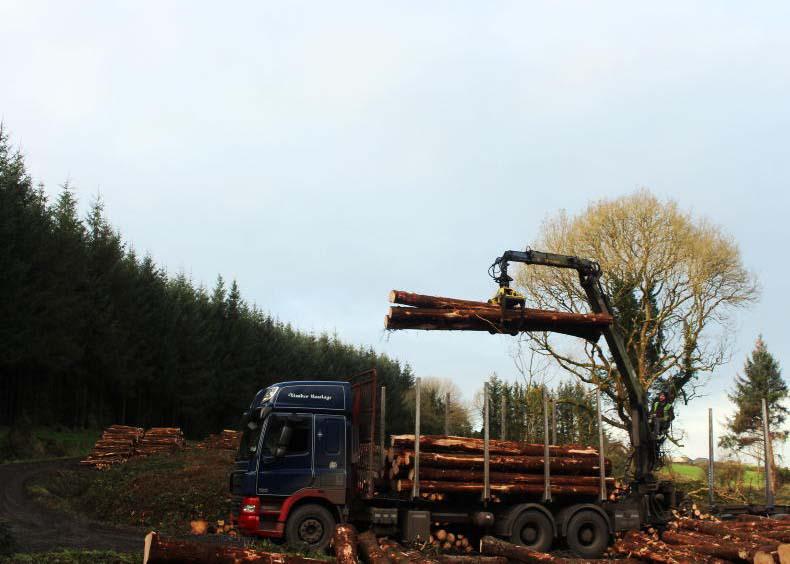
The theme of this focus feature is the business of forestry, which covers commercial wood production but doesn’t preclude non-wood goods and services. For example, forest owners who wish to maximise production may also wish to utilise some forest land for non-wood services, including biodiversity enhancement, shelter and water quality improvement.
But if timber and timber products are to play a major role in timber-frame construction and renewable energy as identified in Ireland’s Climate Action Plan (ICAP), then a commercial programme is essential. Existing and potential forest owners – mainly farmers – need a clear signal from Government on the kind of forests required to achieve a viable forestry programme.
Average afforestation programmes of 2,000ha (2022-2026) – if continued – ensure timber production after 2035 will fall off a “cliff edge”, according to Henry Phillips in his 2024 report Impact of Forest Policy and Forest Regulations on Future Commercial Timber Supply and the Sustainability of Timber Processing.
And it’s not just the low level of planting that’s the issue, but the imbalance between commercial and non-commercial tree species. Last year’s afforestation programme of 2,500ha, comprised only 40% commercial forests.
When the 2023 Forestry Strategy proposed an annual afforestation programmes of at least 50% native species, it did so without any scientific or research basis.
Farmers who wish to plant non-commercial native species should be encouraged to do so, but so too should farmers who wish to plant commercial crops.
The insistence by Government that a farmer who wishes to plant a commercial crop must set aside at least 35% of the forested area for broadleaves and open spaces is not a commercial model and needs appraisal if Ireland is to achieve a viable forestry and forest products sector as well as meeting ICAP targets.



SHARING OPTIONS