The saying “if you want something done, ask a busy person” came to mind at a recent Teagasc farm walk held on the farm of Martin Fleming and his family in Mountbellew, Co Galway.
The Flemings operate mixed enterprises of sheep, sucklers, dairy calf-to-beef and tillage alongside a busy agricultural contracting business.
The sheep side of the business was recently showcased at an event organised by Teagasc’s Ballinasloe office and attracted a crowd of over 300 farmers. Martin explained that all members of the family, including his wife Ann and children Cathal, Fiona, Emer and Liam are actively involved in the running of the farm, with help at key times from farmers working in the contracting business.
Best use of facilities
The enterprises are set up in a manner that best utilise available labour and make the best use of facilities. The lambing date in the sheep flock is mid-January.
Martin explains that the majority of the 155 head ewe flock are typically lambed before work starts to build in spreading slurry/field work.
There is also a multipurpose main shed on the yard that services all enterprises.
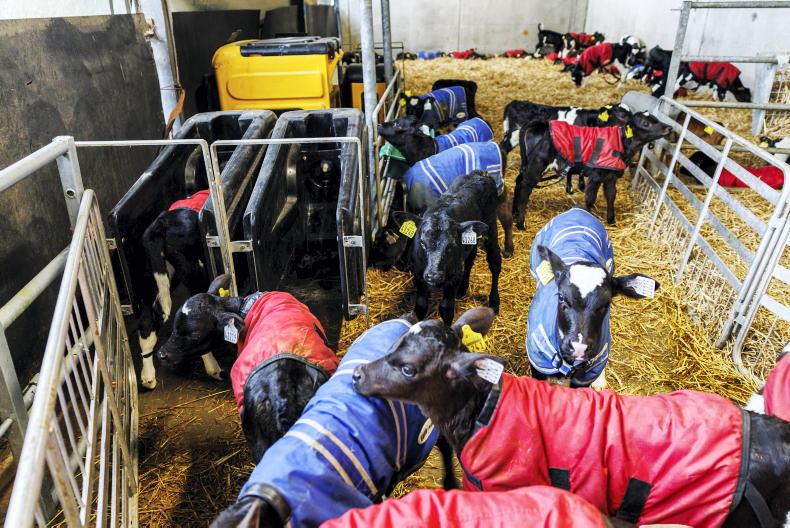
Once ewes and lambs are turned outdoors penning is collapsed, manure removed and the shed disinfected. The shed is then used for calving suckler cows, and is also used for rearing calves. Later in the season it is used to store grain before delivery for sale and also doubles up in storing straw and hay.
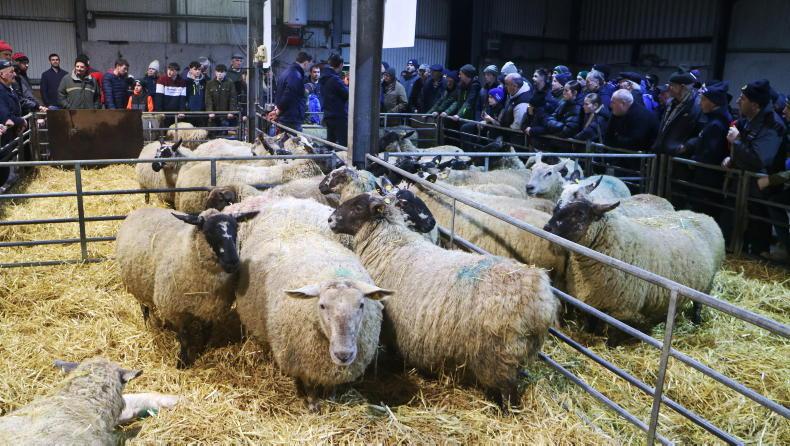
Teagasc lambing event on Martin Flemmings Farm in Co Galway. \ Darren Carty
Land type
Martin also explains that a significant percentage of grassland is heavier ground, and lambing early allows this to be utilised when cows and calves are not likely to be turned outdoors. When demand for grass increases in the suckler herd later in the season, ewes can be tightened up and used as a tool for managing grass.
Lambing early does present some challenges, with weather often proving testing in getting ewes and young lambs turned outdoors. There is good space available, and housing can be temporarily adjusted should ewes and lambs need to be retained indoors. This has been the case in 2026, with persistent inclement weather and tough ground conditions delaying turnout.
System targets
The aim is to operate the sheep system in as straightforward a manner as possible. Ewes with good maternal instincts are purchased – this was traditionally Suffolk x Cheviot-cross ewes, but with such replacements no longer available from the same source Mule hoggets have been purchased in the last couple of years.
Martin explained that he is still weighing up the merits of the change in breed.
He says that the Mule ewe shades the Suffolk x Cheviot-cross in terms of litter size and maternal instincts, but comments that the ewe is probably better suited to a flock breeding their own replacements or ewe lambs for sale. Progeny from the Suffolk x Cheviot-cross is better in terms of exhibiting better terminal genetics and suiting an earlier lambing system where all progeny are finished intensively.
Some farmers in attendance queried the possibility of the flock retaining its own replacements, but Martin’s opinion on this is clear – he doesn’t want to run another group on the farm and feels that to operate such a system and get the most from it would require lambing replacements as hoggets, which adds labour. He also wants all lambs drafted for sale before the silage season hits peak activity.
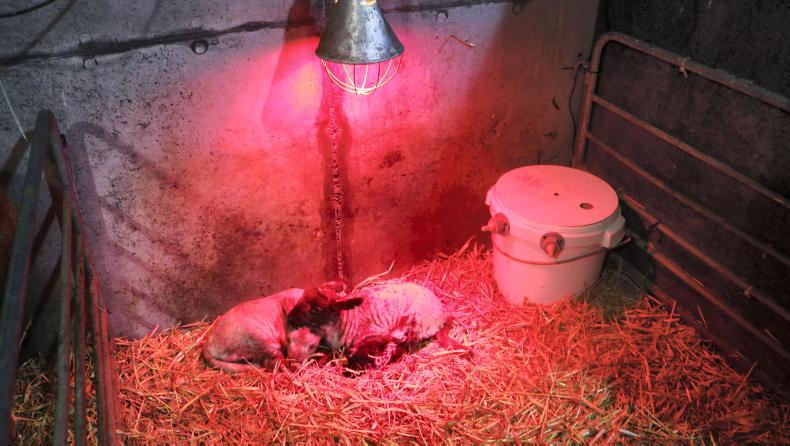
Teagasc lambing event on Martin Flemmings Farm in Co Galway. \ Darren Carty
The aim is to scan in excess of 1.8 lambs per ewe joined, and to sell ideally in excess of 1.6 lambs per ewe joined and at a minimum 1.5 lambs per ewe joined. To achieve these targets there is a strong focus on ensuring ewes are in optimum body condition at joining with rams, while nutrition in late pregnancy and hygiene at lambing are paramount in minimising mortality.
Lamb sales
Charollais sires with good terminal characteristics are used. Lambs are offered creep feed from a few weeks of age, but there is also a strong focus on driving performance from grazed grass and limiting concentrate input.
A rotational grazing system is practised and temporary electric fencing is used to split large paddocks when required. The aim is to draft lambs at maximum carcase weights of 20kg to 21kg, with lambs drafted on a combination of weight and fat cover.
The target in the last two seasons has been to achieve a price of upwards of €190 per head by having lambs available in the period between hogget supplies diminishing and spring lamb numbers increasing.
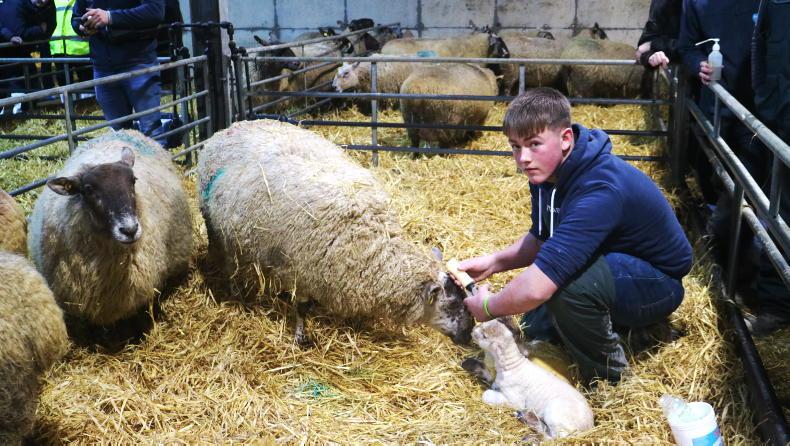
Teagasc lambing event on Martin Flemmings Farm in Co Galway. \ Darren Carty
Martin comments that in order for producers to continue lambing early and take the risk of the highest production costs a farmgate price of upwards of €200 is required if factories want security in supply.
Land type
A big focus on the evening was how the farm excels on attention to detail around lambing, with Teagasc advisor Nollaig O’Dowd, who works closely with the farm, highlighting the benefits of ewes lambing down in good condition and having good facilities in place.
Simple measures such as a white notice board to record lambing info, a temporary work station with all lambing aids present and pens with infrared lamps available and a pet lamb pen all cut down on workload.
A key takeaway from the event is that finding a production system that best suits the farm, balances labour and is enjoyable to be part of is a key ingredient for a successful enterprise.
See www.farmersjournal.ie for more photos and videos from the farm event.
The saying “if you want something done, ask a busy person” came to mind at a recent Teagasc farm walk held on the farm of Martin Fleming and his family in Mountbellew, Co Galway.
The Flemings operate mixed enterprises of sheep, sucklers, dairy calf-to-beef and tillage alongside a busy agricultural contracting business.
The sheep side of the business was recently showcased at an event organised by Teagasc’s Ballinasloe office and attracted a crowd of over 300 farmers. Martin explained that all members of the family, including his wife Ann and children Cathal, Fiona, Emer and Liam are actively involved in the running of the farm, with help at key times from farmers working in the contracting business.
Best use of facilities
The enterprises are set up in a manner that best utilise available labour and make the best use of facilities. The lambing date in the sheep flock is mid-January.
Martin explains that the majority of the 155 head ewe flock are typically lambed before work starts to build in spreading slurry/field work.
There is also a multipurpose main shed on the yard that services all enterprises.
Once ewes and lambs are turned outdoors penning is collapsed, manure removed and the shed disinfected. The shed is then used for calving suckler cows, and is also used for rearing calves. Later in the season it is used to store grain before delivery for sale and also doubles up in storing straw and hay.
Teagasc lambing event on Martin Flemmings Farm in Co Galway. \ Darren Carty
Land type
Martin also explains that a significant percentage of grassland is heavier ground, and lambing early allows this to be utilised when cows and calves are not likely to be turned outdoors. When demand for grass increases in the suckler herd later in the season, ewes can be tightened up and used as a tool for managing grass.
Lambing early does present some challenges, with weather often proving testing in getting ewes and young lambs turned outdoors. There is good space available, and housing can be temporarily adjusted should ewes and lambs need to be retained indoors. This has been the case in 2026, with persistent inclement weather and tough ground conditions delaying turnout.
System targets
The aim is to operate the sheep system in as straightforward a manner as possible. Ewes with good maternal instincts are purchased – this was traditionally Suffolk x Cheviot-cross ewes, but with such replacements no longer available from the same source Mule hoggets have been purchased in the last couple of years.
Martin explained that he is still weighing up the merits of the change in breed.
He says that the Mule ewe shades the Suffolk x Cheviot-cross in terms of litter size and maternal instincts, but comments that the ewe is probably better suited to a flock breeding their own replacements or ewe lambs for sale. Progeny from the Suffolk x Cheviot-cross is better in terms of exhibiting better terminal genetics and suiting an earlier lambing system where all progeny are finished intensively.
Some farmers in attendance queried the possibility of the flock retaining its own replacements, but Martin’s opinion on this is clear – he doesn’t want to run another group on the farm and feels that to operate such a system and get the most from it would require lambing replacements as hoggets, which adds labour. He also wants all lambs drafted for sale before the silage season hits peak activity.
Teagasc lambing event on Martin Flemmings Farm in Co Galway. \ Darren Carty
The aim is to scan in excess of 1.8 lambs per ewe joined, and to sell ideally in excess of 1.6 lambs per ewe joined and at a minimum 1.5 lambs per ewe joined. To achieve these targets there is a strong focus on ensuring ewes are in optimum body condition at joining with rams, while nutrition in late pregnancy and hygiene at lambing are paramount in minimising mortality.
Lamb sales
Charollais sires with good terminal characteristics are used. Lambs are offered creep feed from a few weeks of age, but there is also a strong focus on driving performance from grazed grass and limiting concentrate input.
A rotational grazing system is practised and temporary electric fencing is used to split large paddocks when required. The aim is to draft lambs at maximum carcase weights of 20kg to 21kg, with lambs drafted on a combination of weight and fat cover.
The target in the last two seasons has been to achieve a price of upwards of €190 per head by having lambs available in the period between hogget supplies diminishing and spring lamb numbers increasing.
Teagasc lambing event on Martin Flemmings Farm in Co Galway. \ Darren Carty
Martin comments that in order for producers to continue lambing early and take the risk of the highest production costs a farmgate price of upwards of €200 is required if factories want security in supply.
Land type
A big focus on the evening was how the farm excels on attention to detail around lambing, with Teagasc advisor Nollaig O’Dowd, who works closely with the farm, highlighting the benefits of ewes lambing down in good condition and having good facilities in place.
Simple measures such as a white notice board to record lambing info, a temporary work station with all lambing aids present and pens with infrared lamps available and a pet lamb pen all cut down on workload.
A key takeaway from the event is that finding a production system that best suits the farm, balances labour and is enjoyable to be part of is a key ingredient for a successful enterprise.
See www.farmersjournal.ie for more photos and videos from the farm event.







SHARING OPTIONS