The ever-increasing regulation on nitrogen usage has brought clover into the foreground of pasture management in recent years. These regulations, along with the surge in fertiliser price post COVID have seen a doubling down of efforts by Teagasc to increase clover percentages in swards on farms, both in the dairy and drystock sectors.
Research into clover management, from establishment to productivity, to its longevity in the sward, is being undertaken in Moorepark, Grange and Athenry, covering various land types, weather and livestock.
As part of the increased efforts into developing research into clover, each of the three research stations is seeking to develop a total merit index to identify white clover varieties which can make the greatest economic and carbon footprint reduction to grassland swards, while capturing the exact economic and mitigation potential of these varieties in agronomic trials.
This will then form the new Clover Profit Index (CPI), in a similar format to the Pasture Profit Index (PPI) that is currently in existence for perennial ryegrass varieties.
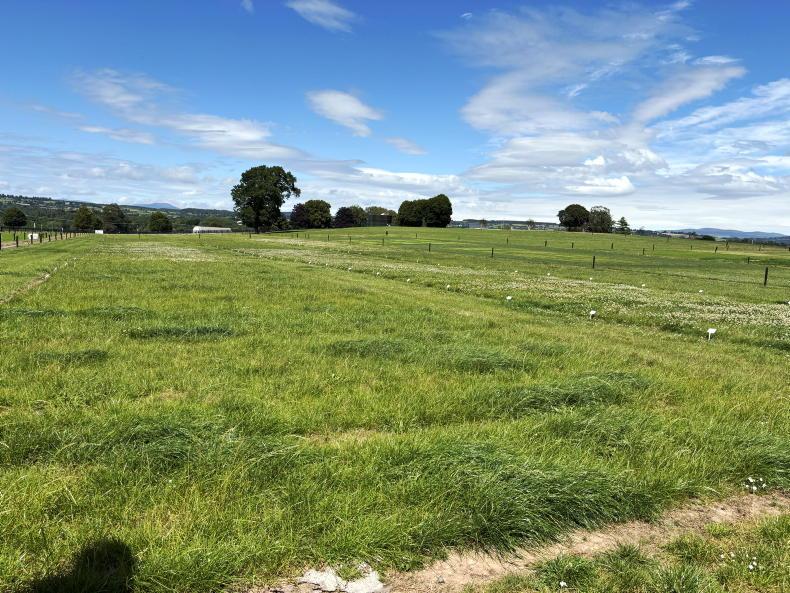
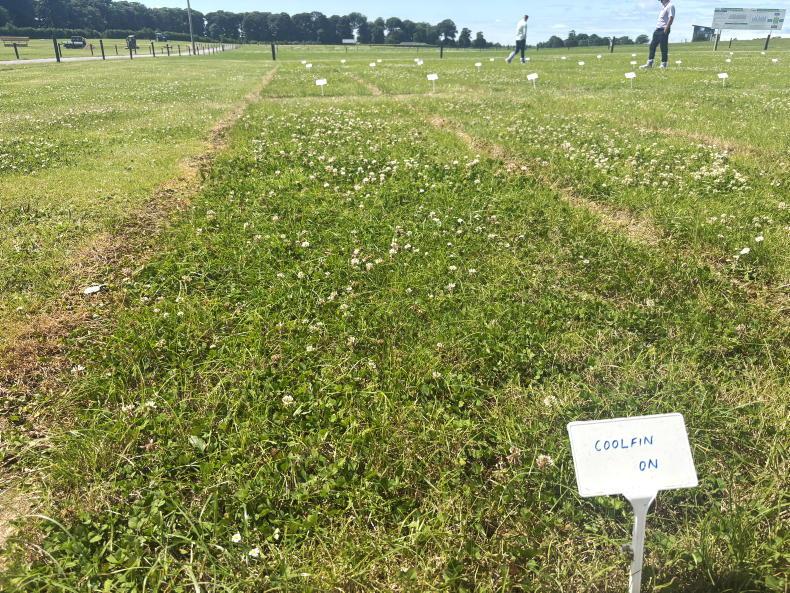
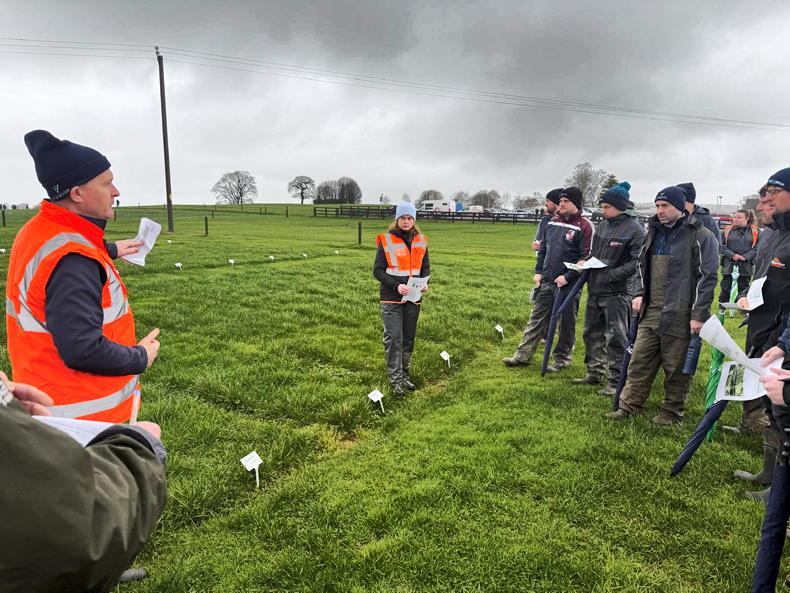
The current clover trial plot in Moorepark was sown in 2022 on a sandy clay-loam soil. A total of 17 different white clover varieties have been sown alongside a single perennial ryegrass variety, with a perennial ryegrass-only sward acting as a control. In the grass: white clover plots, clover was won at a rate of 5kg/ha, with 27kg/ha sown alongside this, while the monoculture was sown at a rate of 32kg/ha. A mix of four small leaf, eight medium leaf and five large leaf varieties were sown. The plots are treated with three different nitrogen rates; 0kg, 75kg and 150kg N/ha, with N application frontloaded in spring. The trials are managed under a simulated grazing protocol, with plots being cut and measured for:
DM yield.Seasonal clover content in the sward.Nutritive quality. Nitrogen fixation.Dry matter yield and nutritive quality are measured at each cutting event (defoliation) with a defoliation target of 1,300-1,500kg DM/ha to replicate grazing on a commercial farm. Sward composition (percentage of white clover in the sward) is measured in spring, summer and autumn, prior to a defoliation event.
The first of the data from the trial work was released as part of Moorepark’s open day back in early July.
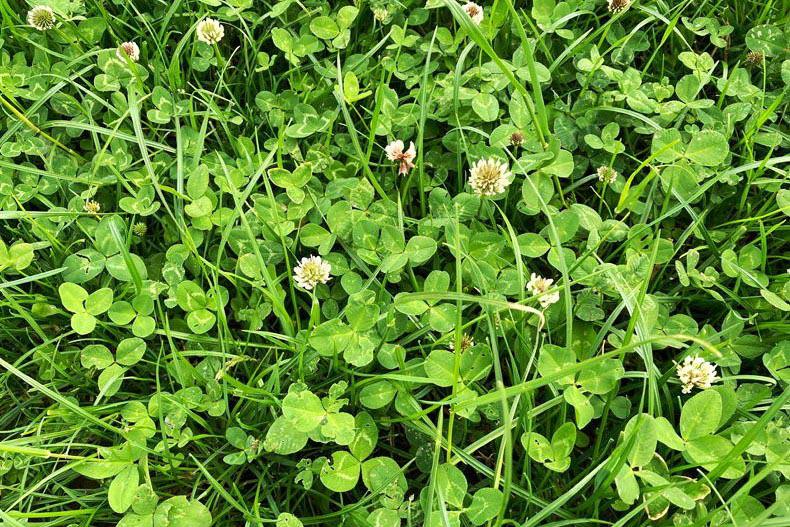
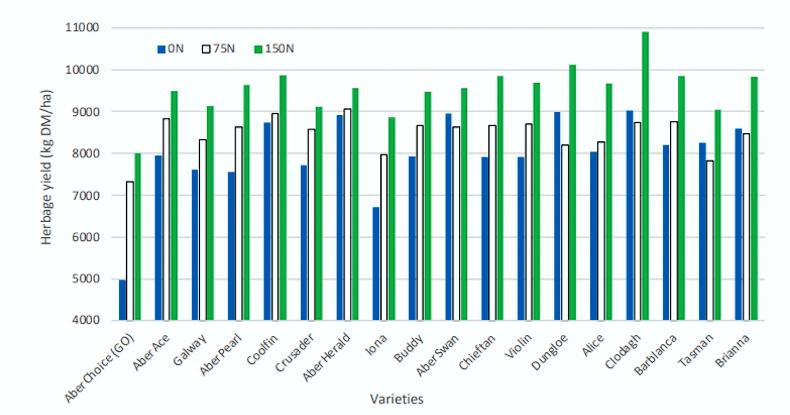
As expected, increasing N application rate increased herbage yield and decreased clover content. The average annual sward white clover content was 37.9%, 22.1% and 17.6% at 0N, 75N and 150N, respectively. Large leaf varieties had greater increases in herbage production in response to increasing N rate compared to medium and small leaf varieties. There were significant differences between varieties at each N rate outlining the importance of selecting the appropriate variety when reseeding. At 75kg N/ha, AberHerald yielded +2,250kg DM/ha above the grass only control at the same N rate. At 150kg N/ha, Clodagh produced 10,901kg DM/ha which was +2,895kg DM/ha above the grass only control at the same N rate.
At 150kg N, there was only a ~1% difference in organic matter digestibility (OMD) between the highest and lowest ranked varieties for digestibility and a 26.3% range between the lowest (6.0%) and highest (29.3%) ranked varieties for annual clover content.
It should be noted that due to the zero N part of the trial, cattle slurry can not be used, with all Ps and Ks coming from chemical sources.
Previous Teagasc work has shown that plots of simulated grazing (cutting and harvesting the grass at approximately 1,400kg DM/ha) sees the annual dry matter production drop by three tonne/ha compared to what would be seen on the ground in commercial farms.
Developing the Clover Profit Index
1. Seasonal herbage production
Production values from the 150N treatment will be used for the ranking system as it is most representative of Irish dairy systems that incorporate white clover into their swards. Spring growth will be set at base values of 1.01t DM/ha, with summer and autumn growth having a base value of 6.1t DM/ha and 1.9t DM/ha respectively, with a value of €0.17 for spring growth, €0.04 for summer growth and €0.11 for autumn growth for each kg of dry matter per ha grown above the base figure. The higher values for spring grazing are as a result of previous trial work showing the increased value of grass at the shoulders of the year.
2. Nitrogen
Varieties will be assessed on their nitrogen fixation abilities through the analysis of the protein content of the sward at defoliation. Five random clover varieties were selected and the Natural Abundance method was used on these to quantify the N fixation of the plants. The Natural Abundance method is a technique used to quantify the amount of nitrogen in a plant derived from biological nitrogen fixation (BNF) by analysing the natural abundance of the stable isotope 15N in plant tissues. This is a more accurate but extremely costly method of analysing N fixation, with the researchers in Moorepark trying to draw a correlation between the protein content and the Natural Abundance method.
3. Nutritive Quality
Research has shown an increase in performance of stock between 8-10% where clover swards are incorporated into the diet. The Clover Profit Index will adopt a similar quality value of the PPI, with the grass-only treatment at 150kg N/ha used as the base value. Quality is being measured at each defoliation event, with minimal differences so far being recorded between varieties on a DMD perspective.
4. Persistency
Long-term research of the persistency of clover varieties in a sward is difficult due to limitations on facilities and funding. If resources remained in place to measure persistency, then this would pull these resources away from other trial work on clover being done, with just trait being analysed once a trial passed over three years. The Moorepark trials are in their second full year, while the data from Athenry will likely be included in due course. The likelihood is that commercial farms part of Clover 150N will form the base for the measurement of persistency.
It is expected that the Clover Profit Index will be rolled out in mid-2027, likely just ahead of the open day that year.
There is some excellent research being completed by individuals and teams throughout the three research facilities, not only on white clover but red clover and multispecies swards.
Anecdotally, farmers will say that clover varieties simply don’t perform the same as perennial ryegrass ones with N applied, but what the current trial work is doing is aiming to bridge that gap and have clover swards perform at the same level with reduced N usage.
Hopefully they can achieve this.
The ever-increasing regulation on nitrogen usage has brought clover into the foreground of pasture management in recent years. These regulations, along with the surge in fertiliser price post COVID have seen a doubling down of efforts by Teagasc to increase clover percentages in swards on farms, both in the dairy and drystock sectors.
Research into clover management, from establishment to productivity, to its longevity in the sward, is being undertaken in Moorepark, Grange and Athenry, covering various land types, weather and livestock.
As part of the increased efforts into developing research into clover, each of the three research stations is seeking to develop a total merit index to identify white clover varieties which can make the greatest economic and carbon footprint reduction to grassland swards, while capturing the exact economic and mitigation potential of these varieties in agronomic trials.
This will then form the new Clover Profit Index (CPI), in a similar format to the Pasture Profit Index (PPI) that is currently in existence for perennial ryegrass varieties.
The current clover trial plot in Moorepark was sown in 2022 on a sandy clay-loam soil. A total of 17 different white clover varieties have been sown alongside a single perennial ryegrass variety, with a perennial ryegrass-only sward acting as a control. In the grass: white clover plots, clover was won at a rate of 5kg/ha, with 27kg/ha sown alongside this, while the monoculture was sown at a rate of 32kg/ha. A mix of four small leaf, eight medium leaf and five large leaf varieties were sown. The plots are treated with three different nitrogen rates; 0kg, 75kg and 150kg N/ha, with N application frontloaded in spring. The trials are managed under a simulated grazing protocol, with plots being cut and measured for:
DM yield.Seasonal clover content in the sward.Nutritive quality. Nitrogen fixation.Dry matter yield and nutritive quality are measured at each cutting event (defoliation) with a defoliation target of 1,300-1,500kg DM/ha to replicate grazing on a commercial farm. Sward composition (percentage of white clover in the sward) is measured in spring, summer and autumn, prior to a defoliation event.
The first of the data from the trial work was released as part of Moorepark’s open day back in early July.
As expected, increasing N application rate increased herbage yield and decreased clover content. The average annual sward white clover content was 37.9%, 22.1% and 17.6% at 0N, 75N and 150N, respectively. Large leaf varieties had greater increases in herbage production in response to increasing N rate compared to medium and small leaf varieties. There were significant differences between varieties at each N rate outlining the importance of selecting the appropriate variety when reseeding. At 75kg N/ha, AberHerald yielded +2,250kg DM/ha above the grass only control at the same N rate. At 150kg N/ha, Clodagh produced 10,901kg DM/ha which was +2,895kg DM/ha above the grass only control at the same N rate.
At 150kg N, there was only a ~1% difference in organic matter digestibility (OMD) between the highest and lowest ranked varieties for digestibility and a 26.3% range between the lowest (6.0%) and highest (29.3%) ranked varieties for annual clover content.
It should be noted that due to the zero N part of the trial, cattle slurry can not be used, with all Ps and Ks coming from chemical sources.
Previous Teagasc work has shown that plots of simulated grazing (cutting and harvesting the grass at approximately 1,400kg DM/ha) sees the annual dry matter production drop by three tonne/ha compared to what would be seen on the ground in commercial farms.
Developing the Clover Profit Index
1. Seasonal herbage production
Production values from the 150N treatment will be used for the ranking system as it is most representative of Irish dairy systems that incorporate white clover into their swards. Spring growth will be set at base values of 1.01t DM/ha, with summer and autumn growth having a base value of 6.1t DM/ha and 1.9t DM/ha respectively, with a value of €0.17 for spring growth, €0.04 for summer growth and €0.11 for autumn growth for each kg of dry matter per ha grown above the base figure. The higher values for spring grazing are as a result of previous trial work showing the increased value of grass at the shoulders of the year.
2. Nitrogen
Varieties will be assessed on their nitrogen fixation abilities through the analysis of the protein content of the sward at defoliation. Five random clover varieties were selected and the Natural Abundance method was used on these to quantify the N fixation of the plants. The Natural Abundance method is a technique used to quantify the amount of nitrogen in a plant derived from biological nitrogen fixation (BNF) by analysing the natural abundance of the stable isotope 15N in plant tissues. This is a more accurate but extremely costly method of analysing N fixation, with the researchers in Moorepark trying to draw a correlation between the protein content and the Natural Abundance method.
3. Nutritive Quality
Research has shown an increase in performance of stock between 8-10% where clover swards are incorporated into the diet. The Clover Profit Index will adopt a similar quality value of the PPI, with the grass-only treatment at 150kg N/ha used as the base value. Quality is being measured at each defoliation event, with minimal differences so far being recorded between varieties on a DMD perspective.
4. Persistency
Long-term research of the persistency of clover varieties in a sward is difficult due to limitations on facilities and funding. If resources remained in place to measure persistency, then this would pull these resources away from other trial work on clover being done, with just trait being analysed once a trial passed over three years. The Moorepark trials are in their second full year, while the data from Athenry will likely be included in due course. The likelihood is that commercial farms part of Clover 150N will form the base for the measurement of persistency.
It is expected that the Clover Profit Index will be rolled out in mid-2027, likely just ahead of the open day that year.
There is some excellent research being completed by individuals and teams throughout the three research facilities, not only on white clover but red clover and multispecies swards.
Anecdotally, farmers will say that clover varieties simply don’t perform the same as perennial ryegrass ones with N applied, but what the current trial work is doing is aiming to bridge that gap and have clover swards perform at the same level with reduced N usage.
Hopefully they can achieve this.







SHARING OPTIONS