I’m old enough to remember some of the debates that took place in the early 2000s around the EBI and the direction of Ireland’s fledgling breeding programme. Some of these discussions were heated and fiery affairs combining strongly held views mixed with science, emotion and plenty of passion.
Were they simpler times when the sector hadn’t much else to worry about? Because when you look at it, the changes that are taking place now are far more significant. Sexed semen, intellectual property rights, in vitro fertilisation and, as a result, the rapidly reducing generational interval are all profound changes in their own right.
The fact that they are all happening together is even more significant. Added to this, they are taking place pretty much in the absence of debate, or at least public debate like in the old days.
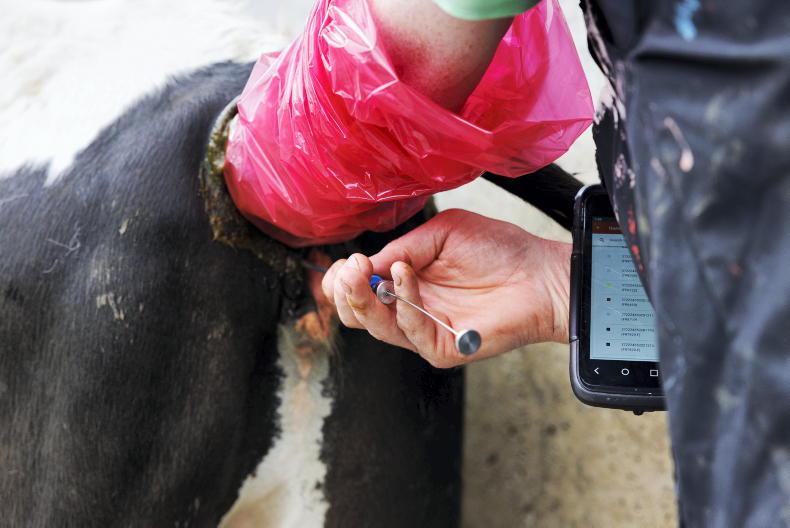
To summarise the changes; at this stage 30% of all dairy AI serves in 2025 were to sexed semen. We can hypothesise that these straws were used on the best cows in the herd as farmers want to breed heifers from them. Aside from the obvious benefits to improved genetic gain, it also means that lower EBI cows can be bred to beef increasing the value of the calf crop.
The flip side is that potentially the top 30% of cows in the country are being served to sexed female, which effectively rules them out of being bull dams. AI companies argue that they are overcoming this issue by pre-screening the national herd and asking farmers to use matched matings with conventional straws in the hope of breeding a bull calf from an interesting pairing.
However, the current breeding programme is built on genomics, which uses DNA analysis to find the highest genetic merit animals. It’s sometimes described as being like finding a needle in a haystack. Hundreds of thousands of calves are screened each year and the highest EBI calves are purchased for the breeding programme.
By using sexed semen across a large and growing proportion of the national herd, we’ve not only made the haystack smaller, we’ve also likely removed some of the shiniest and best needles from the pile.
OK, it can be argued that this is not a big issue now and there is plenty of selection available, but the direction of travel is for sexed semen to increase further. Where will we be when say 60% or 70% of all serves will be sexed semen?
The current breeding programme is built on genomics, which uses DNA analysis to find the highest genetic merit animals. It’s sometimes described as being like finding a needle in a haystack
Is the breeding sector planning for this? We saw last year that the Irish Holstein Friesian Association (IHFA) attempted to develop a nucleus herd, with significant resistance among some of the membership.
I’m not sure if one nucleus herd is the right way to go. I’m not exactly sure what the right way to go is, but perhaps having a core group of 200 to 300 very high EBI herds where only conventional semen is used might make more sense. It’s an area that warrants debate.
New technology
The other big change concerns the role of in vitro fertilisation (IVF) and in vitro production (IVP) in reducing the generational interval.
Ireland has pretty much stepped out of this party and is merely a bystander watching what is going on elsewhere, particularly in the US.
One company now dominates the global bovine breeding world and that company is Sexing Technologies (ST). It has achieved this dominance not so much by successfully deploying its sexed semen technology globally, but by adopting human reproductive technology across its dairy breeding programme.
By doing so, it has reduced the generational interval which has meant much faster genetic gain. It has done this by harvesting oocytes, or eggs from pre-pubertal heifers at just a few months of age, fertilising them with high genetic merit bulls and implanting the resulting embryo in recipient cows.
It is doing this at scale, with large reproductive farms operating across America breeding bulls that will dominate the breeding indices in the US, Canada and Europe. Traditional breeding companies relying on actual matings and traditional techniques are being left behind.
To compete with ST, competitors are joining forces to pool resources and technology and we’re seeing increased mergers and acquisitions by AI companies in North America and Europe. The US dairy AI market is massive with almost 50 million straws sold annually between domestic and export markets.
In contrast, there was just shy of 800,000 dairy AI serves in Ireland in 2025 and this was mostly split across three different breeding companies; NCBC, Dovea and Eurogene. This gives an indication of the scale of the Irish AI sector relative to the US sector.
Resources
It really highlights the differences in resources for research and development. The dividend from this research investment for the average US farmer is coming in the form of faster genetic gain and improved animal performance, particularly in terms of constituents and fertility.
Last year, IP was introduced in Ireland for the first time and this year, almost all of the top bulls are IP protected.
This has the effect of improving the competitiveness of confinement systems while Irish grass-based genetics stay in the slow lane.
This is where intellectual property (IP) comes in. Large US breeding companies such as ST have been using IP on their semen sales for over 15 years.
They see this as a legal protection for their breeding programme. Otherwise, they will argue, why would they spend millions developing a sire line only for a competing AI organisation to breed sires from that line.
Last year, IP was introduced in Ireland for the first time and this year, almost all of the top bulls are IP protected. This means that the farmer must accept that he or she cannot knowingly sell the progeny from the AI bull, or the progeny of their progeny to a competing AI company or for use as embryo transfer, etc.
Initially seen as a defensive mechanism by the Irish AI organisations against foreign or domestic entities buying up the best genetics and then putting IP on them, the move is now seen as a precursor to the likes of ST or other large multinational AI companies being active in the Irish breeding programme.
For the same reasons ST use IP in the US, they will also need IP in Ireland and by taking the first steps, the Irish AI companies have opened the door for them or some other organisation to ‘make a bull’ using IVF/IVP on heifers.
The Irish Farmers Journal understands that LIC, the New Zealand-based AI co-op had been working with ST on a breeding programme, but that progress has since stalled. The question is, are any of the Irish AI companies big enough to invest in these programmes on their own? Even if they pooled together would they be big enough?
The global market for grass-based genetics is very small, centred on Ireland, New Zealand, South America and parts of Britain. As it stands, confinement-based systems are making faster progress in genetic gain. It’s time Irish farmers took note and start the debate on the future direction of grass-based breeding companies.
I’m old enough to remember some of the debates that took place in the early 2000s around the EBI and the direction of Ireland’s fledgling breeding programme. Some of these discussions were heated and fiery affairs combining strongly held views mixed with science, emotion and plenty of passion.
Were they simpler times when the sector hadn’t much else to worry about? Because when you look at it, the changes that are taking place now are far more significant. Sexed semen, intellectual property rights, in vitro fertilisation and, as a result, the rapidly reducing generational interval are all profound changes in their own right.
The fact that they are all happening together is even more significant. Added to this, they are taking place pretty much in the absence of debate, or at least public debate like in the old days.
To summarise the changes; at this stage 30% of all dairy AI serves in 2025 were to sexed semen. We can hypothesise that these straws were used on the best cows in the herd as farmers want to breed heifers from them. Aside from the obvious benefits to improved genetic gain, it also means that lower EBI cows can be bred to beef increasing the value of the calf crop.
The flip side is that potentially the top 30% of cows in the country are being served to sexed female, which effectively rules them out of being bull dams. AI companies argue that they are overcoming this issue by pre-screening the national herd and asking farmers to use matched matings with conventional straws in the hope of breeding a bull calf from an interesting pairing.
However, the current breeding programme is built on genomics, which uses DNA analysis to find the highest genetic merit animals. It’s sometimes described as being like finding a needle in a haystack. Hundreds of thousands of calves are screened each year and the highest EBI calves are purchased for the breeding programme.
By using sexed semen across a large and growing proportion of the national herd, we’ve not only made the haystack smaller, we’ve also likely removed some of the shiniest and best needles from the pile.
OK, it can be argued that this is not a big issue now and there is plenty of selection available, but the direction of travel is for sexed semen to increase further. Where will we be when say 60% or 70% of all serves will be sexed semen?
The current breeding programme is built on genomics, which uses DNA analysis to find the highest genetic merit animals. It’s sometimes described as being like finding a needle in a haystack
Is the breeding sector planning for this? We saw last year that the Irish Holstein Friesian Association (IHFA) attempted to develop a nucleus herd, with significant resistance among some of the membership.
I’m not sure if one nucleus herd is the right way to go. I’m not exactly sure what the right way to go is, but perhaps having a core group of 200 to 300 very high EBI herds where only conventional semen is used might make more sense. It’s an area that warrants debate.
New technology
The other big change concerns the role of in vitro fertilisation (IVF) and in vitro production (IVP) in reducing the generational interval.
Ireland has pretty much stepped out of this party and is merely a bystander watching what is going on elsewhere, particularly in the US.
One company now dominates the global bovine breeding world and that company is Sexing Technologies (ST). It has achieved this dominance not so much by successfully deploying its sexed semen technology globally, but by adopting human reproductive technology across its dairy breeding programme.
By doing so, it has reduced the generational interval which has meant much faster genetic gain. It has done this by harvesting oocytes, or eggs from pre-pubertal heifers at just a few months of age, fertilising them with high genetic merit bulls and implanting the resulting embryo in recipient cows.
It is doing this at scale, with large reproductive farms operating across America breeding bulls that will dominate the breeding indices in the US, Canada and Europe. Traditional breeding companies relying on actual matings and traditional techniques are being left behind.
To compete with ST, competitors are joining forces to pool resources and technology and we’re seeing increased mergers and acquisitions by AI companies in North America and Europe. The US dairy AI market is massive with almost 50 million straws sold annually between domestic and export markets.
In contrast, there was just shy of 800,000 dairy AI serves in Ireland in 2025 and this was mostly split across three different breeding companies; NCBC, Dovea and Eurogene. This gives an indication of the scale of the Irish AI sector relative to the US sector.
Resources
It really highlights the differences in resources for research and development. The dividend from this research investment for the average US farmer is coming in the form of faster genetic gain and improved animal performance, particularly in terms of constituents and fertility.
Last year, IP was introduced in Ireland for the first time and this year, almost all of the top bulls are IP protected.
This has the effect of improving the competitiveness of confinement systems while Irish grass-based genetics stay in the slow lane.
This is where intellectual property (IP) comes in. Large US breeding companies such as ST have been using IP on their semen sales for over 15 years.
They see this as a legal protection for their breeding programme. Otherwise, they will argue, why would they spend millions developing a sire line only for a competing AI organisation to breed sires from that line.
Last year, IP was introduced in Ireland for the first time and this year, almost all of the top bulls are IP protected. This means that the farmer must accept that he or she cannot knowingly sell the progeny from the AI bull, or the progeny of their progeny to a competing AI company or for use as embryo transfer, etc.
Initially seen as a defensive mechanism by the Irish AI organisations against foreign or domestic entities buying up the best genetics and then putting IP on them, the move is now seen as a precursor to the likes of ST or other large multinational AI companies being active in the Irish breeding programme.
For the same reasons ST use IP in the US, they will also need IP in Ireland and by taking the first steps, the Irish AI companies have opened the door for them or some other organisation to ‘make a bull’ using IVF/IVP on heifers.
The Irish Farmers Journal understands that LIC, the New Zealand-based AI co-op had been working with ST on a breeding programme, but that progress has since stalled. The question is, are any of the Irish AI companies big enough to invest in these programmes on their own? Even if they pooled together would they be big enough?
The global market for grass-based genetics is very small, centred on Ireland, New Zealand, South America and parts of Britain. As it stands, confinement-based systems are making faster progress in genetic gain. It’s time Irish farmers took note and start the debate on the future direction of grass-based breeding companies.






SHARING OPTIONS