It is very seldom that in the last days of July we have to abandon slurry spreading because of ground conditions but that was the reality last week. Granted, it was a field reclaimed some years ago but with a weak, slightly peaty, structure. We had cut its second cut of silage with no great difficulty but we have had a lot of rain which has softened land more than I realised. You can see that softening as the cattle leave paddocks with patches more cut up than would be normal for this time of the year.
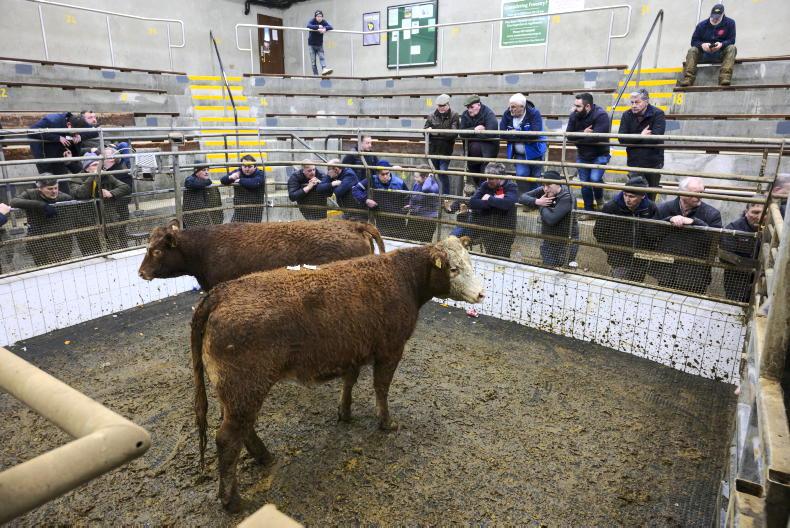
Normally, I would have started buying in bull weanlings by this stage but, having switched to dairy-bred Angus and Hereford steers we continue to keep them all outside until they are 550kg to 600kg. We then bring them in for 60 to 70 days for final finishing. One of the real differences with these animals is that they will not adequately finish before 30 months on a grass-only system, whereas if we had the old British Friesians crossed with an Angus or Hereford, there would be little problem. This is another reason for the declining competitiveness and efficiency of Irish beef production but that is for another day.
As I said recently, it is possible to get an acceptable finish on this kind of animal – the problem is the cost. Another reason in the back of my mind for my slowness to purchase stores is the worry about what might happen to beef prices in a Brexit context. I have little doubt that there will be some rescue package in the event of a Brexit catastrophe but these can be unpredictable. Also, I would rather have more of the harvest completed. We still have the winter barley straw on the ground. The next crop due to be harvested is the oilseed rape. I had been tempted to bale the OSR straw but I can see everyone being under pressure to cope with the workload that is building up, so I have switched plans and will chop it.
ADVERTISEMENT
The continuous summer rain has encouraged a lot of new weed growth in both the beans and commercial wheat. We will burn off the wheat in a few days. My small amount of seed wheat sown after beans looks excellent. It has passed its departmental inspection for wild oats, etc, but it is still some way off harvest.
Register for free to read this story and our free stories.
This content is available to digital subscribers and loyalty code users only. Sign in to your account, use the code or subscribe to get unlimited access.
The reader loyalty code gives you full access to the site from when you enter it until the following Wednesday at 9pm. Find your unique code on the back page of Irish Country Living every week.
CODE ACCEPTED
You have full access to the site until next Wednesday at 9pm.
CODE NOT VALID
Please try again or contact support.
It is very seldom that in the last days of July we have to abandon slurry spreading because of ground conditions but that was the reality last week. Granted, it was a field reclaimed some years ago but with a weak, slightly peaty, structure. We had cut its second cut of silage with no great difficulty but we have had a lot of rain which has softened land more than I realised. You can see that softening as the cattle leave paddocks with patches more cut up than would be normal for this time of the year.
Normally, I would have started buying in bull weanlings by this stage but, having switched to dairy-bred Angus and Hereford steers we continue to keep them all outside until they are 550kg to 600kg. We then bring them in for 60 to 70 days for final finishing. One of the real differences with these animals is that they will not adequately finish before 30 months on a grass-only system, whereas if we had the old British Friesians crossed with an Angus or Hereford, there would be little problem. This is another reason for the declining competitiveness and efficiency of Irish beef production but that is for another day.
As I said recently, it is possible to get an acceptable finish on this kind of animal – the problem is the cost. Another reason in the back of my mind for my slowness to purchase stores is the worry about what might happen to beef prices in a Brexit context. I have little doubt that there will be some rescue package in the event of a Brexit catastrophe but these can be unpredictable. Also, I would rather have more of the harvest completed. We still have the winter barley straw on the ground. The next crop due to be harvested is the oilseed rape. I had been tempted to bale the OSR straw but I can see everyone being under pressure to cope with the workload that is building up, so I have switched plans and will chop it.
The continuous summer rain has encouraged a lot of new weed growth in both the beans and commercial wheat. We will burn off the wheat in a few days. My small amount of seed wheat sown after beans looks excellent. It has passed its departmental inspection for wild oats, etc, but it is still some way off harvest.
If you would like to speak to a member of our team, please call us on 01-4199525.
Link sent to your email address
We have sent an email to your address. Please click on the link in this email to reset your password. If you can't find it in your inbox, please check your spam folder. If you can't find the email, please call us on 01-4199525.
ENTER YOUR LOYALTY CODE:
The reader loyalty code gives you full access to the site from when you enter it until the following Wednesday at 9pm. Find your unique code on the back page of Irish Country Living every week.






SHARING OPTIONS