As August settles in, Irish gardens begin their gentle shift toward autumn. Early crops such as potatoes, peas, broad beans, and lettuces are now being harvested, leaving patches of bare soil behind.
Rather than leaving this soil exposed, it’s an ideal moment to sow green manures, a simple yet powerful way to protect and enrich your soil over winter. Thanks to this year’s warm spring and sunny summer, many crops have matured and been cleared earlier than usual, offering a longer window for sowing. With soil temperatures still high, a wider variety of green manure species can successfully establish, improving soil structure and fertility before cooler conditions set in.
What are green manures?
Green manures, also known as cover crops, are fast-growing plants sown specifically to improve soil health. Rather than harvesting them for food, these crops are grown and then either dug into the soil or mowed and used as mulch.
They can be sown at any time of year but their most important role is to cover and protect soil in winter. They serve multiple purposes with core benefits being weed suppression, prevention of nutrient leaching and enhanced soil structure. In Ireland’s mild, wet climate, green manures are especially valuable as left bare, soil can become compacted and depleted over winter.
August is an ideal month to sow green manures as many summer crops are finishing up, leaving space in the garden. By getting the seed into the ground now, you’re giving them time to establish before colder weather sets in. Most green manures will germinate quickly in the warm soil and mild temperatures of late summer.
However, not all green manures are equal, and the best choice will depend on your soil, what you’ve grown before and what you plan to grow next.
Here are a few tried-and-tested winter-hardy options:
Phacelia (Phacelia tanacetifolia): Phacelia is a favourite among organic gardeners. It germinates quickly, grows well in Irish conditions, and is not related to common vegetable families, which means it won’t disturb your crop rotation plan. As a bonus, its delicate purple flowers attract bees and other pollinators if a few are left to flower. It is best sown from March to September and can be left to overwinter in mild areas or dug in before it sets seed.
Winter Vetch (Vicia sativa): also known as common vetch, this legume is a nitrogen-fixer, meaning it draws nitrogen from the atmosphere and stores it in nodules in its roots, a real treat for the following crop. Vetch is hardy and can be sown in August for overwintering. It’s ideal for beds where you’ll be growing nitrogen-hungry crops next season.
Rye (Secale cereale): winter rye is another robust option, especially good at preventing erosion and suppressing weeds. It produces a dense mat of roots and top growth, which can be dug in in spring to improve soil structure.
Landsberger Mix (Vetch, Crimson Clover, Annual Ryegrass): This is the ultimate green manure blend containing a mix of species, each chosen for their fast growth, nitrogen-fixing ability and soil-enriching properties. It provides excellent ground cover, weed suppression and high value with the potential for both autumn and spring cuts depending on sowing time.
Fruit Hill Farm (fruithillfarm.com) is where I go for green manures.
Growing green manures
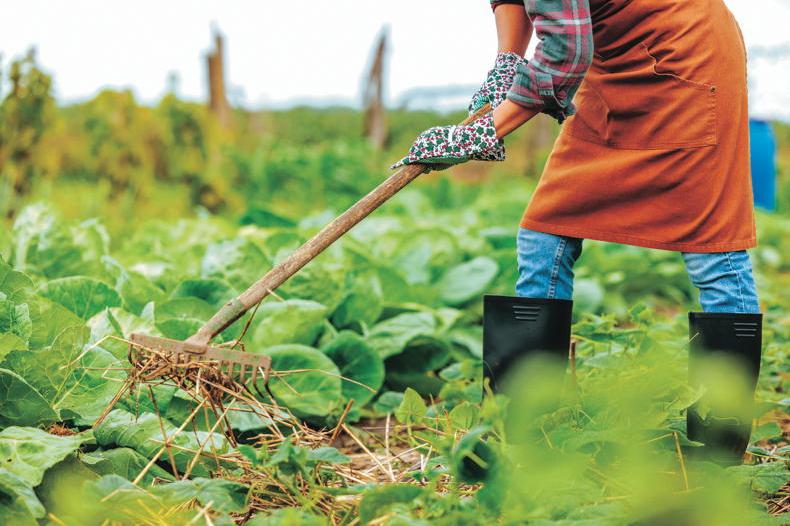
Sowing green manures is straightforward. Begin by clearing away any crop debris and weeds, then rake the soil to create a fine tilth. Scatter the seeds thinly, each type has a recommended sowing rate, then lightly rake them in. Firm the soil by rolling or gently treading it to ensure good seed-to-soil contact. Aim to sow before rain is expected, or water if conditions are dry. Once established, green manures need little attention. They usually suppress weeds and grow well with minimal care, though an occasional trim can keep them bushy and manageable.
How you manage green manures depends on the type you choose and your cropping schedule. In traditional systems, they can be chopped and dug in about four weeks before sowing new crops in spring, allowing time for decomposition. In no-dig gardens, foliage is simply chopped and dropped, then covered with black ground cover to aid breakdown. When digging in, cut the plants down, let them wilt for a few days, and then turn them into the top layer of soil. This process slowly releases nutrients and feeds soil microbes which are vital players in a healthy garden ecosystem.
Sowing green manures is one of the easiest and most effective ways to build long-term fertility in your garden. Not only do they protect the soil over winter, they also contribute to a vibrant, living soil teeming with beneficial organisms.
Your soil and next year’s crops will thank you for it.
Q&A: Signs of blight in crop potatoes?
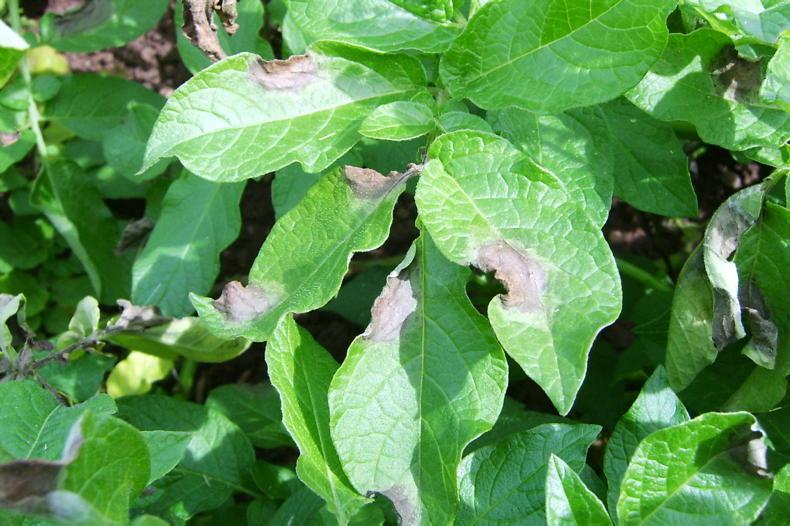
If you spot signs, immediately remove affected foliage. \iStock
What are the signs of blight and how should I respond to save my crop if it appears?
- Kay Keany, Co Sligo
Late blight, caused by Phytophthora infestans, shows as dark, water-soaked lesions on stems and leaves. While planting blight resistant varieties helps, it’s not foolproof. Check plants regularly, especially in damp conditions. If you spot signs, immediately remove and destroy affected foliage to contain the spread. Do not compost infected material. Leave unaffected tubers in the soil so they can continue maturing for harvest next month. Early action is critical to minimising damage.
Module/tray sowings for transplanting in polytunnel: Lettuce
(winter varieties), Pac choi, oriental greens, winter purslane, corn salad, rocket, spinach, Florence fennel, coriander and chervil.
Module/tray sowings for transplanting outdoors next month: Cabbage (spring types), kale (early in the month) and chard.
Direct sow outdoors: Coriander, radish, turnip, spring onions, salad leaves (mixed varieties, cut-and-come-again
types), spinach and land cress.
As August settles in, Irish gardens begin their gentle shift toward autumn. Early crops such as potatoes, peas, broad beans, and lettuces are now being harvested, leaving patches of bare soil behind.
Rather than leaving this soil exposed, it’s an ideal moment to sow green manures, a simple yet powerful way to protect and enrich your soil over winter. Thanks to this year’s warm spring and sunny summer, many crops have matured and been cleared earlier than usual, offering a longer window for sowing. With soil temperatures still high, a wider variety of green manure species can successfully establish, improving soil structure and fertility before cooler conditions set in.
What are green manures?
Green manures, also known as cover crops, are fast-growing plants sown specifically to improve soil health. Rather than harvesting them for food, these crops are grown and then either dug into the soil or mowed and used as mulch.
They can be sown at any time of year but their most important role is to cover and protect soil in winter. They serve multiple purposes with core benefits being weed suppression, prevention of nutrient leaching and enhanced soil structure. In Ireland’s mild, wet climate, green manures are especially valuable as left bare, soil can become compacted and depleted over winter.
August is an ideal month to sow green manures as many summer crops are finishing up, leaving space in the garden. By getting the seed into the ground now, you’re giving them time to establish before colder weather sets in. Most green manures will germinate quickly in the warm soil and mild temperatures of late summer.
However, not all green manures are equal, and the best choice will depend on your soil, what you’ve grown before and what you plan to grow next.
Here are a few tried-and-tested winter-hardy options:
Phacelia (Phacelia tanacetifolia): Phacelia is a favourite among organic gardeners. It germinates quickly, grows well in Irish conditions, and is not related to common vegetable families, which means it won’t disturb your crop rotation plan. As a bonus, its delicate purple flowers attract bees and other pollinators if a few are left to flower. It is best sown from March to September and can be left to overwinter in mild areas or dug in before it sets seed.
Winter Vetch (Vicia sativa): also known as common vetch, this legume is a nitrogen-fixer, meaning it draws nitrogen from the atmosphere and stores it in nodules in its roots, a real treat for the following crop. Vetch is hardy and can be sown in August for overwintering. It’s ideal for beds where you’ll be growing nitrogen-hungry crops next season.
Rye (Secale cereale): winter rye is another robust option, especially good at preventing erosion and suppressing weeds. It produces a dense mat of roots and top growth, which can be dug in in spring to improve soil structure.
Landsberger Mix (Vetch, Crimson Clover, Annual Ryegrass): This is the ultimate green manure blend containing a mix of species, each chosen for their fast growth, nitrogen-fixing ability and soil-enriching properties. It provides excellent ground cover, weed suppression and high value with the potential for both autumn and spring cuts depending on sowing time.
Fruit Hill Farm (fruithillfarm.com) is where I go for green manures.
Growing green manures
Sowing green manures is straightforward. Begin by clearing away any crop debris and weeds, then rake the soil to create a fine tilth. Scatter the seeds thinly, each type has a recommended sowing rate, then lightly rake them in. Firm the soil by rolling or gently treading it to ensure good seed-to-soil contact. Aim to sow before rain is expected, or water if conditions are dry. Once established, green manures need little attention. They usually suppress weeds and grow well with minimal care, though an occasional trim can keep them bushy and manageable.
How you manage green manures depends on the type you choose and your cropping schedule. In traditional systems, they can be chopped and dug in about four weeks before sowing new crops in spring, allowing time for decomposition. In no-dig gardens, foliage is simply chopped and dropped, then covered with black ground cover to aid breakdown. When digging in, cut the plants down, let them wilt for a few days, and then turn them into the top layer of soil. This process slowly releases nutrients and feeds soil microbes which are vital players in a healthy garden ecosystem.
Sowing green manures is one of the easiest and most effective ways to build long-term fertility in your garden. Not only do they protect the soil over winter, they also contribute to a vibrant, living soil teeming with beneficial organisms.
Your soil and next year’s crops will thank you for it.
Q&A: Signs of blight in crop potatoes?
If you spot signs, immediately remove affected foliage. \iStock
What are the signs of blight and how should I respond to save my crop if it appears?
- Kay Keany, Co Sligo
Late blight, caused by Phytophthora infestans, shows as dark, water-soaked lesions on stems and leaves. While planting blight resistant varieties helps, it’s not foolproof. Check plants regularly, especially in damp conditions. If you spot signs, immediately remove and destroy affected foliage to contain the spread. Do not compost infected material. Leave unaffected tubers in the soil so they can continue maturing for harvest next month. Early action is critical to minimising damage.
Module/tray sowings for transplanting in polytunnel: Lettuce
(winter varieties), Pac choi, oriental greens, winter purslane, corn salad, rocket, spinach, Florence fennel, coriander and chervil.
Module/tray sowings for transplanting outdoors next month: Cabbage (spring types), kale (early in the month) and chard.
Direct sow outdoors: Coriander, radish, turnip, spring onions, salad leaves (mixed varieties, cut-and-come-again
types), spinach and land cress.







SHARING OPTIONS