One in 10 of the general population is affected by chronic kidney disease, a number which increases to one in seven among people over the age of 50. A simple blood or urine test can detect its presence, and early intervention can stop or slow down the progression to end-stage kidney disease.
The day this paper is published, Thursday 12 March, is World Kidney Day, and the Irish Kidney Association is taking the opportunity to draw the public’s attention to the prevalence of kidney disease, the associated risk factors, and the benefits of early detection.
Figures up until the end of 2024 show that there were almost 700 people currently active on the waiting lists for organ transplants (including heart, lung, liver kidney, pancreas), and 540 or almost 80% of these required a kidney transplant. These 540 account for approximately 20% of the total number of patients currently on kidney dialysis.
At the end of 2024, 2,581 people were on dialysis in Ireland – more than three times the 821 people who were receiving dialysis treatment in 2000.
Dialysis is already costing the HSE more than €300m per year, emphasising the importance of prevention and early intervention.
Preliminary end of year figures for organ donation and transplantation reported by the HSE’s Organ Donation Transplant Ireland on 29 December 2025 revealed that 140 kidney transplant operations had taken place.
One-hundred-and-eleven of these kidney transplants were thanks to the 68 families consenting to their deceased loved ones’ organs being donated while 29 people received their kidney transplants from living donors.
Cavan man on dialysis
One patient waiting for a transplant is Colm Chambers, who has been undergoing dialysis treatment for nearly eight years. Colm was born with a blockage in his urethra and attended regular renal appointments from childhood.
“I had one kidney operating at 75% and another one was working at 25%. Between the two of them, I was grand as long as I looked after things, which I did.” In recent years, however, Colm’s kidney function began to decline and he started his dialysis treatment.
Colm travels from his family farm in Ballyjamesduff to Cavan General Hospital three times a week and each dialysis session is four hours at a time. “At the beginning I was tired after dialysis but now I’m fine,” he says.
Colm works full-time with Dovea Genetics, a bovine AI company, a job he really enjoys and that sees him travelling around the country. “They are very good to me,” he says of Dovea.
“They understand everything that I have to go through and they just let me get on with it.” Colm doesn’t have much time or energy to manage the family farm. He leases part of it and does dry stock farming on a small scale.
Colm has been waiting four months for a transplant. “I got on to the transplant pool last November and it was very emotional for both me. Everything I had to do and done to get here. For now, my next chapter is to get a transplant.”
Although Colm says most patients are waiting 18 months for a transplant, he adds: “You could be very lucky. You could have it within a couple of months, or you could be waiting two years and more. It all depends on your blood group, and your health has to be good.
“I’m waiting for somebody to die for me to get a kidney, and that’s why it’s so important for people to carry the donor cards. The law has changed now that you have to opt-out instead of opt-in. When we get an organ, we’re so, so, so grateful to get it and it is a second chance at life,” he says.
Dialysis has an impact on Colm’s whole family. A married father-of-two children (aged 12 and nine), Colm says his son “has never seen me without having to go to dialysis.”
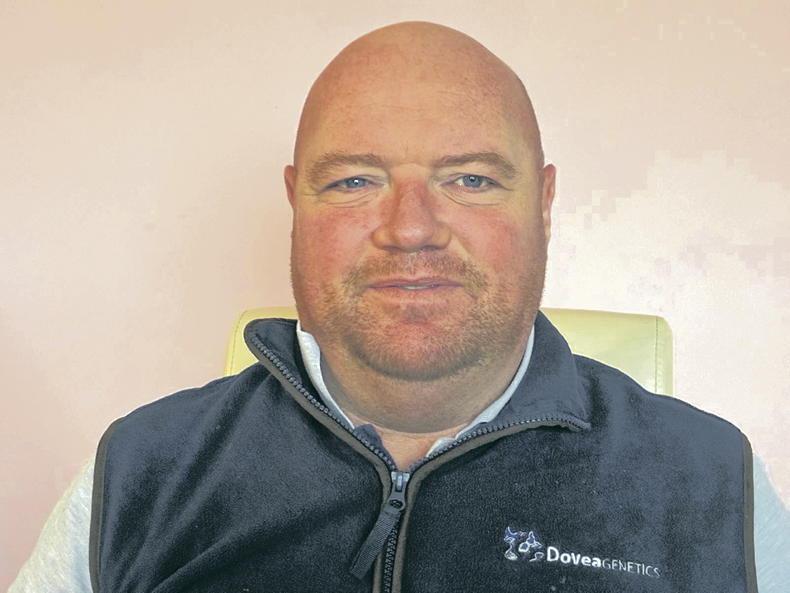
Colm Chambers from Co Cavan.
The summer of 2024 was their first family holiday in five years. Travelling can be near impossible for dialysis patients because they need to return to their home treatment centre for dialysis sessions, but the Irish Kidney Association provides a workaround by arranging dialysis with international partners abroad.
Carol Moore, CEO of the Irish Kidney Association, told Irish Country Living: “The Irish Kidney Association’s holiday coordinator supports dialysis patients travelling abroad by arranging ‘away from base’ dialysis with international providers and guiding them through the medical paperwork both within and outside the EU.
“We advise patients not to book flights until these dialysis slots are confirmed. We also provide free holiday homes in Kerry and Tramore for families. Unfortunately, the lack of ‘away from base’ dialysis slots in Ireland remains a significant hurdle.”
Despite his circumstances, Colm’s attitude is extremely positive. He remains undeterred. “There’s people far worse off than I am. I get the kidney, I’m going to be sorted. There are people with other ailments far worse off than me.”
His advice for others going through kidney problems is to talk to other people. “It is a very fearful time, because there’s so much unknown to the patients. Talk to somebody that’s in the process and talk to the Irish Kidney Association.
“There’s a lot of scare mongering, people going online and stuff. It could induce a lot of fear. You always hear the bad stories. You rarely hear the good stories.”
Life-changing transplant
Twenty-one-year-old Michaela Morley said her kidney transplant in 2011 changed her life. Michaela was born with polycystic kidney disease and was on dialysis until she was seven years old.
The Mayo native used to travel to Dublin three times a week for haemodialysis dialysis before receiving a transplant. Michaela is from a farm just outside Claremorris and her father, Sean, is a dry stock slatted shed bullock farmer.
“The transplant changed my life a lot, because beforehand, I could only go to school from junior up to first class. I was only going in on Tuesday and Thursday, because I’d be gone on the Monday, Wednesday and Friday for dialysis. It has let me lead a more normal life. I was able to start going to school normally, like everyone else in my class.” Michaela is now doing a childcare course to fulfil her dream of working with children.
While Michaela’s transplant was life-changing, she still has problems with her kidneys, making regular journeys from her home in Mayo for appointments in Beaumont Hospital, Dublin.
Bridie, Michaela’s mother, tells Irish Country Living: “We’re up every two to three months for Michaela’s bloods. You have to keep an eye on it. If she got an infection, Michaela can get very ill, very quickly. We have to be very careful.
“She’s up and down for cardiologist, respiratory and loads of different appointments.
“It’s very stressful, but we’re kind of used to it. Now this is going on for 21 years, what can you do? You have to just deal with things.”
See ika.ie/kidneyhealth
Your risk of chronic kidney disease increases if you have: diabetes, heart disease, high blood pressure or a family history of kidney disease.
A simple blood/urine test can determine the health of your kidneys, or you can talk with your GP if you are in one of the risk groups. Your kidney numbers show how well your kidneys are working and whether you need treatment.
In the lead up to World Kidney Day, volunteer collectors will be stationed in Dunnes Stores and ALDI outlets nationwide. They will be sharing information about kidney health and raising vital funds in support of the Irish Kidney Association, helping to provide essential services to kidney patients and their families across Ireland.
One in 10 of the general population is affected by chronic kidney disease, a number which increases to one in seven among people over the age of 50. A simple blood or urine test can detect its presence, and early intervention can stop or slow down the progression to end-stage kidney disease.
The day this paper is published, Thursday 12 March, is World Kidney Day, and the Irish Kidney Association is taking the opportunity to draw the public’s attention to the prevalence of kidney disease, the associated risk factors, and the benefits of early detection.
Figures up until the end of 2024 show that there were almost 700 people currently active on the waiting lists for organ transplants (including heart, lung, liver kidney, pancreas), and 540 or almost 80% of these required a kidney transplant. These 540 account for approximately 20% of the total number of patients currently on kidney dialysis.
At the end of 2024, 2,581 people were on dialysis in Ireland – more than three times the 821 people who were receiving dialysis treatment in 2000.
Dialysis is already costing the HSE more than €300m per year, emphasising the importance of prevention and early intervention.
Preliminary end of year figures for organ donation and transplantation reported by the HSE’s Organ Donation Transplant Ireland on 29 December 2025 revealed that 140 kidney transplant operations had taken place.
One-hundred-and-eleven of these kidney transplants were thanks to the 68 families consenting to their deceased loved ones’ organs being donated while 29 people received their kidney transplants from living donors.
Cavan man on dialysis
One patient waiting for a transplant is Colm Chambers, who has been undergoing dialysis treatment for nearly eight years. Colm was born with a blockage in his urethra and attended regular renal appointments from childhood.
“I had one kidney operating at 75% and another one was working at 25%. Between the two of them, I was grand as long as I looked after things, which I did.” In recent years, however, Colm’s kidney function began to decline and he started his dialysis treatment.
Colm travels from his family farm in Ballyjamesduff to Cavan General Hospital three times a week and each dialysis session is four hours at a time. “At the beginning I was tired after dialysis but now I’m fine,” he says.
Colm works full-time with Dovea Genetics, a bovine AI company, a job he really enjoys and that sees him travelling around the country. “They are very good to me,” he says of Dovea.
“They understand everything that I have to go through and they just let me get on with it.” Colm doesn’t have much time or energy to manage the family farm. He leases part of it and does dry stock farming on a small scale.
Colm has been waiting four months for a transplant. “I got on to the transplant pool last November and it was very emotional for both me. Everything I had to do and done to get here. For now, my next chapter is to get a transplant.”
Although Colm says most patients are waiting 18 months for a transplant, he adds: “You could be very lucky. You could have it within a couple of months, or you could be waiting two years and more. It all depends on your blood group, and your health has to be good.
“I’m waiting for somebody to die for me to get a kidney, and that’s why it’s so important for people to carry the donor cards. The law has changed now that you have to opt-out instead of opt-in. When we get an organ, we’re so, so, so grateful to get it and it is a second chance at life,” he says.
Dialysis has an impact on Colm’s whole family. A married father-of-two children (aged 12 and nine), Colm says his son “has never seen me without having to go to dialysis.”
Colm Chambers from Co Cavan.
The summer of 2024 was their first family holiday in five years. Travelling can be near impossible for dialysis patients because they need to return to their home treatment centre for dialysis sessions, but the Irish Kidney Association provides a workaround by arranging dialysis with international partners abroad.
Carol Moore, CEO of the Irish Kidney Association, told Irish Country Living: “The Irish Kidney Association’s holiday coordinator supports dialysis patients travelling abroad by arranging ‘away from base’ dialysis with international providers and guiding them through the medical paperwork both within and outside the EU.
“We advise patients not to book flights until these dialysis slots are confirmed. We also provide free holiday homes in Kerry and Tramore for families. Unfortunately, the lack of ‘away from base’ dialysis slots in Ireland remains a significant hurdle.”
Despite his circumstances, Colm’s attitude is extremely positive. He remains undeterred. “There’s people far worse off than I am. I get the kidney, I’m going to be sorted. There are people with other ailments far worse off than me.”
His advice for others going through kidney problems is to talk to other people. “It is a very fearful time, because there’s so much unknown to the patients. Talk to somebody that’s in the process and talk to the Irish Kidney Association.
“There’s a lot of scare mongering, people going online and stuff. It could induce a lot of fear. You always hear the bad stories. You rarely hear the good stories.”
Life-changing transplant
Twenty-one-year-old Michaela Morley said her kidney transplant in 2011 changed her life. Michaela was born with polycystic kidney disease and was on dialysis until she was seven years old.
The Mayo native used to travel to Dublin three times a week for haemodialysis dialysis before receiving a transplant. Michaela is from a farm just outside Claremorris and her father, Sean, is a dry stock slatted shed bullock farmer.
“The transplant changed my life a lot, because beforehand, I could only go to school from junior up to first class. I was only going in on Tuesday and Thursday, because I’d be gone on the Monday, Wednesday and Friday for dialysis. It has let me lead a more normal life. I was able to start going to school normally, like everyone else in my class.” Michaela is now doing a childcare course to fulfil her dream of working with children.
While Michaela’s transplant was life-changing, she still has problems with her kidneys, making regular journeys from her home in Mayo for appointments in Beaumont Hospital, Dublin.
Bridie, Michaela’s mother, tells Irish Country Living: “We’re up every two to three months for Michaela’s bloods. You have to keep an eye on it. If she got an infection, Michaela can get very ill, very quickly. We have to be very careful.
“She’s up and down for cardiologist, respiratory and loads of different appointments.
“It’s very stressful, but we’re kind of used to it. Now this is going on for 21 years, what can you do? You have to just deal with things.”
See ika.ie/kidneyhealth
Your risk of chronic kidney disease increases if you have: diabetes, heart disease, high blood pressure or a family history of kidney disease.
A simple blood/urine test can determine the health of your kidneys, or you can talk with your GP if you are in one of the risk groups. Your kidney numbers show how well your kidneys are working and whether you need treatment.
In the lead up to World Kidney Day, volunteer collectors will be stationed in Dunnes Stores and ALDI outlets nationwide. They will be sharing information about kidney health and raising vital funds in support of the Irish Kidney Association, helping to provide essential services to kidney patients and their families across Ireland.







SHARING OPTIONS