The first month of the yearcan feel like an optimistic time for many of us. The clear white light steadying each morning bears the promise of longer days ahead, with an extra two and a half minutes of it every day.
But everything this month can also feel that bit duller, with bauble-laden trees a distant memory and the now-tattered tinsel put away for another year.
Around this mid-point in January, the nation’s mood begins to dip. So much so that the third Monday in January, which falls next Monday 19 January, is described as ‘the most depressing day of the year’ and nicknamed ‘Blue Monday’.
There are many reasons why our mental health can wobble two-thirds of the way into January. The financial strain from present buying has caught up with us, and the proper chill of winter has set in. The evenings are damp and cold, a massive deterrent for people even considering venturing outside the house (and sure, isn’t everyone too broke to meet up anyway?)
Many of us have binned our New Years Resolutions by this point, fallen off the Dry January bandwagon (and failed to remount), and being bombarded with gloating self-reflection posts on social media has led to us beating ourselves up about what we did or didn’t do last year.
This is why Nicola Byrne, CEO of Shine, believes it is important to mind yourself now more than ever, and seek help if you are struggling.
Shine is a mental health organisation that supports people with lived experience of mental illness and their family members or supporters.
“We know from research and experience that those working in agriculture face some of the highest mental health risks in our society,” Nicola explains.
“Long hours, unpredictable weather, financial pressures, and the weight of running a family business can take their toll. When these pressures meet the stillness of winter, it can feel overwhelming. Especially if we are struggling with relationship challenges with family or friends.”
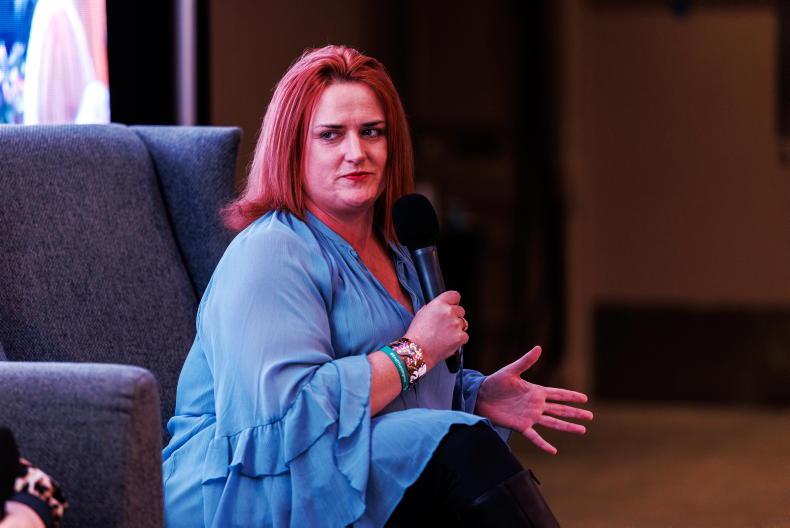
Nicola Byrne, ceo of Shine, speaking at 2025 Women & Agriculture Conference. \ Philip Doyle
January is a month with many associations, which, in turn, can bring to the fore many emotions, Nicola points out. These include regret, grief, loneliness, worries about the future, depression or burnout from the pressure of having kept the show on the road throughout December. It can be hard to talk about these emotions but she encourages everyone to do so.
“My advice is to reach out no matter what hour, as Ireland has a network of crisis supports and there is a service for everyone of every age, every preferred method and every hour of the day.
“Text, call, email but just don’t sit in silence. Feelings will pass but it is important to know that there is help there to get through the tough times. These services will help you get through the tough moments, and it is important to remember that throughout the year there are many organisations and services set up that can meet your needs.
“No one should have to carry these burdens alone. There are people and organisations ready to listen and to help.
“For example, Shine is a national mental health organisation that provides free, confidential support and information to anyone affected by mental illness, whether it’s your own wellbeing or that of a loved one. Our team understands the realities of life in rural Ireland and the challenges that come with it.”
Confidential and free services
Irish Country Living compiled a list of free, confidential services to support anyone struggling with their mental health in January.
Pieta House: if you are experiencing thoughts of suicide, engaging in self-harm, or bereaved by suicide, call Pieta House. There are long-term and emergency supports available: you can call for free therapy services (0818111126) or Pieta House offers a free 24-hour crisis helpline (1800 247 247) which is managed by qualified and professional therapists.
You can also text HELP to 51444.
Pieta.ie
Samaritans Ireland: aims to dispel the myth of so called ‘Blue Monday’ and encourage people to catch up with family and friends for its annual Brew Monday campaign.
The suicide prevention charity is centred on the power of human connection, and its awareness campaign encourages people to come together and have a conversation with someone they are worried about, because it could save a life.
Sarah O’Toole, executive director for Samaritans Ireland, says: “We answer a call every 61 seconds and know first-hand how a conversation where someone can share how they feeling can be life changing.
“Brew Monday is an opportunity for everyone to check in with those we care about. Making time for anyone we might be worried about to have a chat and tell us how they are really feeling. It might seem simple to some or impossible to others, but we know the difference it can make to someone who is struggling.”
samaritans.org/ireland
Aware: those living with anxiety, depression or bipolar disorder may find their conditions become more difficult to manage in the darker months. Aware is a national organisation providing free support and information services to people and family members impacted by mental health conditions.
Their helpline (1800 80 48 48) is a free service available seven days a week from 10am-10pm.
aware.ie
Irish Hospice Foundation: if you are grieving, Irish Hospice Foundation provides bereavement and end-of-life care information and support. The Bereavement Support Line: 1800 80 70 77, in partnership with the HSE is free to call from 10am-1pm on Monday to Friday. If you have queries about end-of-life care, the Information and Support Line (1800 60 70 66) is a confidential line that can provide practical support and advice.
hospicefoundation.ie
Alone: is a national organisation that supports older people. The National Support Line (0818 222 024) is available seven days a week from 8am-8pm. ALONE also offers a Visitation Support and Befriending Service, which involves a volunteer making regular visits to an older person.
alone.ie
Jigsaw: young people who are struggling with their mental health can reach out to Jigsaw. The charity works with young people aged 12-25 years, both online and in-person in one of 18 locations around Ireland. Jigsaw offer a live text chat service, with a therapist from Monday to Friday.
jigsaw.ie
Women’s Aid: Women’s Aid has a 24 hour National Freephone Helpline (1800 341 900) which is a free and confidential service for women to talk about what is happening to them, as well as an instant messaging service.
The charity also assists male victims of abuse. Men experiencing domestic abuse can contact the national
Men’s Aid helpline (01 554 3811) or email: Hello@mensaid.ie.
womensaid.ie and mensaid.ie
Childline: children can seek help for matters big and small through Childline 24-hour Support Line (1800 66 66 66). They will be listened to by staff and volunteers who can help with what next steps to take. There is also a live online chat option.
childline.ie
BodyWhys: January, with its emphasis on fitness and diets, can be very challenging for people living with an eating disorder. The national eating disorder service in Ireland, BodyWhys, provide free, confidential support for anyone affected by an eating disorder. You can call the national helpline (01-210 7906) or email alex@bodywhys.ie for support.
bodywhys.ie
HSE: the HSE website has information and resources including self-help tools. You can also develop a free mental health plan on this website.
hse.ie/mental-health
The first month of the yearcan feel like an optimistic time for many of us. The clear white light steadying each morning bears the promise of longer days ahead, with an extra two and a half minutes of it every day.
But everything this month can also feel that bit duller, with bauble-laden trees a distant memory and the now-tattered tinsel put away for another year.
Around this mid-point in January, the nation’s mood begins to dip. So much so that the third Monday in January, which falls next Monday 19 January, is described as ‘the most depressing day of the year’ and nicknamed ‘Blue Monday’.
There are many reasons why our mental health can wobble two-thirds of the way into January. The financial strain from present buying has caught up with us, and the proper chill of winter has set in. The evenings are damp and cold, a massive deterrent for people even considering venturing outside the house (and sure, isn’t everyone too broke to meet up anyway?)
Many of us have binned our New Years Resolutions by this point, fallen off the Dry January bandwagon (and failed to remount), and being bombarded with gloating self-reflection posts on social media has led to us beating ourselves up about what we did or didn’t do last year.
This is why Nicola Byrne, CEO of Shine, believes it is important to mind yourself now more than ever, and seek help if you are struggling.
Shine is a mental health organisation that supports people with lived experience of mental illness and their family members or supporters.
“We know from research and experience that those working in agriculture face some of the highest mental health risks in our society,” Nicola explains.
“Long hours, unpredictable weather, financial pressures, and the weight of running a family business can take their toll. When these pressures meet the stillness of winter, it can feel overwhelming. Especially if we are struggling with relationship challenges with family or friends.”
Nicola Byrne, ceo of Shine, speaking at 2025 Women & Agriculture Conference. \ Philip Doyle
January is a month with many associations, which, in turn, can bring to the fore many emotions, Nicola points out. These include regret, grief, loneliness, worries about the future, depression or burnout from the pressure of having kept the show on the road throughout December. It can be hard to talk about these emotions but she encourages everyone to do so.
“My advice is to reach out no matter what hour, as Ireland has a network of crisis supports and there is a service for everyone of every age, every preferred method and every hour of the day.
“Text, call, email but just don’t sit in silence. Feelings will pass but it is important to know that there is help there to get through the tough times. These services will help you get through the tough moments, and it is important to remember that throughout the year there are many organisations and services set up that can meet your needs.
“No one should have to carry these burdens alone. There are people and organisations ready to listen and to help.
“For example, Shine is a national mental health organisation that provides free, confidential support and information to anyone affected by mental illness, whether it’s your own wellbeing or that of a loved one. Our team understands the realities of life in rural Ireland and the challenges that come with it.”
Confidential and free services
Irish Country Living compiled a list of free, confidential services to support anyone struggling with their mental health in January.
Pieta House: if you are experiencing thoughts of suicide, engaging in self-harm, or bereaved by suicide, call Pieta House. There are long-term and emergency supports available: you can call for free therapy services (0818111126) or Pieta House offers a free 24-hour crisis helpline (1800 247 247) which is managed by qualified and professional therapists.
You can also text HELP to 51444.
Pieta.ie
Samaritans Ireland: aims to dispel the myth of so called ‘Blue Monday’ and encourage people to catch up with family and friends for its annual Brew Monday campaign.
The suicide prevention charity is centred on the power of human connection, and its awareness campaign encourages people to come together and have a conversation with someone they are worried about, because it could save a life.
Sarah O’Toole, executive director for Samaritans Ireland, says: “We answer a call every 61 seconds and know first-hand how a conversation where someone can share how they feeling can be life changing.
“Brew Monday is an opportunity for everyone to check in with those we care about. Making time for anyone we might be worried about to have a chat and tell us how they are really feeling. It might seem simple to some or impossible to others, but we know the difference it can make to someone who is struggling.”
samaritans.org/ireland
Aware: those living with anxiety, depression or bipolar disorder may find their conditions become more difficult to manage in the darker months. Aware is a national organisation providing free support and information services to people and family members impacted by mental health conditions.
Their helpline (1800 80 48 48) is a free service available seven days a week from 10am-10pm.
aware.ie
Irish Hospice Foundation: if you are grieving, Irish Hospice Foundation provides bereavement and end-of-life care information and support. The Bereavement Support Line: 1800 80 70 77, in partnership with the HSE is free to call from 10am-1pm on Monday to Friday. If you have queries about end-of-life care, the Information and Support Line (1800 60 70 66) is a confidential line that can provide practical support and advice.
hospicefoundation.ie
Alone: is a national organisation that supports older people. The National Support Line (0818 222 024) is available seven days a week from 8am-8pm. ALONE also offers a Visitation Support and Befriending Service, which involves a volunteer making regular visits to an older person.
alone.ie
Jigsaw: young people who are struggling with their mental health can reach out to Jigsaw. The charity works with young people aged 12-25 years, both online and in-person in one of 18 locations around Ireland. Jigsaw offer a live text chat service, with a therapist from Monday to Friday.
jigsaw.ie
Women’s Aid: Women’s Aid has a 24 hour National Freephone Helpline (1800 341 900) which is a free and confidential service for women to talk about what is happening to them, as well as an instant messaging service.
The charity also assists male victims of abuse. Men experiencing domestic abuse can contact the national
Men’s Aid helpline (01 554 3811) or email: Hello@mensaid.ie.
womensaid.ie and mensaid.ie
Childline: children can seek help for matters big and small through Childline 24-hour Support Line (1800 66 66 66). They will be listened to by staff and volunteers who can help with what next steps to take. There is also a live online chat option.
childline.ie
BodyWhys: January, with its emphasis on fitness and diets, can be very challenging for people living with an eating disorder. The national eating disorder service in Ireland, BodyWhys, provide free, confidential support for anyone affected by an eating disorder. You can call the national helpline (01-210 7906) or email alex@bodywhys.ie for support.
bodywhys.ie
HSE: the HSE website has information and resources including self-help tools. You can also develop a free mental health plan on this website.
hse.ie/mental-health









SHARING OPTIONS