Situated outside Mallow, Co Cork, in the village of Ballyhooly, contracting is something that has ran in the bloodlines of the Ross family now for three generations.
Since 2019, the business has been led by Alan Ross, having taken the reins from his father, George.
However, the business remains very family orientated, with George and Alan’s mother, Betty, still very much involved on a day-to-day basis.
After decades of growth, AG Ross Agri has flourished into a busy operation. Including Alan, the team comprises seven full-time staff and a further eight seasonal staff, during the summer and harvest period.
Diversity is something that Alan feels is critical in a modern contracting business in order to keep man and machine busy all year round. The family are also tillage farmers, growing 600ac of cereals and 150ac of maize.
Evolution of the business
Over the years, the business has expanded to undertake pretty much every task one can think of when it comes to livestock and tillage farming.
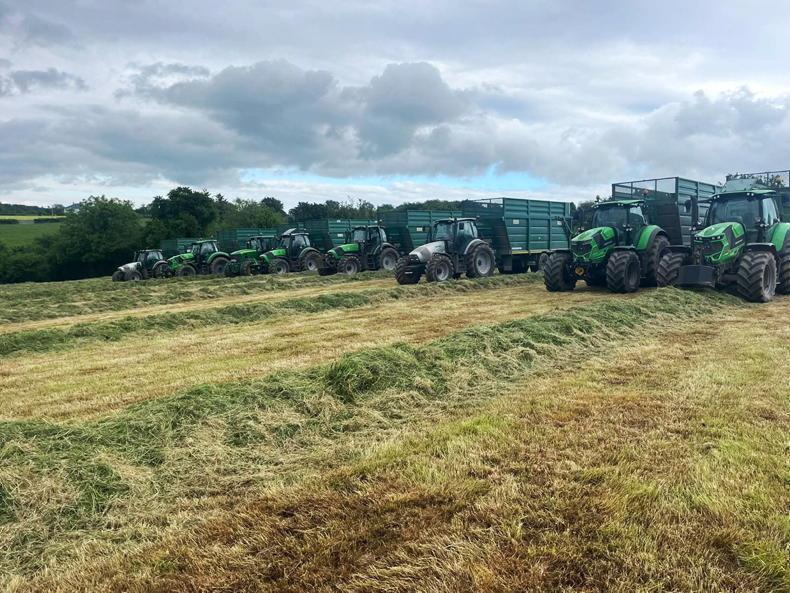
In total, there are 16 Deutz Fahr tractors within the fleet.
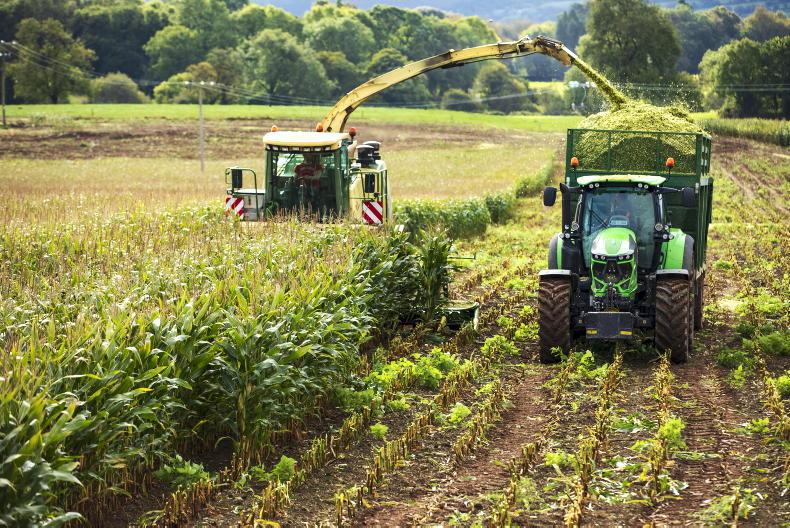
This includes grass silage, maize silage, whole crop harvesting, slurry works, as well as all cultivations, planting, crop care and cereal harvesting.
In recent years, two 13t diggers have joined the arsenal along with a Takeuchi mini digger in recent months, which are kept busy at land reclamation work or at civil works. Although still young, Alan practically has a lifetime of experience contracting under his belt, having grown up around machinery from a young age.
“Growing up, if I wasn’t at school then I was out driving on a machine,” he said. “It wasn’t long before I was on the driver seat. I soon became interested in mechanics and engineering, as those in the business all know too well there’s times repairs can form a large part of the day.
“That time there wasn’t the same issue as there is today in getting drivers, so with plenty of help at home, I decided to undertake an apprenticeship with local Deutz dealers, Kearney Agri in Fermoy.
“I qualified and then spent some time working in New Zealand and travelling Australia,” he added.
“They were good times, but I’d known all along that I wanted to return home and go contracting alongside Dad. Things were getting busier, so we decided to buy and run a second forager, purely to get through work.”
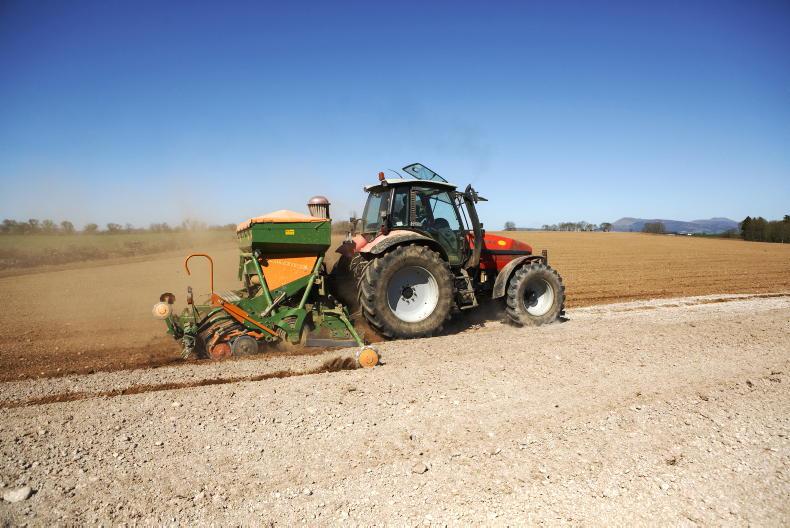
Although now running a full fleet of modern Deutz Fahr tractors, the family business has always kept Same Deutz Fahr tractors.
Although involved in the business full time since 2013, Alan officially took over the business in 2019, allowing his father George to take a step back.
However, George still remains a key asset to the business, taking care of all spraying and filling in where and when he is needed.
Advancements
One of Alan’s first moves was to move the business into a company (AG Ross Agri Ltd) and modernise areas he felted needed attention, including the replacement of a number of older tractors.
Having the mechanical know-how, Alan decided to improve the workshop facilities and take care of most service and repair jobs in-house.
Although he is more limited now as a result of electronics and modern diagnostic software, Alan still does what he can in terms of repairs and preparing machines ahead of the busy working seasons.
Some of the current machines within the ever-expanding fleet include two McHale Fusion balers, two Krone Big X 770 foragers, two Krone Big M self propelled mowers, four Volvo loaders, two Deutz 6095 combines, two 13t diggers as well as two Slurryquip umbilical systems and a fleet of tankers and trailers – not to mention the array of tillage equipment and the list goes on.
The fleet of tractors extends to 16 Deutz Fahr models, varying in age and horsepower, while a further two tractors are hired in when needed.
Machinery choices
George had run both Deutz Fahr and John Deere tractors over the years, something Alan has since narrowed down to just one shade of green.
“I suppose having good experience with Deutz, both from a operator and mechanic’s point of view, they’ve performed well and we’ll continue to stick with them. The service we get from Kearney Agri also plays a big role in our decision to remain with the brand,” Alan said.
“Running one brand as much as possible helps streamline things too when it comes to parts, dealers, etc. With machinery prices gone out of control, we’ve found Deutz more competitive than a lot of the others and this I feel, regardless of brand loyalty, is something that needs to be considered in any robust, modern contracting business.
“I would class ourselves as having more loyalty to a dealership and its staff as opposed to what brand is above the door. Without backup, no machine is any good,” Alan added.
The Rosses don’t always tend to buy their machinery new. Instead, they often see better value in a fresh second-hand machine as has been the case in the past with tractors and Big M mowers and Big X foragers. Replacement policy, too, isn’t completely dictated by hours, but by a machine’s history and performance, Alan said.
Running a business in 2026
“I think diversification is becoming more and more important for the survival of any business,” Alan told the Irish Farmers Journal. “I know tillage is in a tough place at the moment and farmers are getting the raw end of the deal, but in the past, it has worked well alongside the contacting and hopefully it will come right again.
“Diversification was the reasoning behind the purchase of the two Case diggers. Not only does it keep a flow of steady winter work, but it gives us access into other sectors like construction for example,” Alan said.
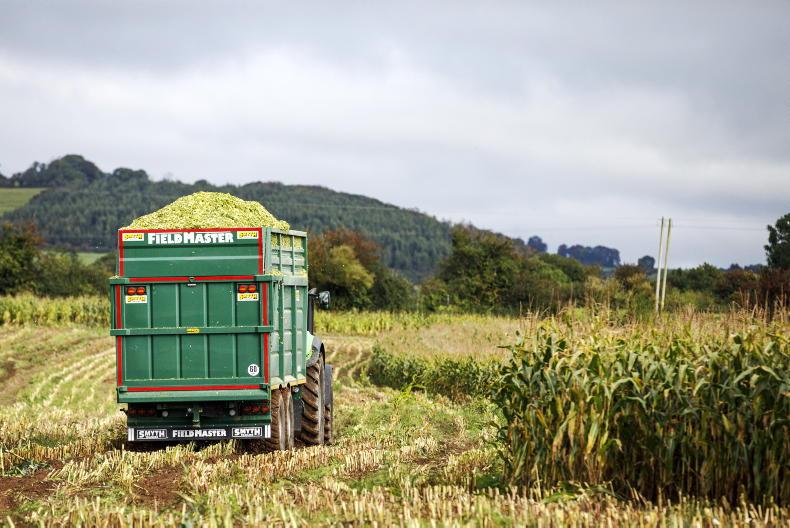
'We bought six silage trailers in 2019 for 18,000 plus VAT each, the same trailers are now €28,500 plus VAT. This is before mentioning, the price of spare parts, labour, tyres and crippling fuel prices.' \ Donal O'Leary
“Keeping on top of job recording, invoicing and accounts is more critical now than ever. We’re lucky, my mother Betty still takes charge of this and does it very well. Only for her, we’d probably have had to go down the route of an app-based system for job-recording and invoicing.
“Although apps, in theory, look like the way to go, I can see some potential pitfalls with them too. For example, if we used an app system that invoiced automatically after a job is complete, and the job didn’t happen to be paid within the month – which can often happen – then I’d have to carry the cost of the VAT, until I was paid. At least if the job isn’t invoiced until it’s paid, then the VAT isn’t paid until I have it,” Alan explained.
“In fairness, rates got a long overdue increase during Covid, but they still don’t come close to matching the rate at which machinery and other inputs such as fuel continue to increase.
“Take for example, 15 years ago, a new 150hp tractor could be bought for €65,000 to €70,000 plus VAT, this is now more in the region of €150,000 plus VAT.
“We bought six silage trailers in 2019 for 18,000 plus VAT each, the same trailers are now €28,500 plus VAT. This is before mentioning, the price of spare parts, labour, tyres and crippling fuel prices.”
“Like a lot of industries, I think if you’re well established, efficient and willing to stay at it, then there will be a future. It’s like farming, you now need scale to remain relevant. While it’s not always good to see, the reality is that, if there are less contractors in the future, then there will inevitably be room for those left to expand.
“Furthering my point, the reality is that contracting has become a profession that’s almost impossible to become established in if starting from nothing, not too dissimilar to farming,” Alan said.
Changes
Like any sector, Alan feels change is inevitable. One change constantly becoming more and more prominent is the lack of labour.
“We’re lucky to have a great team of lads some of which are with us over 10 years. So, it’s important to keep work in front of these lads all year,” he explained.
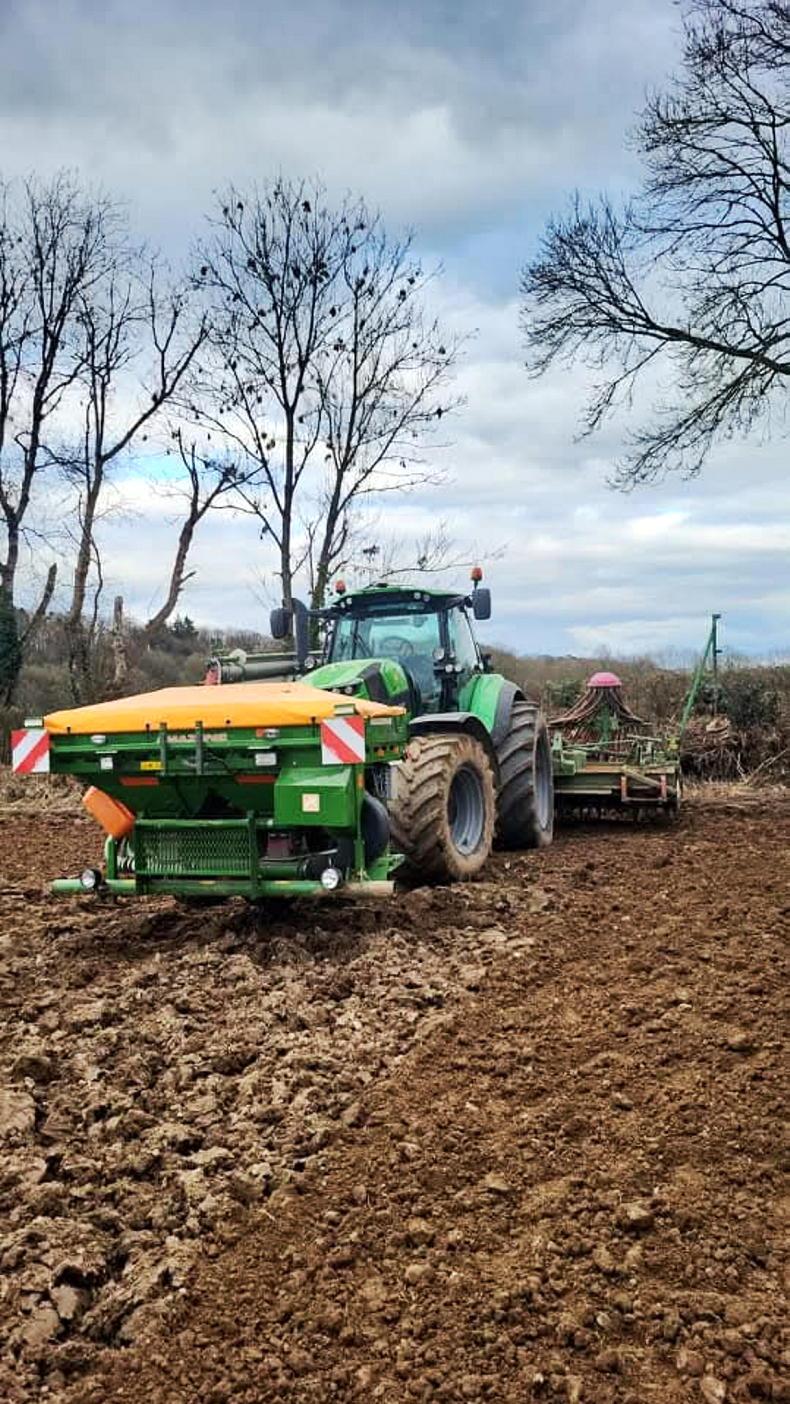
With the exception of large square baling, the Rosses undertake almost all tillage and livestock farming services.
“But I remember as a young lad, my father would have got several calls from other young lads at the time looking for an opportunity to drive for the summer. He’d often have to turn lads away. That day is well and truly gone.
“I don’t know if people just want to work more sociable hours now, if it’s the seasonal work or the interest just isn’t there anymore? Then you’re losing a cohort of the Irish lads that are interested, heading off to New Zealand and Australia to drive and they’re right to for the experience,” he said.
“Five years ago, I thought to myself that if we’ve Irish lads heading to New Zealand to drive then, surely there are some Kiwi lads that want to come here? I advertised on a few online forums and have since taken on four or five lads every year. It works out well for everyone, they get to travel, earn money and see the country while we get competent operators for the busy seasonal period,” Alan explained.
“One thing I noticed is the lack of help and resources available for hiring overseas agricultural workers. Contracting isn’t deemed as a critical occupation which I feel is wrong based on the fact that contractors are a key link in getting food on the shop shelf. I’ve often considered starting up an agency to help link up people from abroad with agricultural work here in Ireland and vice versa.”
When it comes to running a business, Alan feels that consistency is key.
“You’ll always have bad years, either financially or weather and ground conditions. But it’s important to stick at it and remember during the good times, not to leave yourself too exposed as the good times don’t last forever.
“Machinery finance is easily accessed these days, and I can see how some people find themselves in tricky situations all of a sudden at times.”
Alan explained that type of work continues to change over the years too, some of which he puts down to the direction farming is headed.
“Not as much grass seems to be cut in our area now. I’m unsure if it’s to do with everyone making more of an effort to turn cattle out to grass earlier and back into sheds later, or if more second cut is being made as bales, or maybe there’s just less cattle in these areas or maybe a combination of all? There’s time running two silage outfits isn’t justified and then all of a sudden the wetaher breaks and we’d have work for a third!
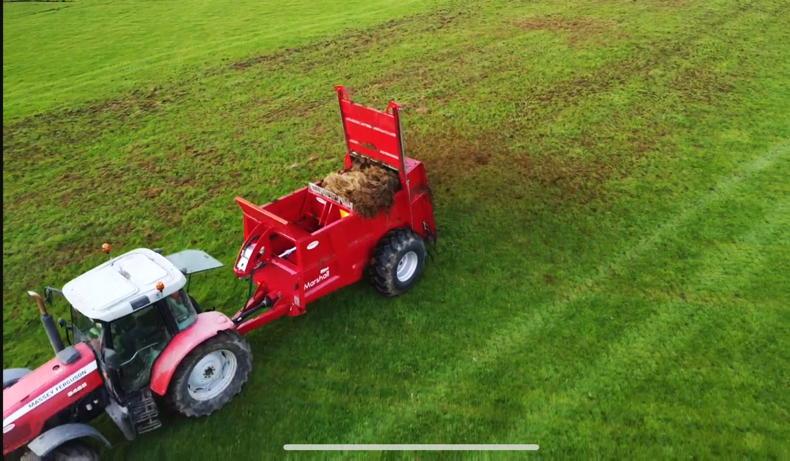
“Slurry is an aspect of the business that has grown massively over the years. It’s almost full time, from spreading throughout the open period to moving slurry during the winter months. Since fertiliser prices went crazy, there’s more of a value placed on slurry. Umbilical systems too I think have played a role here,” Alan said.
“Farmers can see straight away the time they’re saving with the added value of being more kind on ground. I can see us moving towards the over-hedge boom and nurse tank system as farms become more fragmented,” he added.
“While it is stressful at times keeping the show on the road, there too comes a great sense of satisfaction helping farmers, many which we’ve worked for all our lives. Similar to myself growing up, our kids, Fionn, Conal and Aoibh all show good interest, so hopefully there’ll be a fourth generation of Rosses contracting in the future,” Alan said.
Situated outside Mallow, Co Cork, in the village of Ballyhooly, contracting is something that has ran in the bloodlines of the Ross family now for three generations.
Since 2019, the business has been led by Alan Ross, having taken the reins from his father, George.
However, the business remains very family orientated, with George and Alan’s mother, Betty, still very much involved on a day-to-day basis.
After decades of growth, AG Ross Agri has flourished into a busy operation. Including Alan, the team comprises seven full-time staff and a further eight seasonal staff, during the summer and harvest period.
Diversity is something that Alan feels is critical in a modern contracting business in order to keep man and machine busy all year round. The family are also tillage farmers, growing 600ac of cereals and 150ac of maize.
Evolution of the business
Over the years, the business has expanded to undertake pretty much every task one can think of when it comes to livestock and tillage farming.
In total, there are 16 Deutz Fahr tractors within the fleet.
This includes grass silage, maize silage, whole crop harvesting, slurry works, as well as all cultivations, planting, crop care and cereal harvesting.
In recent years, two 13t diggers have joined the arsenal along with a Takeuchi mini digger in recent months, which are kept busy at land reclamation work or at civil works. Although still young, Alan practically has a lifetime of experience contracting under his belt, having grown up around machinery from a young age.
“Growing up, if I wasn’t at school then I was out driving on a machine,” he said. “It wasn’t long before I was on the driver seat. I soon became interested in mechanics and engineering, as those in the business all know too well there’s times repairs can form a large part of the day.
“That time there wasn’t the same issue as there is today in getting drivers, so with plenty of help at home, I decided to undertake an apprenticeship with local Deutz dealers, Kearney Agri in Fermoy.
“I qualified and then spent some time working in New Zealand and travelling Australia,” he added.
“They were good times, but I’d known all along that I wanted to return home and go contracting alongside Dad. Things were getting busier, so we decided to buy and run a second forager, purely to get through work.”
Although now running a full fleet of modern Deutz Fahr tractors, the family business has always kept Same Deutz Fahr tractors.
Although involved in the business full time since 2013, Alan officially took over the business in 2019, allowing his father George to take a step back.
However, George still remains a key asset to the business, taking care of all spraying and filling in where and when he is needed.
Advancements
One of Alan’s first moves was to move the business into a company (AG Ross Agri Ltd) and modernise areas he felted needed attention, including the replacement of a number of older tractors.
Having the mechanical know-how, Alan decided to improve the workshop facilities and take care of most service and repair jobs in-house.
Although he is more limited now as a result of electronics and modern diagnostic software, Alan still does what he can in terms of repairs and preparing machines ahead of the busy working seasons.
Some of the current machines within the ever-expanding fleet include two McHale Fusion balers, two Krone Big X 770 foragers, two Krone Big M self propelled mowers, four Volvo loaders, two Deutz 6095 combines, two 13t diggers as well as two Slurryquip umbilical systems and a fleet of tankers and trailers – not to mention the array of tillage equipment and the list goes on.
The fleet of tractors extends to 16 Deutz Fahr models, varying in age and horsepower, while a further two tractors are hired in when needed.
Machinery choices
George had run both Deutz Fahr and John Deere tractors over the years, something Alan has since narrowed down to just one shade of green.
“I suppose having good experience with Deutz, both from a operator and mechanic’s point of view, they’ve performed well and we’ll continue to stick with them. The service we get from Kearney Agri also plays a big role in our decision to remain with the brand,” Alan said.
“Running one brand as much as possible helps streamline things too when it comes to parts, dealers, etc. With machinery prices gone out of control, we’ve found Deutz more competitive than a lot of the others and this I feel, regardless of brand loyalty, is something that needs to be considered in any robust, modern contracting business.
“I would class ourselves as having more loyalty to a dealership and its staff as opposed to what brand is above the door. Without backup, no machine is any good,” Alan added.
The Rosses don’t always tend to buy their machinery new. Instead, they often see better value in a fresh second-hand machine as has been the case in the past with tractors and Big M mowers and Big X foragers. Replacement policy, too, isn’t completely dictated by hours, but by a machine’s history and performance, Alan said.
Running a business in 2026
“I think diversification is becoming more and more important for the survival of any business,” Alan told the Irish Farmers Journal. “I know tillage is in a tough place at the moment and farmers are getting the raw end of the deal, but in the past, it has worked well alongside the contacting and hopefully it will come right again.
“Diversification was the reasoning behind the purchase of the two Case diggers. Not only does it keep a flow of steady winter work, but it gives us access into other sectors like construction for example,” Alan said.
'We bought six silage trailers in 2019 for 18,000 plus VAT each, the same trailers are now €28,500 plus VAT. This is before mentioning, the price of spare parts, labour, tyres and crippling fuel prices.' \ Donal O'Leary
“Keeping on top of job recording, invoicing and accounts is more critical now than ever. We’re lucky, my mother Betty still takes charge of this and does it very well. Only for her, we’d probably have had to go down the route of an app-based system for job-recording and invoicing.
“Although apps, in theory, look like the way to go, I can see some potential pitfalls with them too. For example, if we used an app system that invoiced automatically after a job is complete, and the job didn’t happen to be paid within the month – which can often happen – then I’d have to carry the cost of the VAT, until I was paid. At least if the job isn’t invoiced until it’s paid, then the VAT isn’t paid until I have it,” Alan explained.
“In fairness, rates got a long overdue increase during Covid, but they still don’t come close to matching the rate at which machinery and other inputs such as fuel continue to increase.
“Take for example, 15 years ago, a new 150hp tractor could be bought for €65,000 to €70,000 plus VAT, this is now more in the region of €150,000 plus VAT.
“We bought six silage trailers in 2019 for 18,000 plus VAT each, the same trailers are now €28,500 plus VAT. This is before mentioning, the price of spare parts, labour, tyres and crippling fuel prices.”
“Like a lot of industries, I think if you’re well established, efficient and willing to stay at it, then there will be a future. It’s like farming, you now need scale to remain relevant. While it’s not always good to see, the reality is that, if there are less contractors in the future, then there will inevitably be room for those left to expand.
“Furthering my point, the reality is that contracting has become a profession that’s almost impossible to become established in if starting from nothing, not too dissimilar to farming,” Alan said.
Changes
Like any sector, Alan feels change is inevitable. One change constantly becoming more and more prominent is the lack of labour.
“We’re lucky to have a great team of lads some of which are with us over 10 years. So, it’s important to keep work in front of these lads all year,” he explained.
With the exception of large square baling, the Rosses undertake almost all tillage and livestock farming services.
“But I remember as a young lad, my father would have got several calls from other young lads at the time looking for an opportunity to drive for the summer. He’d often have to turn lads away. That day is well and truly gone.
“I don’t know if people just want to work more sociable hours now, if it’s the seasonal work or the interest just isn’t there anymore? Then you’re losing a cohort of the Irish lads that are interested, heading off to New Zealand and Australia to drive and they’re right to for the experience,” he said.
“Five years ago, I thought to myself that if we’ve Irish lads heading to New Zealand to drive then, surely there are some Kiwi lads that want to come here? I advertised on a few online forums and have since taken on four or five lads every year. It works out well for everyone, they get to travel, earn money and see the country while we get competent operators for the busy seasonal period,” Alan explained.
“One thing I noticed is the lack of help and resources available for hiring overseas agricultural workers. Contracting isn’t deemed as a critical occupation which I feel is wrong based on the fact that contractors are a key link in getting food on the shop shelf. I’ve often considered starting up an agency to help link up people from abroad with agricultural work here in Ireland and vice versa.”
When it comes to running a business, Alan feels that consistency is key.
“You’ll always have bad years, either financially or weather and ground conditions. But it’s important to stick at it and remember during the good times, not to leave yourself too exposed as the good times don’t last forever.
“Machinery finance is easily accessed these days, and I can see how some people find themselves in tricky situations all of a sudden at times.”
Alan explained that type of work continues to change over the years too, some of which he puts down to the direction farming is headed.
“Not as much grass seems to be cut in our area now. I’m unsure if it’s to do with everyone making more of an effort to turn cattle out to grass earlier and back into sheds later, or if more second cut is being made as bales, or maybe there’s just less cattle in these areas or maybe a combination of all? There’s time running two silage outfits isn’t justified and then all of a sudden the wetaher breaks and we’d have work for a third!
“Slurry is an aspect of the business that has grown massively over the years. It’s almost full time, from spreading throughout the open period to moving slurry during the winter months. Since fertiliser prices went crazy, there’s more of a value placed on slurry. Umbilical systems too I think have played a role here,” Alan said.
“Farmers can see straight away the time they’re saving with the added value of being more kind on ground. I can see us moving towards the over-hedge boom and nurse tank system as farms become more fragmented,” he added.
“While it is stressful at times keeping the show on the road, there too comes a great sense of satisfaction helping farmers, many which we’ve worked for all our lives. Similar to myself growing up, our kids, Fionn, Conal and Aoibh all show good interest, so hopefully there’ll be a fourth generation of Rosses contracting in the future,” Alan said.






SHARING OPTIONS