Based between Longford and Edgeworthstown, George Allen is a drystock farmer and part-time agricultural contractor. Buying-in 70 weanlings each year, George brings the cattle through to stores and occasionally finishes them, depending on the year.
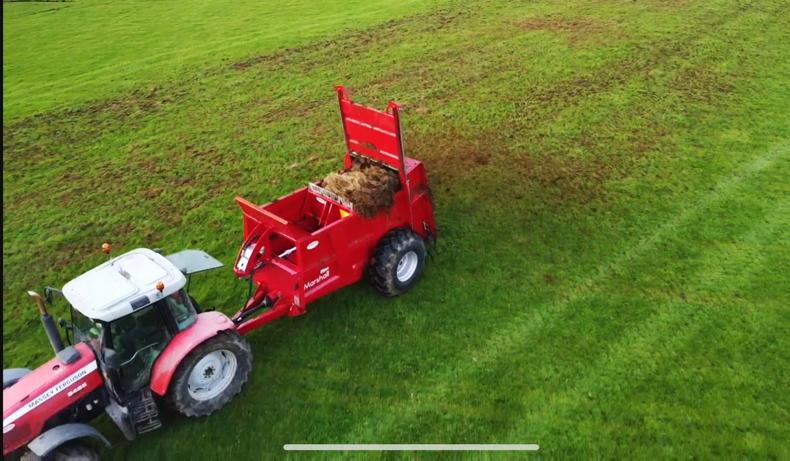
George offers baling, slurry spreading and dung spreading contracting services to local farmers, running two Massey Ferguson tractors and carrying out all of the work himself.
As he’s a one-man band, George likes to keep his machines fresh and well-maintained, aiming to avoid any downtime. Three years ago, George made the decision to purchase a new Marshall VES-1500 rear-discharge dung spreader off Johnston Farm Equipment in Longford, who are also the Irish importers of Marshall equipment.
Why Marshall?
“Before the Marshall spreader, it was always side discharge machines I had operated. The grant aiding of rear-discharge dung spreaders under TAMS III gave me the opportunity to upgrade to a new machine. I had seen many different brands of rear discharge systems working over the years, but I always thought the Marshall design was very simple and effective. It uses a hydraulic ram instead of the conventional floor chain drive system,” explained George.
The workings
Marshall offers four basic side slinger models and three rear-discharge models. George opted for the Marshall VES-1500 rear-discharge dung spreader, which is the entry level VES (Vesuvius Vantage) machine. With a carrying capacity of approximately nine tonnes, its design is based on low maintenance.
The most distinctive feature of the VES-1500 is its hydraulic ram headboard system, which replaces the conventional floor chain mechanism found in the vast majority of rear-discharge dung spreaders on the market.
Instead of using chains to move material toward the rear beaters, the VES-1500 uses a four-stage hydraulic push ram located at the front headboard of the machine.
This ram feeds the load backward toward the vertical beaters during operation. This design eliminates the major wearing point in traditional machines, with users knowing all too well of floor chains stretching and breaking over time. Straight away, this design significantly reduces maintenance requirements.
The discharge system on the VES range is controlled by a mechanical flow-regulator that governs the speed of the hydraulic ram. As the ram extends, the oil flow is reduced to maintain a consistent discharge rate, allowing for even spreading. This can be simply adjusted via a dial, or the user can control the speed of the ram through the tractors oil flow rate to the individual hydraulic spool.
The rear of the machine is fitted with twin vertical beaters, which are built from heavy-duty steel, which distribute the material.
These beaters are equipped with 12mm reversible hardened tips, meaning that when one side wears down, the tips can be turned to get the most out of them.
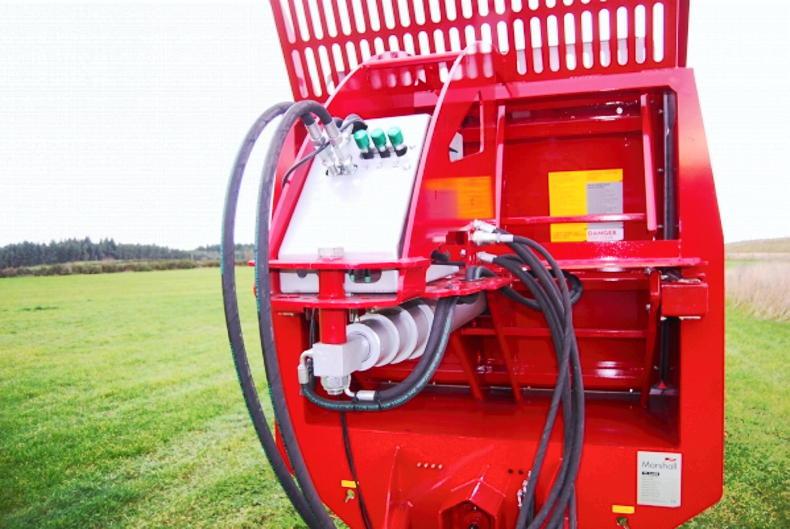
The discharge system on the VES range is controlled by a mechanical flow-regulator that governs the speed of the hydraulic ram.
Body design
The VES range comes with a completely sealed body design, allowing it to handle both solid dung and slurry. As standard, it comes fitted with a slurry door, allowing operators to spread more liquid-based materials effectively.
The body of the VES-1500 is manufactured from 4mm thick steel. The rear beaters and tips are made from 12mm steel plates. The machine features a one-piece gearbox designed to handle up to 160hp, which is protected by an armoured plate underneath to prevent damage from debris or ground contact. A dual protection system is also incorporated, including polyurethane couplings to absorb shock loads and a shear bolt in the PTO shaft to protect the drivetrain from overload.
By eliminating the floor chain system, Marshall says its spreader is built with a shorter and deeper body, resulting in a lower centre of gravity. It says that this makes it suitable for use on uneven terrain or hilly ground.
Furthermore, the firm says that the absence of a chain drive gearbox allows the axle to be positioned further toward the rear of the machine, which it says improves weight distribution. The spreader also benefits from a minimum ground clearance of approximately 520mm.
Setting up and maintenance
From an operational perspective, the VES-1500 is designed to be user-friendly. The spreading process is straightforward, with the machine only requiring two hydraulic spool valves. One operates the ram to push material toward the beaters, while the second opens and closes the slurry door.
After that, the operator engages the 1,000 speed PTO and begins spreading. The spreading width is governed by the material at hand, but Marshall says the machine is capable of spreading material over a width of up to 16 metres.
George’s biggest like about the spreader is how simple it is to maintain. Routine upkeep is largely down to greasing five remote pins and checking the gearbox oil level, etc.
Obviously, the elimination of the floor chains saves a lot of time from a maintenance point of view, removing the need for tensioning, lubrication and, eventually, replacement.
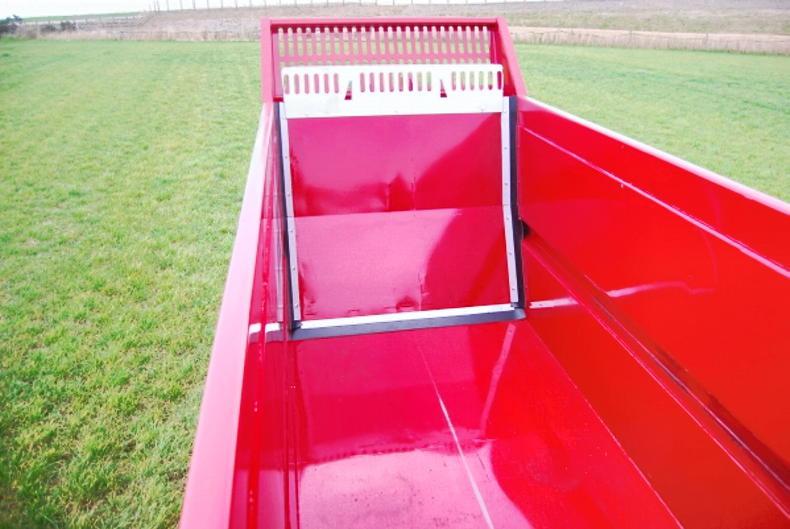
The VES range has a completely sealed body, and combined with the standard slurry door, means it can hold and spread slurry.
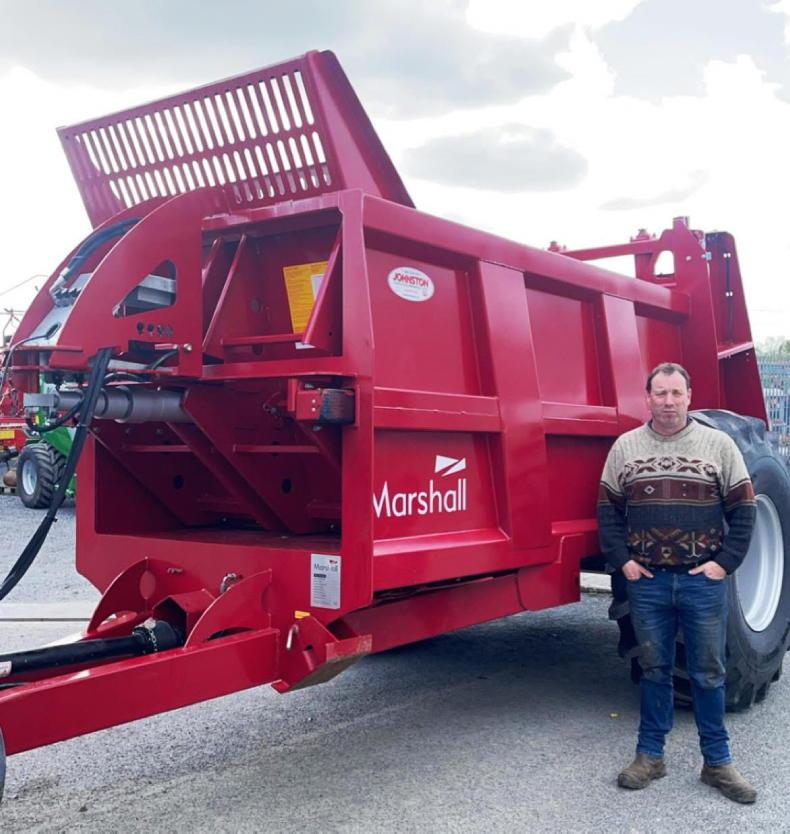
George Allen.
Specifications
In terms of specifications, Marshall claims that the VES-1500 requires a tractor with a minimum of around 80hp and operates with a standard PTO speed of 1,000rpm.
As standard, it is equipped with 18.4 x 30 tyres, while George opted to fit the wider 23.1 x 26 -14 ply tyres. It comes on an eight-stud axle with hydraulic brakes, while air brakes are available as an optional extra.
The machine has an unladen weight of approximately 4,080kg. The spreaders internal body size is roughly nine feet ten inches in length, five feet in width, and over four and a half feet in depth.
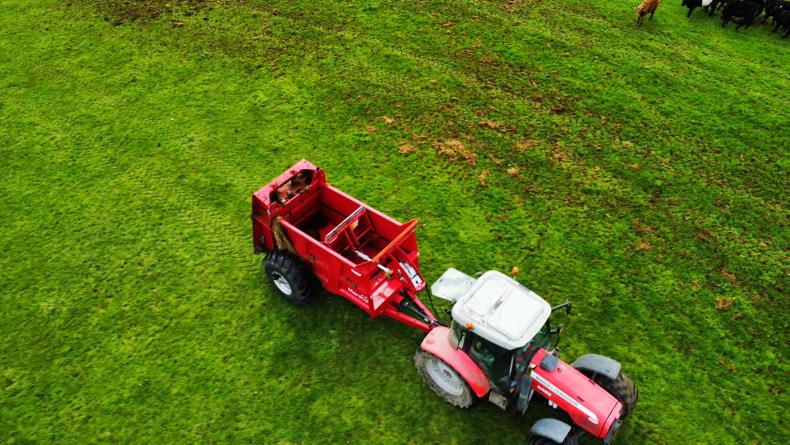
Instead of using chains to move material toward the rear beaters, the VES-1500 uses a four-stage hydraulic push ram located at the front headboard of the machine.
Verdict
“I have the Marshall VES-1500 for the past three seasons, and I’m absolutely delighted with it. I have a lot of material spread with it, and by now the tips on the rotor are about 50% worn, so I intend on turning them around shortly,” said George.
“The machine is extremely well-designed, and it’s built very strong. I have two tractors, a Massey Ferguson 6S.165 and a 5465, both of them run the spreader at their ease. It’s definitely easy to drive, with pressure only coming on if you are working on hilly ground, or trying to force material through the beaters quickly. I work on a lot of heavy ground, so I’m happy that I went for the smaller nine tonne model. With the larger tyres, it travels well on marginal ground, but they do leave the machine that bit wider on the road.
“The biggest draw to the spreader is obviously it’s moving headboard and hydraulic ram design, which works very efficiently.
“The headboard runs on nylon splines, with rubber sealing all the way around, which leaves it ideal for spreading liquid materials. It leaves the body perfectly cleaned out, every time. In terms of foreign objects through the dung, we feed the material towards the beaters relatively slow, giving it a chance to break it up and spread it evenly.
“I listen closely to the beaters, and if a foreign object like a stone gets in, you will hear it tipping off the beaters. In that case, I will reverse the hydraulic ram, turn off the machine and get into the spreader to remove the stone etc.
“If you push the likes of a big stone to the beaters, it will break the 10mm standard shear bolt. Overall, I’m very happy with the spreader and I would highly recommend the Marshall spreader,” concluded George.
? Likes
Design simplicity which leaves very little maintenance.Build quality.? Dislikes
Would like a ladder for accessing the internal body of the spreader.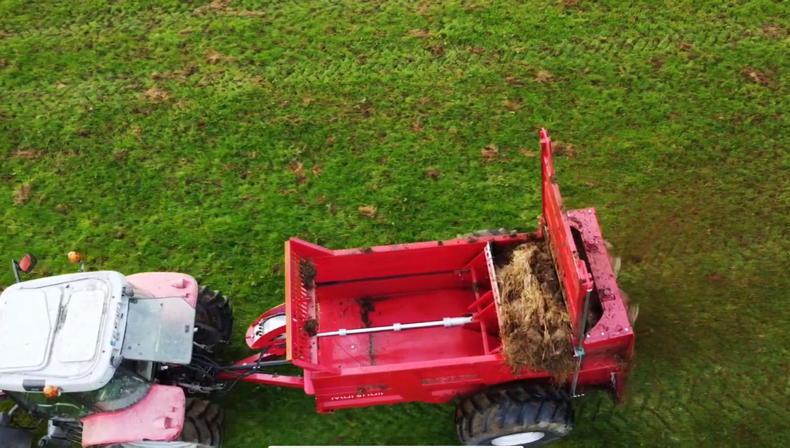
The rear of the machine is fitted with twin vertical beaters, which are built from heavy-duty steel, which distribute the material.
Machine specification
Model: VES-1500
Carrying capacity: Nine tonnes (6,490l / 229 cu.ft).
Floor and wall thickness: 4mm.
Slurry door (removable): Standard.
Unladen weight: 4,080kg.
Material feed: Hydraulic ram.
Standard PTO input speed: 1,000.
Standard tyre: 18.4 x 30 (23.1 x 26 optional).
Axle: Eight stud, 80mm.
Width: 8’ 10” standard wheels (9’ 7” oversized wheels).
Overall length: 19ft 2in.
Price: €30,000 plus VAT (full spec).
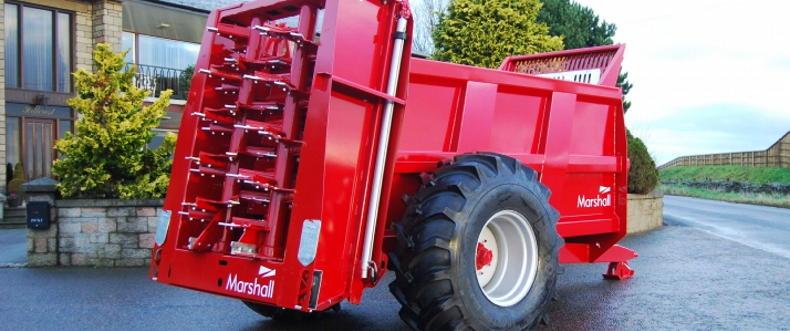
The VES range comes with a completely sealed body design, allowing it to handle both solid dung and slurry.
Based between Longford and Edgeworthstown, George Allen is a drystock farmer and part-time agricultural contractor. Buying-in 70 weanlings each year, George brings the cattle through to stores and occasionally finishes them, depending on the year.
George offers baling, slurry spreading and dung spreading contracting services to local farmers, running two Massey Ferguson tractors and carrying out all of the work himself.
As he’s a one-man band, George likes to keep his machines fresh and well-maintained, aiming to avoid any downtime. Three years ago, George made the decision to purchase a new Marshall VES-1500 rear-discharge dung spreader off Johnston Farm Equipment in Longford, who are also the Irish importers of Marshall equipment.
Why Marshall?
“Before the Marshall spreader, it was always side discharge machines I had operated. The grant aiding of rear-discharge dung spreaders under TAMS III gave me the opportunity to upgrade to a new machine. I had seen many different brands of rear discharge systems working over the years, but I always thought the Marshall design was very simple and effective. It uses a hydraulic ram instead of the conventional floor chain drive system,” explained George.
The workings
Marshall offers four basic side slinger models and three rear-discharge models. George opted for the Marshall VES-1500 rear-discharge dung spreader, which is the entry level VES (Vesuvius Vantage) machine. With a carrying capacity of approximately nine tonnes, its design is based on low maintenance.
The most distinctive feature of the VES-1500 is its hydraulic ram headboard system, which replaces the conventional floor chain mechanism found in the vast majority of rear-discharge dung spreaders on the market.
Instead of using chains to move material toward the rear beaters, the VES-1500 uses a four-stage hydraulic push ram located at the front headboard of the machine.
This ram feeds the load backward toward the vertical beaters during operation. This design eliminates the major wearing point in traditional machines, with users knowing all too well of floor chains stretching and breaking over time. Straight away, this design significantly reduces maintenance requirements.
The discharge system on the VES range is controlled by a mechanical flow-regulator that governs the speed of the hydraulic ram. As the ram extends, the oil flow is reduced to maintain a consistent discharge rate, allowing for even spreading. This can be simply adjusted via a dial, or the user can control the speed of the ram through the tractors oil flow rate to the individual hydraulic spool.
The rear of the machine is fitted with twin vertical beaters, which are built from heavy-duty steel, which distribute the material.
These beaters are equipped with 12mm reversible hardened tips, meaning that when one side wears down, the tips can be turned to get the most out of them.
The discharge system on the VES range is controlled by a mechanical flow-regulator that governs the speed of the hydraulic ram.
Body design
The VES range comes with a completely sealed body design, allowing it to handle both solid dung and slurry. As standard, it comes fitted with a slurry door, allowing operators to spread more liquid-based materials effectively.
The body of the VES-1500 is manufactured from 4mm thick steel. The rear beaters and tips are made from 12mm steel plates. The machine features a one-piece gearbox designed to handle up to 160hp, which is protected by an armoured plate underneath to prevent damage from debris or ground contact. A dual protection system is also incorporated, including polyurethane couplings to absorb shock loads and a shear bolt in the PTO shaft to protect the drivetrain from overload.
By eliminating the floor chain system, Marshall says its spreader is built with a shorter and deeper body, resulting in a lower centre of gravity. It says that this makes it suitable for use on uneven terrain or hilly ground.
Furthermore, the firm says that the absence of a chain drive gearbox allows the axle to be positioned further toward the rear of the machine, which it says improves weight distribution. The spreader also benefits from a minimum ground clearance of approximately 520mm.
Setting up and maintenance
From an operational perspective, the VES-1500 is designed to be user-friendly. The spreading process is straightforward, with the machine only requiring two hydraulic spool valves. One operates the ram to push material toward the beaters, while the second opens and closes the slurry door.
After that, the operator engages the 1,000 speed PTO and begins spreading. The spreading width is governed by the material at hand, but Marshall says the machine is capable of spreading material over a width of up to 16 metres.
George’s biggest like about the spreader is how simple it is to maintain. Routine upkeep is largely down to greasing five remote pins and checking the gearbox oil level, etc.
Obviously, the elimination of the floor chains saves a lot of time from a maintenance point of view, removing the need for tensioning, lubrication and, eventually, replacement.
The VES range has a completely sealed body, and combined with the standard slurry door, means it can hold and spread slurry.
George Allen.
Specifications
In terms of specifications, Marshall claims that the VES-1500 requires a tractor with a minimum of around 80hp and operates with a standard PTO speed of 1,000rpm.
As standard, it is equipped with 18.4 x 30 tyres, while George opted to fit the wider 23.1 x 26 -14 ply tyres. It comes on an eight-stud axle with hydraulic brakes, while air brakes are available as an optional extra.
The machine has an unladen weight of approximately 4,080kg. The spreaders internal body size is roughly nine feet ten inches in length, five feet in width, and over four and a half feet in depth.
Instead of using chains to move material toward the rear beaters, the VES-1500 uses a four-stage hydraulic push ram located at the front headboard of the machine.
Verdict
“I have the Marshall VES-1500 for the past three seasons, and I’m absolutely delighted with it. I have a lot of material spread with it, and by now the tips on the rotor are about 50% worn, so I intend on turning them around shortly,” said George.
“The machine is extremely well-designed, and it’s built very strong. I have two tractors, a Massey Ferguson 6S.165 and a 5465, both of them run the spreader at their ease. It’s definitely easy to drive, with pressure only coming on if you are working on hilly ground, or trying to force material through the beaters quickly. I work on a lot of heavy ground, so I’m happy that I went for the smaller nine tonne model. With the larger tyres, it travels well on marginal ground, but they do leave the machine that bit wider on the road.
“The biggest draw to the spreader is obviously it’s moving headboard and hydraulic ram design, which works very efficiently.
“The headboard runs on nylon splines, with rubber sealing all the way around, which leaves it ideal for spreading liquid materials. It leaves the body perfectly cleaned out, every time. In terms of foreign objects through the dung, we feed the material towards the beaters relatively slow, giving it a chance to break it up and spread it evenly.
“I listen closely to the beaters, and if a foreign object like a stone gets in, you will hear it tipping off the beaters. In that case, I will reverse the hydraulic ram, turn off the machine and get into the spreader to remove the stone etc.
“If you push the likes of a big stone to the beaters, it will break the 10mm standard shear bolt. Overall, I’m very happy with the spreader and I would highly recommend the Marshall spreader,” concluded George.
? Likes
Design simplicity which leaves very little maintenance.Build quality.? Dislikes
Would like a ladder for accessing the internal body of the spreader.
The rear of the machine is fitted with twin vertical beaters, which are built from heavy-duty steel, which distribute the material.
Machine specification
Model: VES-1500
Carrying capacity: Nine tonnes (6,490l / 229 cu.ft).
Floor and wall thickness: 4mm.
Slurry door (removable): Standard.
Unladen weight: 4,080kg.
Material feed: Hydraulic ram.
Standard PTO input speed: 1,000.
Standard tyre: 18.4 x 30 (23.1 x 26 optional).
Axle: Eight stud, 80mm.
Width: 8’ 10” standard wheels (9’ 7” oversized wheels).
Overall length: 19ft 2in.
Price: €30,000 plus VAT (full spec).
The VES range comes with a completely sealed body design, allowing it to handle both solid dung and slurry.






SHARING OPTIONS