Located in the east of Czech Republic, close to the Polish border, Bednar FMT is a name relatively new to the Irish market, but a company that has made significant inroads into the European tillage machinery industry since its inception less than 30 years ago.
Established in 1997, Bednar has become one of the big players in the cultivation and seeding equipment industry across Europe.
The business was founded by Ladislav Bednar and some partners in 1997, and is today fully family-owned. Ladislav’s son Jan is the company sales director, while his other son Bednar is the production director.
With a sole focus on tillage equipment, its products include cultivators, seeders, inter-row cultivation, mulching, fertilisation and crop residue management.
The Bednar family also own Strom, the business which import and distribute John Deere equipment in the Czech Republic. The family have always been, and continue to be prominent tillage farmers, close to the factory.
In 1997, the Bednar family and its partners founded Strom Export sro. This was established as a trading company to export Czech-made farm machinery, functioning primarily as an intermediary company.
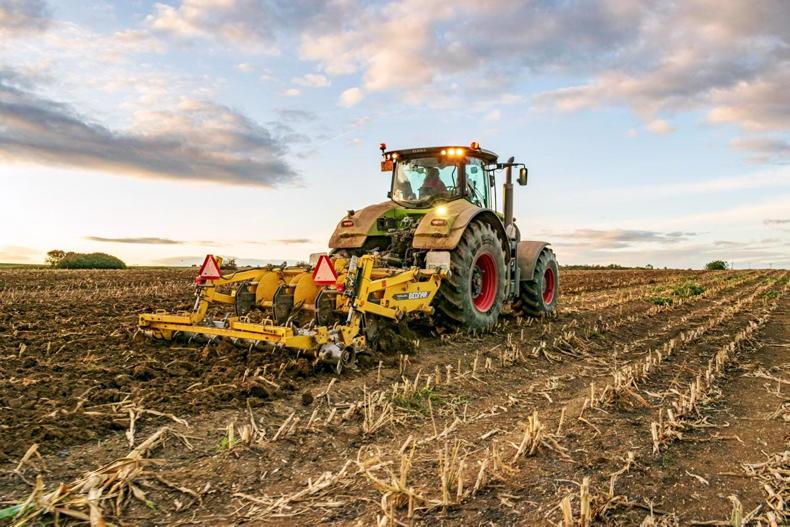
The following year, it began to build its own equipment, and shifted from an export agency to a manufacturer. This began with the Disk Profi cultivator. In 1999, it expanded its portfolio to include disc harrows. In 2003, the firm’s equipment changed from green to yellow.
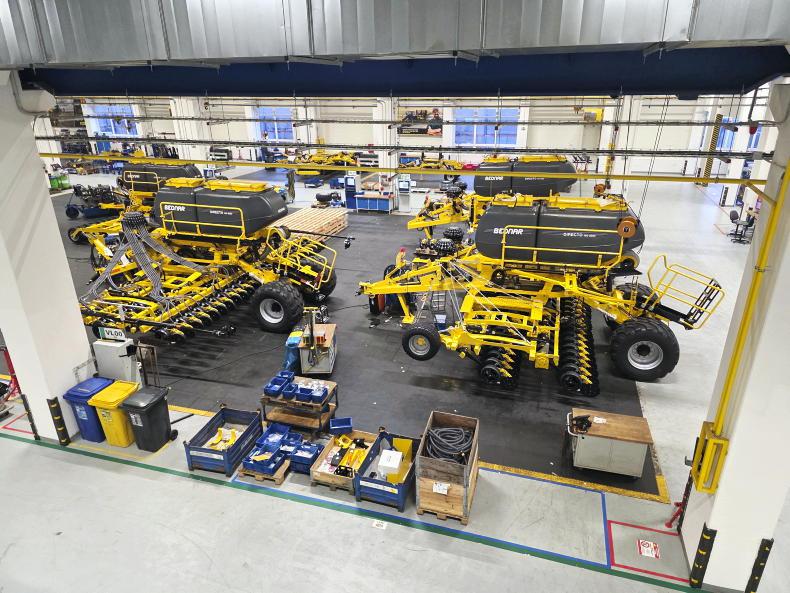
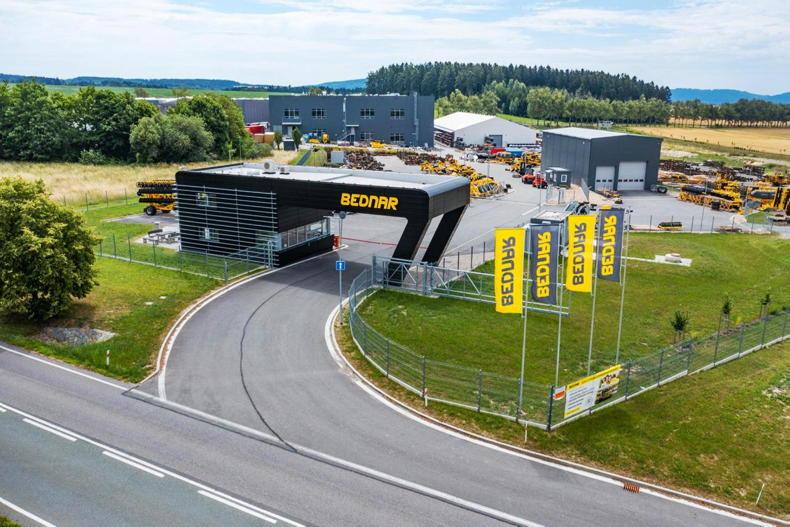
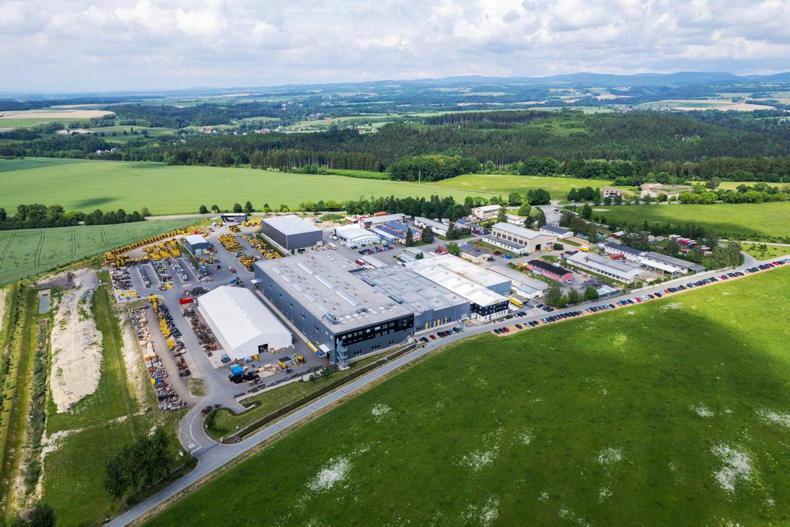
The factory is located 150km east of Prague.
In 2006, it opened its own production plant, expanding its production and storage areas to 3,932m2. In 2008, the plant was extended, with another production hall. In 2010, it introduced the Terraland TN subsoiler and got involved in the development of new implements with wider working width.
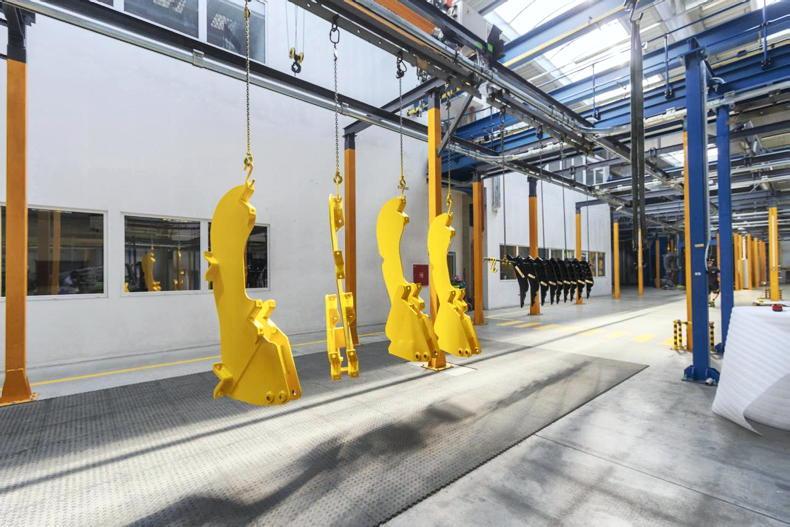
In 2011 and 2012, the plant was further expanded, and a new powder coat paint station was incorporated. In 2013, Strom Export changed its name to Bednar FMT. In 2014 and 2015, the factory was reconstructed, assembly capacity increased and production and storage areas expanded to 15,126 m2.
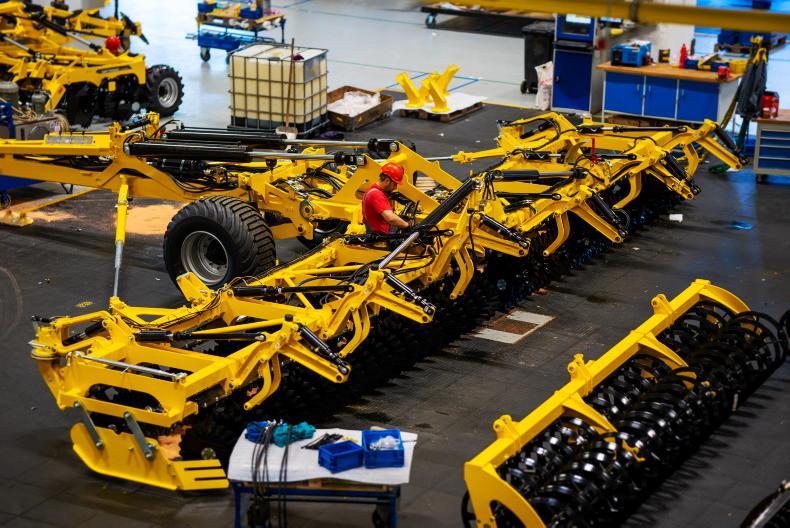
Bednar currently has 550 employees, 400 of whom are based in Czechia.
Further expansions followed in 2018, 2019 and 2020, with a new two-storey assembly hall enabling Bednar to produce even wider machines. By then, production and storage areas had increased to 30,492 m2. In 2022, Bednar celebrated its 25th anniversary.
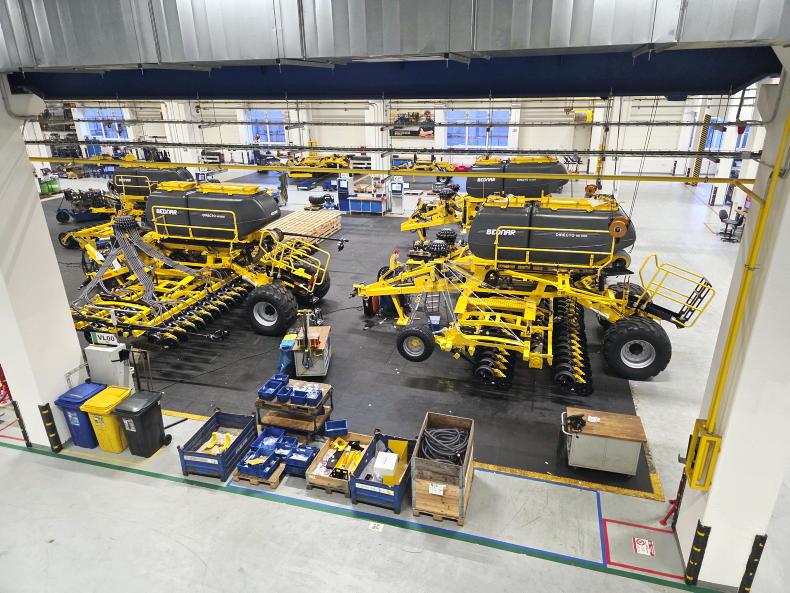
The factory is located 150km east of Prague. Similar to many modern lean manufacturing businesses, all equipment is built to order, meaning no kit is built for stock. The factory runs five days per week, running two shifts per day, one from 6am to 2pm, and again from 2pm to 8pm.
Bednar currently has 550 employees, 400 of whom are based in Czechia. The company claims to build in the region of 4,000 machines per year.
One very interesting thing with Bednar is that it doesn’t carry out any cutting, welding, machining or any steel fabrication in-house. All of this work is subbed out, to local businesses.
This is the first factory tour we have been on, where the manufacturer carries out zero fabrications of any sort.
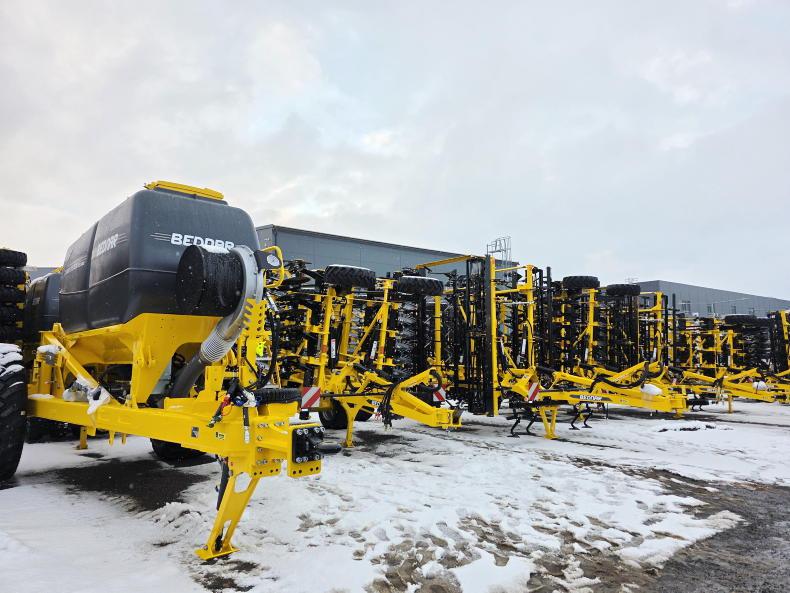
In conversation with Adrian Winnett, sales manager for the Irish and UK markets, he explained that Bednar sees itself as an expert in producing machines that carry out the job they are built to do.
Bednar says it prefers to leave fabrication of componentry to the specialists in their field.
With this, Bednar in fact shares suppliers with local firms who carry out a lot of fabrication for Skoda and the Czech-based Hyundai car plant.
Despite not doing any of the steel work, the entire machine design and testing process is carried out in-house, with Bednar saying that artificial intelligence (AI) plays a major role. It says a lot of designs and simulations are now carried out on computers, which makes for a huge saving on testing.
The manufacturing process
First up, is the goods intake. This warehouse is highly regulated and organised, with regular componentry testing on a daily basis. Each component is given a barcode, and placed on the shelf. From here, componentry is assembled into kits.
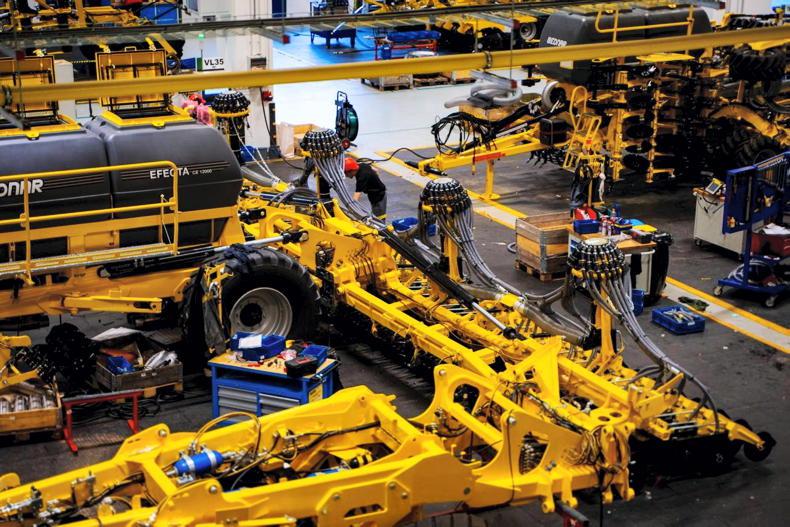
All components for each of the dedicated sub-assemblies are provided to the factory floor staff in kit form. These kits contain the exact number of components to form the associated sub-assembly. As all machines are built to order, specific kits are assembled for each machine in the corresponding sequence.
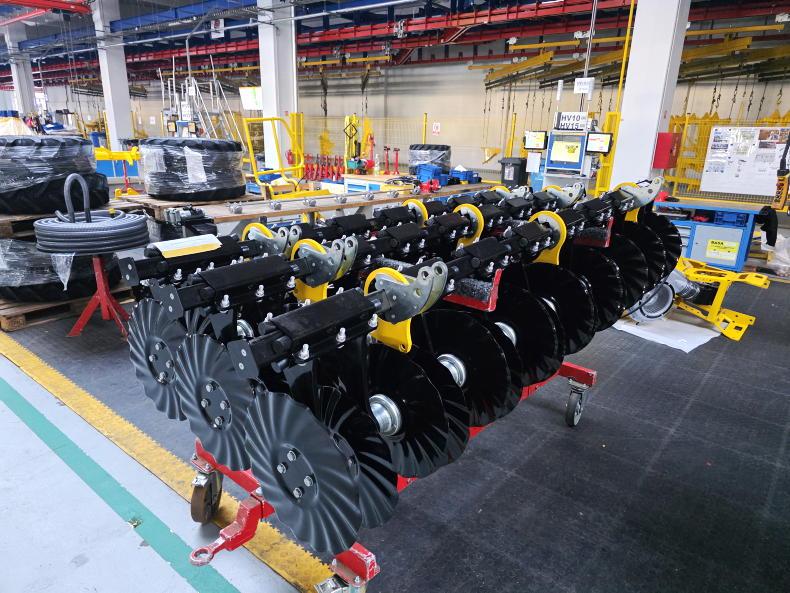
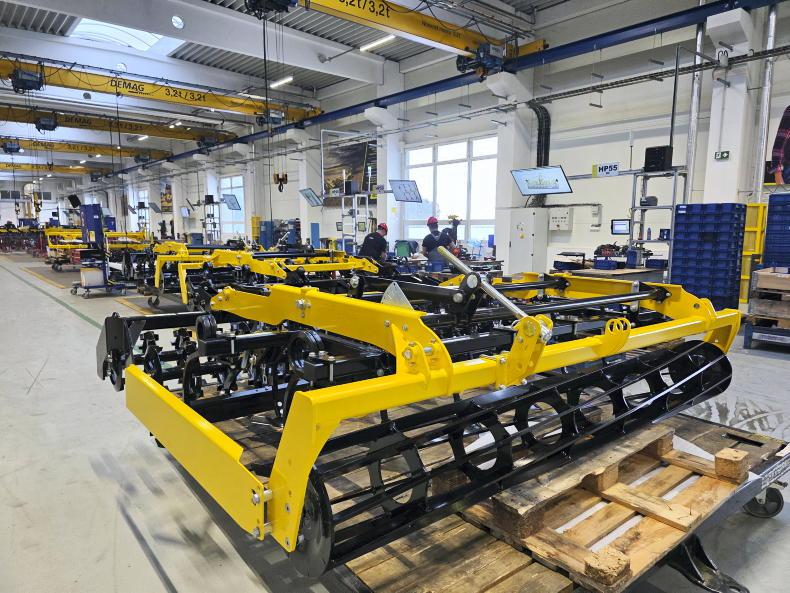
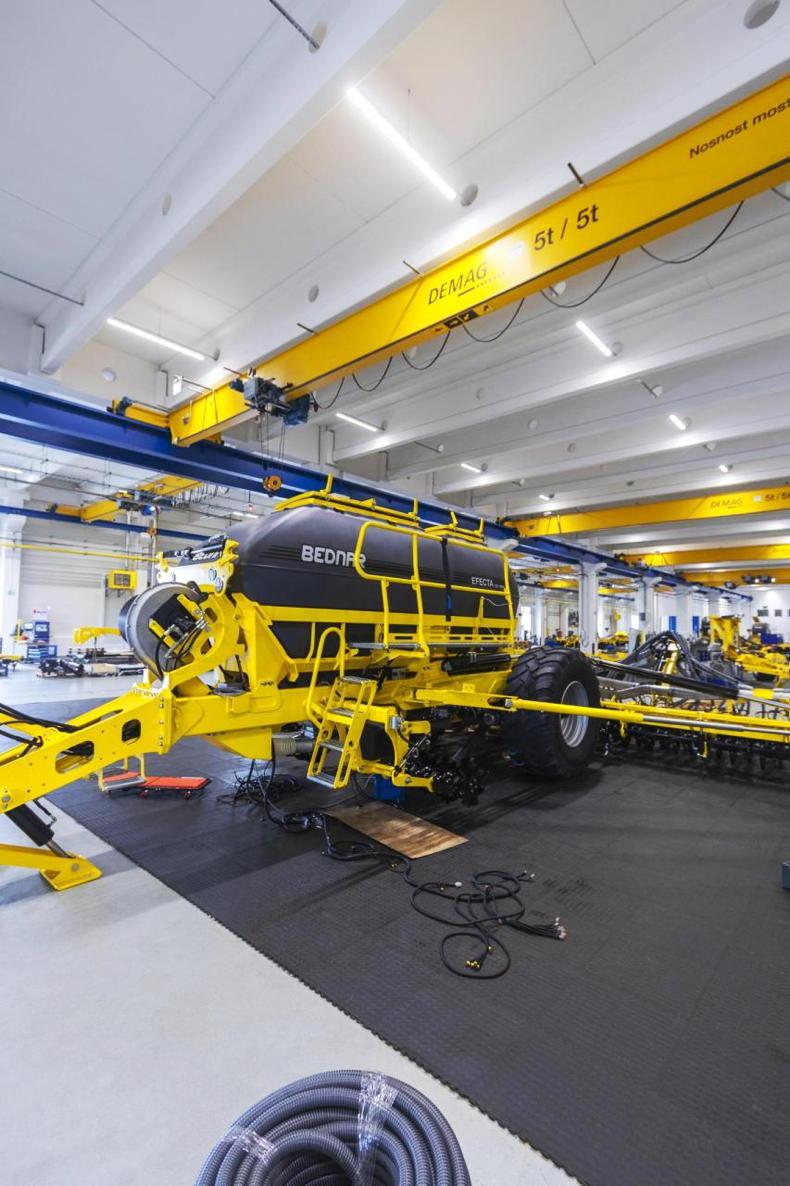
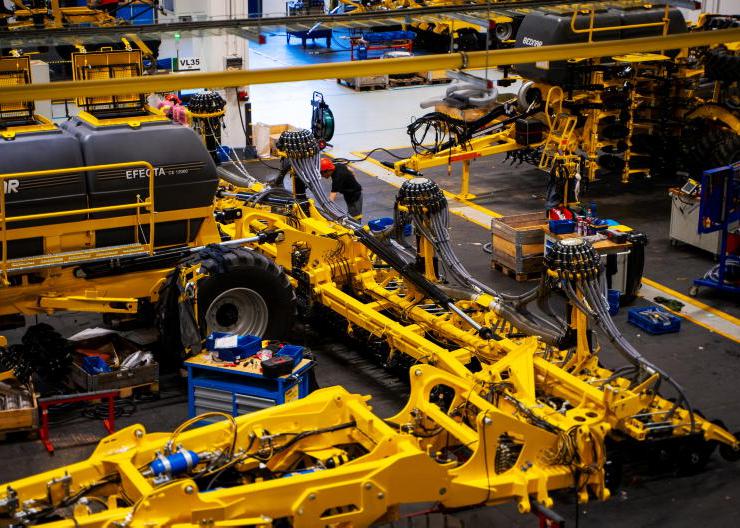
Bednar runs the sub-assembly upstairs on the second floor, with the three main assembly lines located on the ground floor. The firm has a fourth assembly line also, for times when demand ramps up. The process is comparable to a fish spine with the main assembly line being the backbone and the sub assembly areas feeding into the backbone.
Products
Bednar offers 57 different model lines of machines, with close to 200 models to choose from. Its current largest machine is a 18.4m cultivator.
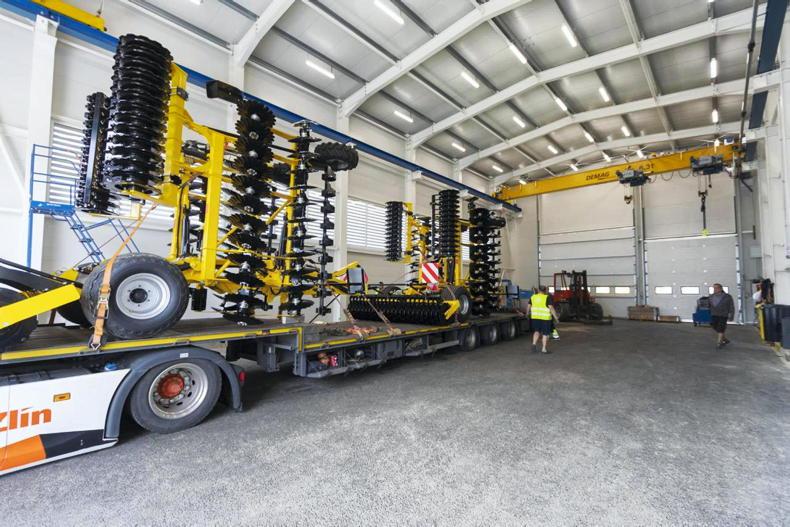
It claims to be the only European manufacturer to build attachments over 15m wide. Willing to stand over what it builds, the company offers a two-year warranty on all machines, on all components. In terms of parts, the firm says that if parts are ordered by 11am, next day delivery is available and that, within the factory, spare parts get priority over new machine builds.
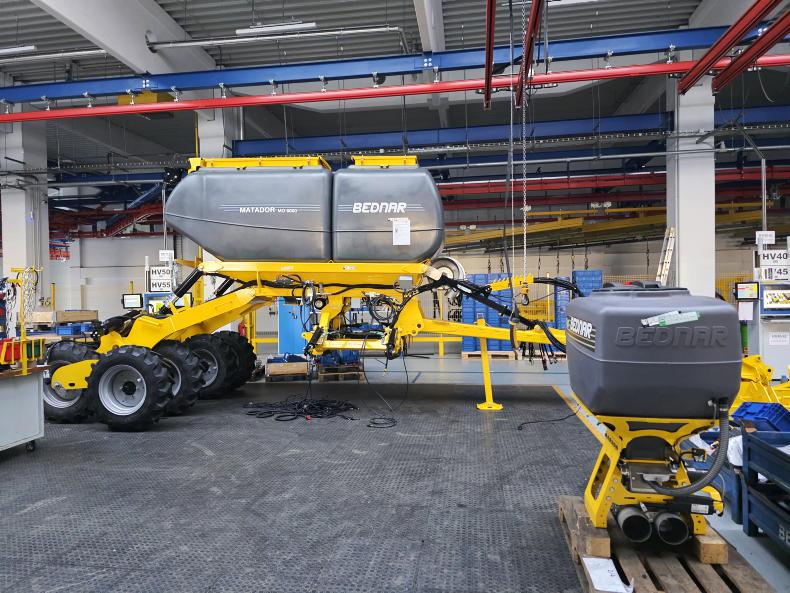
Bednar says that with its quality controls, every part on each machine it builds can be traced back to its original supplier. Every part carries a unique bar code. It even has data capture on its torque wrenches, which records who tightened and fitted each part and the torque they were tightened at. Numbers-wise, its most popular machine globally is the SwifterDisc disc harrow. Depending on the machine you are after, lead times vary from eight to 12 weeks.
Claiming to be an expert in cultivation and seeding, we asked Adrian why Bednar don’t build a plough.
He explained: “Based on feedback from our internal agronomists, the cost of conventional ploughing is too high when you consider the actual machine’s cost, time, fuel and wearing components.”
When asked about current trends in the European tillage equipment sales, Adrian responded: “More with less, fewer passes in the field mean lower costs, many Bednar machines are modular and they can be adapted to the market and political requirements.”
Before the war between Russia and Ukraine, Russia was Bednar’s largest market. Bednar stopped exporting to Russia shortly after the war began, and Ukraine took over as its number one market. Today, this is followed by Poland, Romania, Australia and its home market, the Czech Republic. Bednar is currently expanding across Europe, such as its present push into the Irish and UK markets. The firm also has its eyes peeled on the US and Canadian markets.
Bednar made its Irish debut at the FTMTA show in Punchestown in November 2024, and since then, has muscled its way into the marketplace.
It kicked off with the appointment of six dealers with eight branches, namely Farmworks Machinery (Dublin), Alan Douglas Farm Machinery (Kildare), Murphys Motors (Kilkenny), Kearney Bros (Cork), Mc&S Agrisales (Cork) and Quigleys Garage (Galway).
Speaking about the current dealer line-up and recent appointments, Adrian said the initial strategy was to appoint eight outlets in the main tillage areas in the Republic, with this in the main now being completed.
Acknowledging the fact Bednar has no representation in Northern Ireland, Adrian said his next step is to identify and to appoint two to three quality dealer partners within the main tillage areas of the North.
He added that the brand has hit the ground running in Ireland, with the company in its first year of trading (2025) having sold in excess of 50 machines.
Adrian went on to explain that the top selling machines in Ireland were the Terraland TN subsoiler, the SwifterDisc XN disc harrow, the Fenix FN tined cultivator and the Omega OO FL trailed seed drill.
He added that the Bednar equipment sold to date is working exceptionally well, with the build quality and spec especially suited to the market here.
Bednar offers 200 machine variations. Bednar employs 550 staff. It builds around 4,000 machines per annum. The company is family-owned. It was established in 1997. Ukraine is its largest market. Its widest working width machine is 24m. 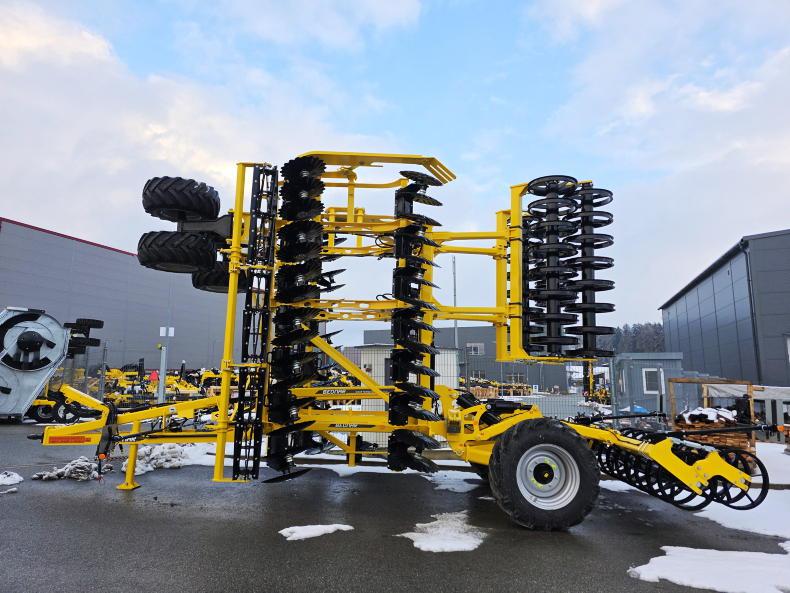
Located in the east of Czech Republic, close to the Polish border, Bednar FMT is a name relatively new to the Irish market, but a company that has made significant inroads into the European tillage machinery industry since its inception less than 30 years ago.
Established in 1997, Bednar has become one of the big players in the cultivation and seeding equipment industry across Europe.
The business was founded by Ladislav Bednar and some partners in 1997, and is today fully family-owned. Ladislav’s son Jan is the company sales director, while his other son Bednar is the production director.
With a sole focus on tillage equipment, its products include cultivators, seeders, inter-row cultivation, mulching, fertilisation and crop residue management.
The Bednar family also own Strom, the business which import and distribute John Deere equipment in the Czech Republic. The family have always been, and continue to be prominent tillage farmers, close to the factory.
In 1997, the Bednar family and its partners founded Strom Export sro. This was established as a trading company to export Czech-made farm machinery, functioning primarily as an intermediary company.
The following year, it began to build its own equipment, and shifted from an export agency to a manufacturer. This began with the Disk Profi cultivator. In 1999, it expanded its portfolio to include disc harrows. In 2003, the firm’s equipment changed from green to yellow.
The factory is located 150km east of Prague.
In 2006, it opened its own production plant, expanding its production and storage areas to 3,932m2. In 2008, the plant was extended, with another production hall. In 2010, it introduced the Terraland TN subsoiler and got involved in the development of new implements with wider working width.
In 2011 and 2012, the plant was further expanded, and a new powder coat paint station was incorporated. In 2013, Strom Export changed its name to Bednar FMT. In 2014 and 2015, the factory was reconstructed, assembly capacity increased and production and storage areas expanded to 15,126 m2.
Bednar currently has 550 employees, 400 of whom are based in Czechia.
Further expansions followed in 2018, 2019 and 2020, with a new two-storey assembly hall enabling Bednar to produce even wider machines. By then, production and storage areas had increased to 30,492 m2. In 2022, Bednar celebrated its 25th anniversary.
The factory is located 150km east of Prague. Similar to many modern lean manufacturing businesses, all equipment is built to order, meaning no kit is built for stock. The factory runs five days per week, running two shifts per day, one from 6am to 2pm, and again from 2pm to 8pm.
Bednar currently has 550 employees, 400 of whom are based in Czechia. The company claims to build in the region of 4,000 machines per year.
One very interesting thing with Bednar is that it doesn’t carry out any cutting, welding, machining or any steel fabrication in-house. All of this work is subbed out, to local businesses.
This is the first factory tour we have been on, where the manufacturer carries out zero fabrications of any sort.
In conversation with Adrian Winnett, sales manager for the Irish and UK markets, he explained that Bednar sees itself as an expert in producing machines that carry out the job they are built to do.
Bednar says it prefers to leave fabrication of componentry to the specialists in their field.
With this, Bednar in fact shares suppliers with local firms who carry out a lot of fabrication for Skoda and the Czech-based Hyundai car plant.
Despite not doing any of the steel work, the entire machine design and testing process is carried out in-house, with Bednar saying that artificial intelligence (AI) plays a major role. It says a lot of designs and simulations are now carried out on computers, which makes for a huge saving on testing.
The manufacturing process
First up, is the goods intake. This warehouse is highly regulated and organised, with regular componentry testing on a daily basis. Each component is given a barcode, and placed on the shelf. From here, componentry is assembled into kits.
All components for each of the dedicated sub-assemblies are provided to the factory floor staff in kit form. These kits contain the exact number of components to form the associated sub-assembly. As all machines are built to order, specific kits are assembled for each machine in the corresponding sequence.
Bednar runs the sub-assembly upstairs on the second floor, with the three main assembly lines located on the ground floor. The firm has a fourth assembly line also, for times when demand ramps up. The process is comparable to a fish spine with the main assembly line being the backbone and the sub assembly areas feeding into the backbone.
Products
Bednar offers 57 different model lines of machines, with close to 200 models to choose from. Its current largest machine is a 18.4m cultivator.
It claims to be the only European manufacturer to build attachments over 15m wide. Willing to stand over what it builds, the company offers a two-year warranty on all machines, on all components. In terms of parts, the firm says that if parts are ordered by 11am, next day delivery is available and that, within the factory, spare parts get priority over new machine builds.
Bednar says that with its quality controls, every part on each machine it builds can be traced back to its original supplier. Every part carries a unique bar code. It even has data capture on its torque wrenches, which records who tightened and fitted each part and the torque they were tightened at. Numbers-wise, its most popular machine globally is the SwifterDisc disc harrow. Depending on the machine you are after, lead times vary from eight to 12 weeks.
Claiming to be an expert in cultivation and seeding, we asked Adrian why Bednar don’t build a plough.
He explained: “Based on feedback from our internal agronomists, the cost of conventional ploughing is too high when you consider the actual machine’s cost, time, fuel and wearing components.”
When asked about current trends in the European tillage equipment sales, Adrian responded: “More with less, fewer passes in the field mean lower costs, many Bednar machines are modular and they can be adapted to the market and political requirements.”
Before the war between Russia and Ukraine, Russia was Bednar’s largest market. Bednar stopped exporting to Russia shortly after the war began, and Ukraine took over as its number one market. Today, this is followed by Poland, Romania, Australia and its home market, the Czech Republic. Bednar is currently expanding across Europe, such as its present push into the Irish and UK markets. The firm also has its eyes peeled on the US and Canadian markets.
Bednar made its Irish debut at the FTMTA show in Punchestown in November 2024, and since then, has muscled its way into the marketplace.
It kicked off with the appointment of six dealers with eight branches, namely Farmworks Machinery (Dublin), Alan Douglas Farm Machinery (Kildare), Murphys Motors (Kilkenny), Kearney Bros (Cork), Mc&S Agrisales (Cork) and Quigleys Garage (Galway).
Speaking about the current dealer line-up and recent appointments, Adrian said the initial strategy was to appoint eight outlets in the main tillage areas in the Republic, with this in the main now being completed.
Acknowledging the fact Bednar has no representation in Northern Ireland, Adrian said his next step is to identify and to appoint two to three quality dealer partners within the main tillage areas of the North.
He added that the brand has hit the ground running in Ireland, with the company in its first year of trading (2025) having sold in excess of 50 machines.
Adrian went on to explain that the top selling machines in Ireland were the Terraland TN subsoiler, the SwifterDisc XN disc harrow, the Fenix FN tined cultivator and the Omega OO FL trailed seed drill.
He added that the Bednar equipment sold to date is working exceptionally well, with the build quality and spec especially suited to the market here.
Bednar offers 200 machine variations. Bednar employs 550 staff. It builds around 4,000 machines per annum. The company is family-owned. It was established in 1997. Ukraine is its largest market. Its widest working width machine is 24m.





SHARING OPTIONS