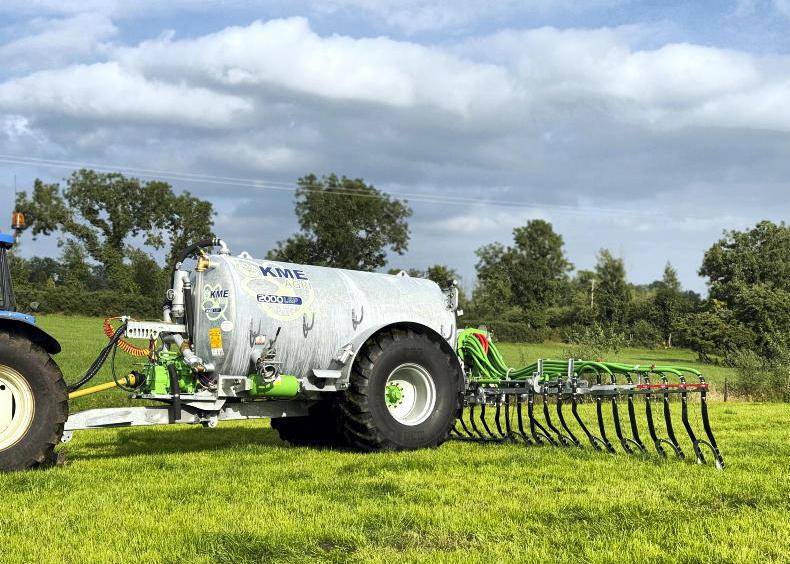
Slurry tankers have the potential to be complex machines, especially when a Low Emission Slurry Spreading (LESS) applicator is mounted to the rear of the vehicle.
As a result, the list of optional equipment to improve performance and operator experience has become pretty seemingly endless.
However, depending on budget, there are a number of options which we would class as important considerations before placing an order for a new slurry tanker and LESS applicator.
Some of the choices outlined within help from a practical perspective while others ease and improve the operator’s experience.
Depending on the manufacturer, the term ‘standard’ specification will vary. So, it is worth bearing this in mind when shopping around and to properly compare like for like.
Firstly, do a technical comparison, ie thickness of steel used, axles/brake size, are there internal baffles fitted or a stepped axle etc.
Secondly, when it comes to non-essential features, exactly what does each manufacturer deem to be the standard specification?
Considerations include features such as access hatches, sight tubes, work lights etc, many of which we outline below as worthwhile options.

A sight tube is a must in our eyes.
Simple but effective, a front sight tube is something we would consider as a must.
With trailing shoes and slurry injection systems especially, it can be very hard to distinguish when the tanker is nearing empty.
A sight tube is a useful add-on for both filling and spreading.
In the event that it is not standard, a sight tube will cost in the region of €700 plus VAT extra.

A side access hatch is definitely an option worth adding.
A stone trap is used for the collection of stones and should be positioned in such a way that stones pass over and fall into the trap where they remain until emptied.
Ideally the LESS applicator should have its own stone trap/sock.
However, an additional trap on the slurry tanker is worth having, especially where a Doda/Garda pump is fitted.
Stone traps should be emptied on a regular basis when a tanker is in operation. This will reduce the likeliness of large stones or debris entering the macerator and causing damage. A stone trap will general cost €600 plus VAT to have fitted.
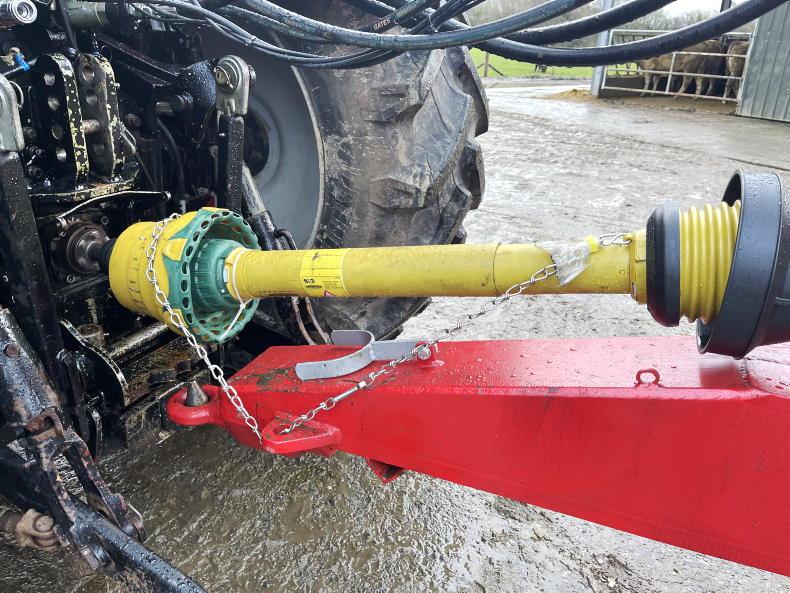
A wide angle shaft improves the flexibility of spreading and filling as thePTO can be left running at any angle.
A side-access hatch is another time saving add-on. Remember, dribble bars and trailing shoes occupy the rear door, which was once upon a time easily accessible in the era of the splash plate. Now, to access the inside of a slurry tanker where there is no side hatch fitted, means removing the rear applicator – not a straightforward procedure.
Overtime, silt will build up inside the tanker and will need to be removed one way or another, before it makes its way into the macerator unit and causes further issues.
A stone trap will help reduce debris and silt entering the unit but only if its frequently emptied out. A side access hatch is one of the easiest ways of gaining access to the barrel. Prices for a side hatch will typically cost €1,000 to €1,100 plus VAT extra.

Extra lights are a worthy investment if the tanker will spend a good bit of time on the public road.
A wide-angle shaft is one of those options that you won’t regret choosing. It will cost in the region of €600 plus VAT more than a standard shaft; a small percentage of the overall buying price of the tanker and LESS applicator.
Not only will it allow the PTO to be left engaged when cornering, but it will allow the tank to be filled at an angled position in tight or compact farmyards.

Depending on the farm and land type, wider tyres are definitely worth considering to reduce compaction on the shoulders of the year.
Functional and visible lights are critically important, especially as more farms become fragmented and time on the public road increases.
Most manufacturers offer an optional set of high-mounted road lights, which are up and out of harm’s way and serve as a backup if the lower set gets damaged.
Beacons/amber strobes and work lights are further lighting options worth considering both from a safety and operator comfort basis.
A rear-view camera might be yet another option to consider or potentially retrofitted at a later stage. Camera kits can be picked up for between €250 and €300.

Extra fill points are worth fitting as they leave for more options when it comes to filling.
Most farmer-spec slurry tankers between 1,600-gallon and 2,600-gallon will be fitted on 750mm (28.1) or 800mm (30.5) tyres.
Where possible, especially if fitted with a LESS system, our advice would be to opt for the 800mm option, which generally tend to offer higher load ratings.
The move from 750mm to 800mm tyres will cost between €1,800 and €2,200, plus VAT, which breaks down to a reasonably small amount over their working life, leaving aside the benefits to the soil.
Anything larger, such as 900mm tyres, can be a special order as the chassis and barrel may need to be modified to accommodate the additional width.
The move from 800mm tyres to 900mm will range between €1,500 and €2,000, plus VAT, for wheels alone.
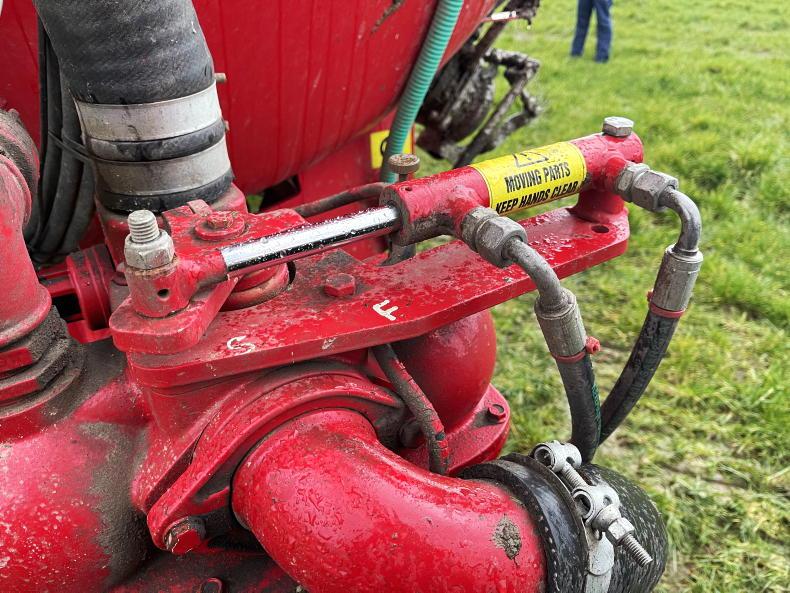
Hydraulic change is over becoming less popular given the number of hydraulic spools now required for dribble bars and trailing shoes.
Although additional fill points can be added any time once blank mounting points have been fitted, consider having them fitted in the factory.
With a LESS system on the back, man holes may not be as easily accessed as they were before, so our advice would be opt for three fill points (two rear and one side) and/or ensure additional blanking plates are left on the tanker for their installation at a later date.
Additional fill points tend to cost in the region of €250 plus VAT each.

When investing in a new slurry tanker, it may be a worthwhile investment to consider fitting some optional extras.
There are numerous other options worth considering, some may be more relevant than others, depending on what you consider important.
One of these is air brakes in the scenario that a 50km/h tractor is on farm or if you want to leave the tanker future proof. Although, air brakes can be retrofitted, it may be worth spending the additional €250-€300 on day one.
Another option is a swivel hitch, which is designed to allow the tanker to follow the tractor better and create less wear on the tractors hitch. Some customers, often contractors are opting to fit the ball and spoon-type hitches. Compared with traditional ring and hook type hitches, the ball and spoon eliminates shunting and offer up to 90% less wear.
The list goes on, but some other popular additions include a hydraulic drive vacuum pump (grant aided through TAMS), hydraulic changeover for switching between vacuum and spreading modes, a vacuum pump silencer, auto-fill arm, an inlet macerator or a weight transfer system.
Slurry tankers have the potential to be complex machines, especially when a Low Emission Slurry Spreading (LESS) applicator is mounted to the rear of the vehicle.
As a result, the list of optional equipment to improve performance and operator experience has become pretty seemingly endless.
However, depending on budget, there are a number of options which we would class as important considerations before placing an order for a new slurry tanker and LESS applicator.
Some of the choices outlined within help from a practical perspective while others ease and improve the operator’s experience.
Depending on the manufacturer, the term ‘standard’ specification will vary. So, it is worth bearing this in mind when shopping around and to properly compare like for like.
Firstly, do a technical comparison, ie thickness of steel used, axles/brake size, are there internal baffles fitted or a stepped axle etc.
Secondly, when it comes to non-essential features, exactly what does each manufacturer deem to be the standard specification?
Considerations include features such as access hatches, sight tubes, work lights etc, many of which we outline below as worthwhile options.
A sight tube is a must in our eyes.
Simple but effective, a front sight tube is something we would consider as a must.
With trailing shoes and slurry injection systems especially, it can be very hard to distinguish when the tanker is nearing empty.
A sight tube is a useful add-on for both filling and spreading.
In the event that it is not standard, a sight tube will cost in the region of €700 plus VAT extra.
A side access hatch is definitely an option worth adding.
A stone trap is used for the collection of stones and should be positioned in such a way that stones pass over and fall into the trap where they remain until emptied.
Ideally the LESS applicator should have its own stone trap/sock.
However, an additional trap on the slurry tanker is worth having, especially where a Doda/Garda pump is fitted.
Stone traps should be emptied on a regular basis when a tanker is in operation. This will reduce the likeliness of large stones or debris entering the macerator and causing damage. A stone trap will general cost €600 plus VAT to have fitted.
A wide angle shaft improves the flexibility of spreading and filling as thePTO can be left running at any angle.
A side-access hatch is another time saving add-on. Remember, dribble bars and trailing shoes occupy the rear door, which was once upon a time easily accessible in the era of the splash plate. Now, to access the inside of a slurry tanker where there is no side hatch fitted, means removing the rear applicator – not a straightforward procedure.
Overtime, silt will build up inside the tanker and will need to be removed one way or another, before it makes its way into the macerator unit and causes further issues.
A stone trap will help reduce debris and silt entering the unit but only if its frequently emptied out. A side access hatch is one of the easiest ways of gaining access to the barrel. Prices for a side hatch will typically cost €1,000 to €1,100 plus VAT extra.
Extra lights are a worthy investment if the tanker will spend a good bit of time on the public road.
A wide-angle shaft is one of those options that you won’t regret choosing. It will cost in the region of €600 plus VAT more than a standard shaft; a small percentage of the overall buying price of the tanker and LESS applicator.
Not only will it allow the PTO to be left engaged when cornering, but it will allow the tank to be filled at an angled position in tight or compact farmyards.
Depending on the farm and land type, wider tyres are definitely worth considering to reduce compaction on the shoulders of the year.
Functional and visible lights are critically important, especially as more farms become fragmented and time on the public road increases.
Most manufacturers offer an optional set of high-mounted road lights, which are up and out of harm’s way and serve as a backup if the lower set gets damaged.
Beacons/amber strobes and work lights are further lighting options worth considering both from a safety and operator comfort basis.
A rear-view camera might be yet another option to consider or potentially retrofitted at a later stage. Camera kits can be picked up for between €250 and €300.
Extra fill points are worth fitting as they leave for more options when it comes to filling.
Most farmer-spec slurry tankers between 1,600-gallon and 2,600-gallon will be fitted on 750mm (28.1) or 800mm (30.5) tyres.
Where possible, especially if fitted with a LESS system, our advice would be to opt for the 800mm option, which generally tend to offer higher load ratings.
The move from 750mm to 800mm tyres will cost between €1,800 and €2,200, plus VAT, which breaks down to a reasonably small amount over their working life, leaving aside the benefits to the soil.
Anything larger, such as 900mm tyres, can be a special order as the chassis and barrel may need to be modified to accommodate the additional width.
The move from 800mm tyres to 900mm will range between €1,500 and €2,000, plus VAT, for wheels alone.
Hydraulic change is over becoming less popular given the number of hydraulic spools now required for dribble bars and trailing shoes.
Although additional fill points can be added any time once blank mounting points have been fitted, consider having them fitted in the factory.
With a LESS system on the back, man holes may not be as easily accessed as they were before, so our advice would be opt for three fill points (two rear and one side) and/or ensure additional blanking plates are left on the tanker for their installation at a later date.
Additional fill points tend to cost in the region of €250 plus VAT each.
When investing in a new slurry tanker, it may be a worthwhile investment to consider fitting some optional extras.
There are numerous other options worth considering, some may be more relevant than others, depending on what you consider important.
One of these is air brakes in the scenario that a 50km/h tractor is on farm or if you want to leave the tanker future proof. Although, air brakes can be retrofitted, it may be worth spending the additional €250-€300 on day one.
Another option is a swivel hitch, which is designed to allow the tanker to follow the tractor better and create less wear on the tractors hitch. Some customers, often contractors are opting to fit the ball and spoon-type hitches. Compared with traditional ring and hook type hitches, the ball and spoon eliminates shunting and offer up to 90% less wear.
The list goes on, but some other popular additions include a hydraulic drive vacuum pump (grant aided through TAMS), hydraulic changeover for switching between vacuum and spreading modes, a vacuum pump silencer, auto-fill arm, an inlet macerator or a weight transfer system.







SHARING OPTIONS