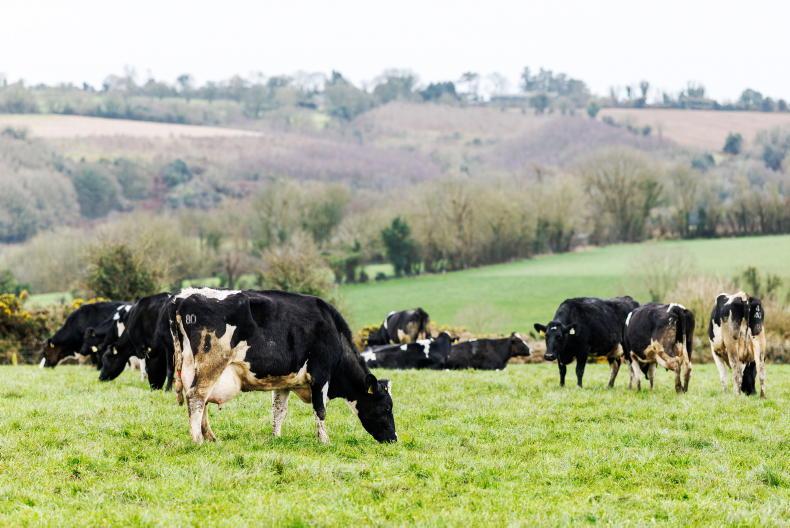
No more than 18% of your dairy herd should be made up of replacements, unless you are expanding, Doreen Corridan said at an Irish Feed and Grain (IGFA) conference last Thursday.
It is mature cows that will drive production and “belt out” milk solids, she said, with heifers producing 22% less milk than third-lactation cows.
“If you look at a lot of herds, and you look at their co-op report, if the fat and protein kilos are low, the first thing I look at is the breakdown of the herd.
ADVERTISEMENT
“If there are too many first calvers in any herd, they will not end up with a high overall production. It’s the mature cows that drive production. The difference between the herd that’s producing and a herd that’s not producing is the genetics and the maturity of the herd,” she said.
Corridan added that 60% of the herd should be third lactation-plus cows. Mature cows are also better able to breed a better beef calf, she added.
Register for free to read this story and our free stories.
This content is available to digital subscribers and loyalty code users only. Sign in to your account, use the code or subscribe to get unlimited access.
The reader loyalty code gives you full access to the site from when you enter it until the following Wednesday at 9pm. Find your unique code on the back page of Irish Country Living every week.
CODE ACCEPTED
You have full access to the site until next Wednesday at 9pm.
CODE NOT VALID
Please try again or contact support.
No more than 18% of your dairy herd should be made up of replacements, unless you are expanding, Doreen Corridan said at an Irish Feed and Grain (IGFA) conference last Thursday.
It is mature cows that will drive production and “belt out” milk solids, she said, with heifers producing 22% less milk than third-lactation cows.
“If you look at a lot of herds, and you look at their co-op report, if the fat and protein kilos are low, the first thing I look at is the breakdown of the herd.
“If there are too many first calvers in any herd, they will not end up with a high overall production. It’s the mature cows that drive production. The difference between the herd that’s producing and a herd that’s not producing is the genetics and the maturity of the herd,” she said.
Corridan added that 60% of the herd should be third lactation-plus cows. Mature cows are also better able to breed a better beef calf, she added.
If you would like to speak to a member of our team, please call us on 01-4199525.
Link sent to your email address
We have sent an email to your address. Please click on the link in this email to reset your password. If you can't find it in your inbox, please check your spam folder. If you can't find the email, please call us on 01-4199525.
ENTER YOUR LOYALTY CODE:
The reader loyalty code gives you full access to the site from when you enter it until the following Wednesday at 9pm. Find your unique code on the back page of Irish Country Living every week.






SHARING OPTIONS