


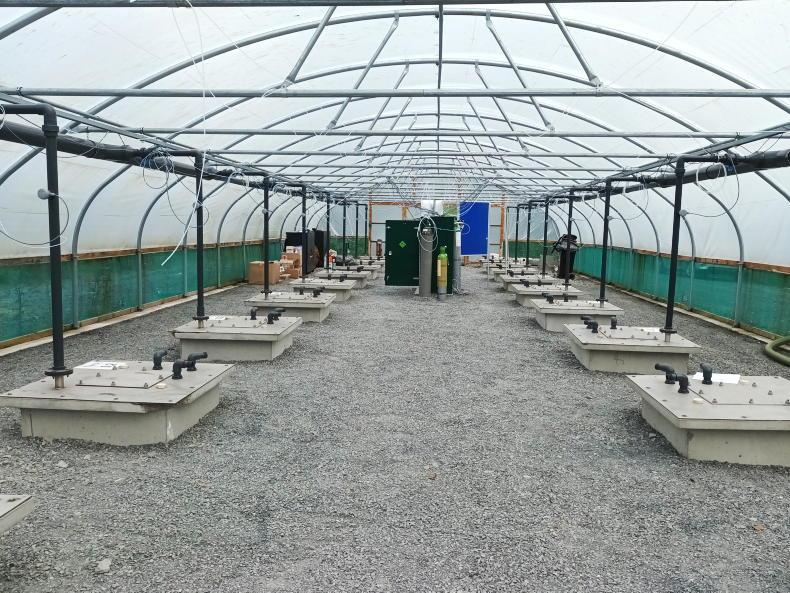
Emissions of both ammonia and methane were reduced significantly when acid was added to stored slurry as part of a new NI-based study.
The research, conducted in a slurry storage emissions facility at the Agri Food and Biosciences Institute (AFBI) in Hillsborough, Co Down, was undertaken by researchers from AFBI and Queen’s University Belfast. The results have been published in a scientific paper in the Journal of Cleaner Production.
The study investigated emissions from storage tanks which contained cattle slurry, anaerobic digestate, and the liquid fraction of digestate which had been mechanically separated.
When compared to cattle slurry, ammonia emissions were 47% higher in the anaerobic digestate tank and 112% higher with liquid digestate.
Ammonia is a key environmental issue in NI agriculture, as the gas can impact sensitive habitats, such as bogs and woodlands, when it is deposited as nitrogen.
The study also looked at emissions of methane, which is a greenhouse gas that contributes to global warming.
However, it found that, when compared to cattle slurry, methane emissions from digestate and liquid digestate were 44% and 47% lower respectively.
“Anaerobic digestion and separation can reduce methane emissions but exacerbate ammonia losses if not combined with appropriate mitigation strategies,” the research paper reads.
Acidification
One such strategy that the scientists looked at was to add sulphuric acid to the tanks to lower the pH of the slurry and digestates.
Whilst the initial pH levels ranged from 7.8 to 8.6, the aim was to lower the pH of the slurries to around 5.5.
The lead author in the study, Dr Khagendra Raj Baral, said acidification led to “dramatic reductions” in both ammonia and methane emissions.
With the cattle slurry, acidification saw ammonia levels drop by 59% and methane by 84%. Similarly, digestate saw reductions of 54% and 92% for ammonia and methane respectively.
When the liquid fraction of digestate was treated with sulphuric acid, ammonia fell by 67% and methane by 86%.
“Acidification proved to be an effective approach for reducing both ammonia and methane emissions, offering a promising pathway for reducing environmental impacts of slurry management and achieving air quality and climate targets,” the paper reads.




SHARING OPTIONS