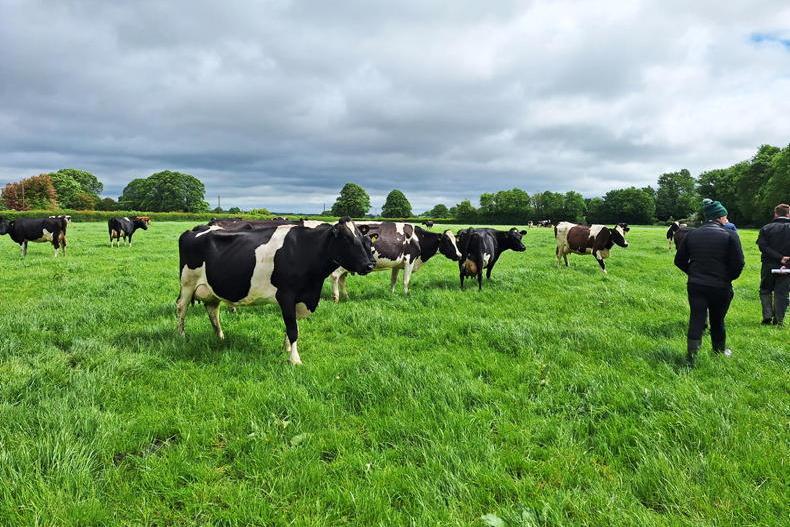
While grazing is off the minds of many with the recent wet weather, days are getting longer and we should soon see cattle and sheep out at grass.
Getting an early grazing into paddocks is essential for a multitude of reasons.
Firstly, as we all know, grass is the cheapest form of feed that we have available to us.
While growth over the winter hasn’t been exceptional, there is still some good covers on farms that, once weather and ground conditions allow, will be ideal for the first few grazings at cover of 700-800kg DM/ha.
Secondly, we need to set up the grazing rotation for later on in the season.
Getting out too late to grass can often lead to excess supplies and difficulty in managing swards in the
second round.
Grass is also what I would call a dormant plant over the winter.
While it does some growing, it almost needs a ‘shock’ from grazing to get it kicked I to a higher growth
gear.
What many farmers find is that the first paddocks grazed in the rotation are often at similar covers as the last paddocks in the rotation, despite only growing for four to six weeks.
All of this is unachievable without a) weather and b) the correct infrastructure to allow us to utilise and manage grass.
While you may be in the throngs of calving now, it’s important that these simple checks are completed in order to get stock back out to grass once the weather allows.
Fallen trees due to storm damage over the past week may have led to permanent fencing to be knocked down, damaged or simply earthing electric. Simple things such as broken insulators can cause wires to earth off fencing posts and can severely impact the voltage of fencing.
Having a good boundary fence with between 5,000-10,000 kV will ensure that stock wait within the farm boundaries and allow you to hook temporary reels on to further subdivide paddocks, an essential task when using on-off grazing at the shoulders of the year.
Reels and temporary posts
Do you have sufficient reels and posts in the yard ahead of the grazing season?
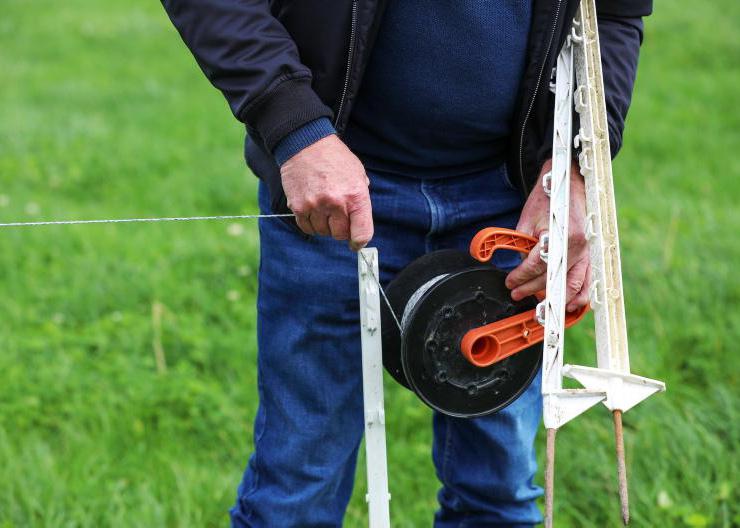
The number of reels required will depend on the number of stock groups on the farm and how well subdivided the grazing platform is with permanent fencing.
As a rule of thumb, you should have three to five reels minimum with good quality poly wire or tape on these.
Having a greater number of reels can be particularly useful to allow you to set up the farm for a number of days grazing in one go (such as going for a weekend away).
Temporary posts invariably require a top up in supplies each year due to the amount that are broken or missing.
Pigtail posts, with their plastic insulating tubing at the top, can perish and crack, leading to the wire earthing off the steel post.
A cheap and simple fix for this is to leave the perished covering intact and cover over with plastic garden hosing.
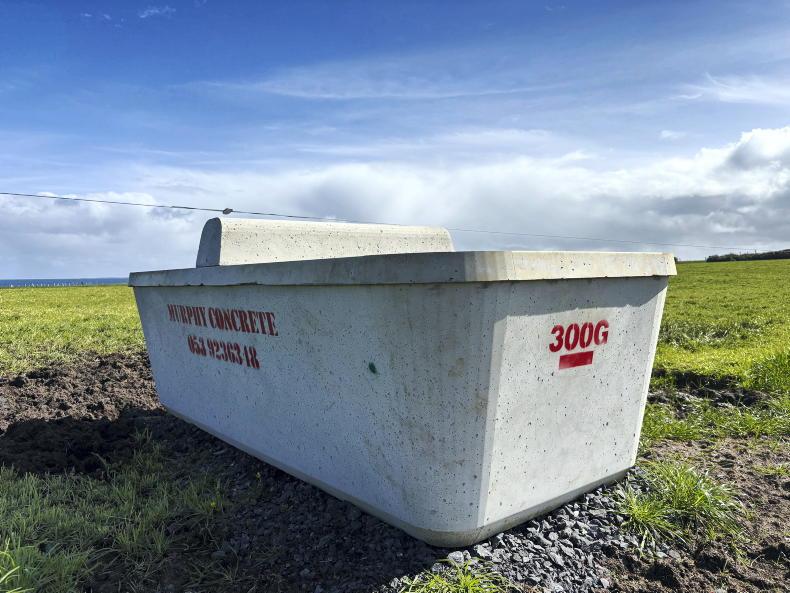
Water troughs should be checked to ensure that they are filling correctly without leak, with all troughs thoroughly cleaned out after the winter period.
Water supply can be a larger project than the two mentioned above, and where significant infrastructure investment such as pipe laying and installation of new water troughs is required it may be necessary to hold off until field conditions allow machinery access.
In the short term, its important to check existing water infrastructure. Frost damage may have occurred to fitting, particularly old-style brass ones, or in concrete drinkers that were left full over the recent freezing conditions.
Where damage has occurred, there may be a need for an immediate replacement.
Ballcocks on water troughs should also be checked; firstly, to ensure that they are not causing an overflow of water and secondly that they are releasing water into the trough at the correct speed.
A build-up of lime, iron or dirt in the valves may be impeding flow, so these should be checked where there is an issue.
Where these are found to be clear and working freely, there may be an underlying issue.
For farmers operating on a well and pump system, the pump may be of too low a horsepower to sufficiently drive water to the drinker.
Narrow diameter pipes (1/2‘’ or 1/4’’) may not have sufficient bore to meet the water demands and may need replacement with wider diameter (1’’ or greater).
Similar to the valves in ballcocks, iron deposits can collect in water pipes and impede flow.
Leaks along the water pipe through damage or leaking fittings can also be the culprit of poor water flow and can contribute significantly to water or electricity charges and should be fixed promptly.
A final simple check should be that all water troughs are cleaned out fully before grazing animals enter the paddock.
While grazing is off the minds of many with the recent wet weather, days are getting longer and we should soon see cattle and sheep out at grass.
Getting an early grazing into paddocks is essential for a multitude of reasons.
Firstly, as we all know, grass is the cheapest form of feed that we have available to us.
While growth over the winter hasn’t been exceptional, there is still some good covers on farms that, once weather and ground conditions allow, will be ideal for the first few grazings at cover of 700-800kg DM/ha.
Secondly, we need to set up the grazing rotation for later on in the season.
Getting out too late to grass can often lead to excess supplies and difficulty in managing swards in the
second round.
Grass is also what I would call a dormant plant over the winter.
While it does some growing, it almost needs a ‘shock’ from grazing to get it kicked I to a higher growth
gear.
What many farmers find is that the first paddocks grazed in the rotation are often at similar covers as the last paddocks in the rotation, despite only growing for four to six weeks.
All of this is unachievable without a) weather and b) the correct infrastructure to allow us to utilise and manage grass.
While you may be in the throngs of calving now, it’s important that these simple checks are completed in order to get stock back out to grass once the weather allows.
Fallen trees due to storm damage over the past week may have led to permanent fencing to be knocked down, damaged or simply earthing electric. Simple things such as broken insulators can cause wires to earth off fencing posts and can severely impact the voltage of fencing.
Having a good boundary fence with between 5,000-10,000 kV will ensure that stock wait within the farm boundaries and allow you to hook temporary reels on to further subdivide paddocks, an essential task when using on-off grazing at the shoulders of the year.
Reels and temporary posts
Do you have sufficient reels and posts in the yard ahead of the grazing season?
The number of reels required will depend on the number of stock groups on the farm and how well subdivided the grazing platform is with permanent fencing.
As a rule of thumb, you should have three to five reels minimum with good quality poly wire or tape on these.
Having a greater number of reels can be particularly useful to allow you to set up the farm for a number of days grazing in one go (such as going for a weekend away).
Temporary posts invariably require a top up in supplies each year due to the amount that are broken or missing.
Pigtail posts, with their plastic insulating tubing at the top, can perish and crack, leading to the wire earthing off the steel post.
A cheap and simple fix for this is to leave the perished covering intact and cover over with plastic garden hosing.
Water troughs should be checked to ensure that they are filling correctly without leak, with all troughs thoroughly cleaned out after the winter period.
Water supply can be a larger project than the two mentioned above, and where significant infrastructure investment such as pipe laying and installation of new water troughs is required it may be necessary to hold off until field conditions allow machinery access.
In the short term, its important to check existing water infrastructure. Frost damage may have occurred to fitting, particularly old-style brass ones, or in concrete drinkers that were left full over the recent freezing conditions.
Where damage has occurred, there may be a need for an immediate replacement.
Ballcocks on water troughs should also be checked; firstly, to ensure that they are not causing an overflow of water and secondly that they are releasing water into the trough at the correct speed.
A build-up of lime, iron or dirt in the valves may be impeding flow, so these should be checked where there is an issue.
Where these are found to be clear and working freely, there may be an underlying issue.
For farmers operating on a well and pump system, the pump may be of too low a horsepower to sufficiently drive water to the drinker.
Narrow diameter pipes (1/2‘’ or 1/4’’) may not have sufficient bore to meet the water demands and may need replacement with wider diameter (1’’ or greater).
Similar to the valves in ballcocks, iron deposits can collect in water pipes and impede flow.
Leaks along the water pipe through damage or leaking fittings can also be the culprit of poor water flow and can contribute significantly to water or electricity charges and should be fixed promptly.
A final simple check should be that all water troughs are cleaned out fully before grazing animals enter the paddock.






SHARING OPTIONS