There are numerous benefits of getting cattle turned out to grass early.
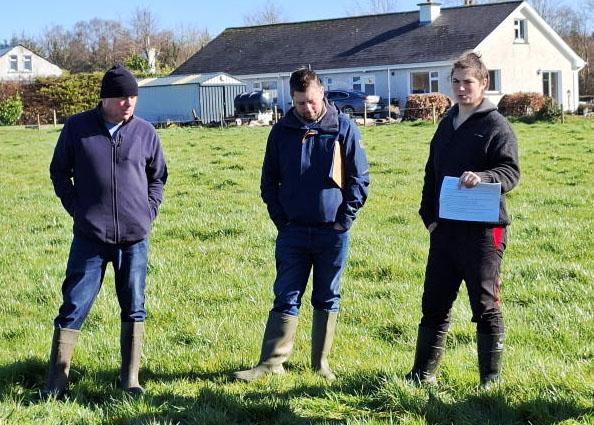
The potential for increased performance and a reduction in costs were two major advantages highlighted at last week’s early spring grass workshop held by the Teagasc Roscommon/Longford area management unit on the farm of Padraig and Cathy Gerety, Derrylough, Kenagh, Co Longford.
Discussions were led by local Teagasc advisor Donal McCabe and centred on preparing for turnout, grazing in difficult conditions, early nitrogen and slurry application and grazing infrastructure.
Donal highlighted that on many farms, and particularly those contending with average- or lower-quality silage, typical performance in weanlings or store cattle is often in the region of 0.4kg to 0.5kg daily liveweight gain (DLWG).
This is dependent in many cases on concentrate supplementation which is a significant cost to the system.
Donal outlined how turning such animals outdoors early can support a near doubling in weight gain to upwards of 0.8kg to 0.9kg DLWG.
There is a fear on many farms of turning out cattle early due to possible sward damage.
However, Donal explained that there is scope on most farms to either target early grazing on drier sections of the farm or to get even a cohort of lighter weanlings turned outdoors.
The increase in weight gain will not be immediate but once animals get acclimatised to an outdoor environment they will thrive much better and be in a position to really capitalise when grass growth improves compared to animals turned out at a later
stage.
Where there are no weanlings or yearlings on the farm, then targeting grazing groups, such as maiden or first calving heifers, that will benefit from grass, will deliver a significant reward in terms of reproductive performance.
From a grass productivity point of view getting heavier covers grazed off at this stage of the year will improve the responsiveness of the sward to applied nutrients, kick-start growth and improve sward quality in the subsequent grazing.
Turnout has been delayed this year on drier farms and as such there is a risk of not hitting grazing targets which will hit recovery and regrazing timelines.
Donal advised farmers to regularly walk the farm to gauge how dry soils are and the volume of grass present.
As days get longer there will be much better drying and often the possibility to get cattle to grass much quicker than anticipated.
Donal also advised that current grazing targets may have to be tweaked to bring the farm back on target.
The target on drier farms is to have 30% of the farm grazed by 1 March and 60% of the farm grazed by 17 March. The first target has been missed on most farms with the second also doubtful for many.
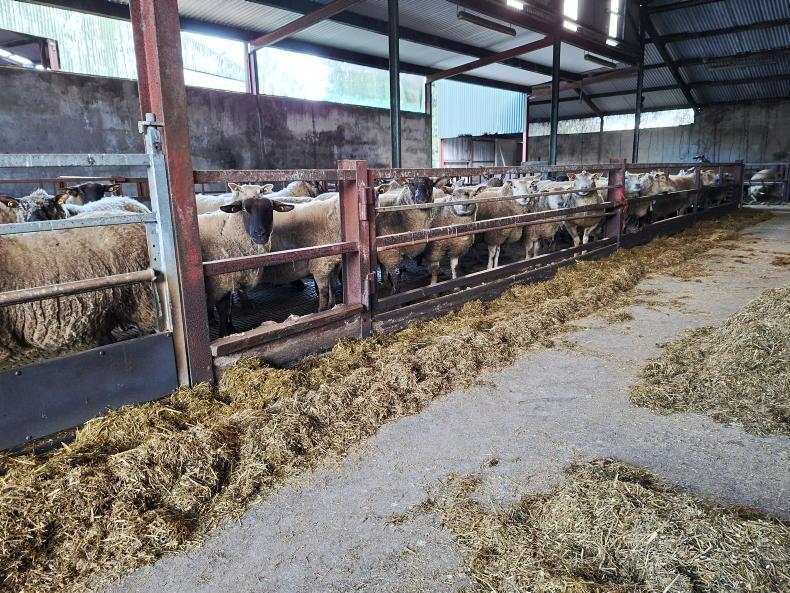
Lambing started this week with ewes and lambs turned outdoors as soon as possible.
As such Donal says that farmers should be in a position to turn cattle outdoors at the earliest opportunity. He cautioned however not to be tempted to open the doors of the shed and let out all cattle at once.
He said: “There’s no point is letting out too many cattle and running out of grass the end of March.”
Instead the advice is where possible to measure the volume of grass present and match demand to what grass is available.
"Predicted growth rates also need to be taken in to account while carefully watching what growth rates are like over the next number of weeks make sure paddocks that’s grazed early have an adequate recovery period to have them available for grazing in the second rotation.
Getting nutrients applied to swards is also critical to boost growth rates. Slurry tanks are full to capacity on many holdings with many farmers keeping tanks at bay by spreading an odd load here and there.
The advice once ground is trafficable is to get slurry applied to bare swards. Cattle slurry applied in spring at 6% dry matter will generally supply nine units of nitrogen, five units of phosphorus and 32 units of potassium per 1,000 gallons applied.
Nutrient loss of nitrogen will be minimised where slurry is applied using low emission slurry spreading (LESS) equipment. The advised application rate on grazing ground was 1,500 to 2,000 gallons slurry/acre.
Where there is a cover of grass present then it is better to graze this area off first before applying slurry or to apply chemical fertiliser so that grazing will not be delayed.
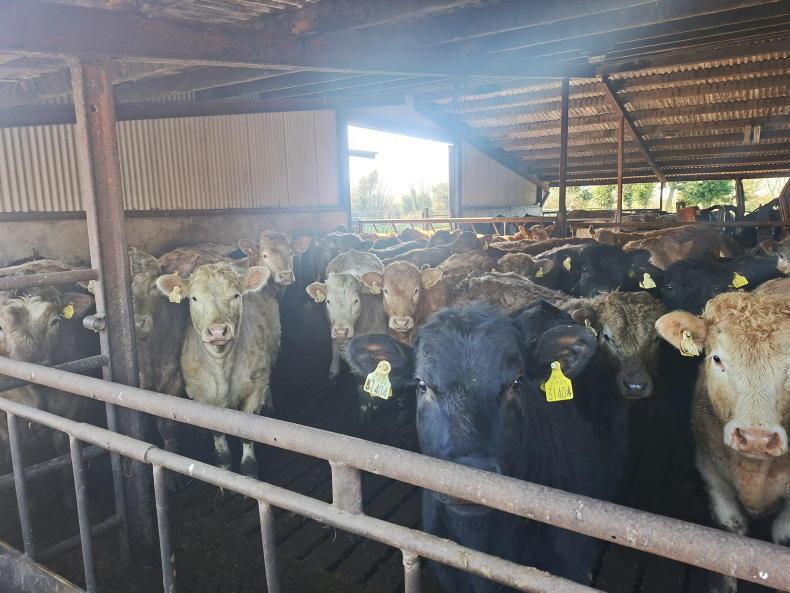
Yearling cattle are being turned out to grass this week.
There was much debate at the event regarding the merits of applying a half a bag or a full bag of protected urea/acre in the first application.
The consensus was to apply 20 to 25 units as soon as possible but if the application date is delayed for an overly long period of time then the application rate may need to be reconsidered.
Padraig and Cathy Gerety run a mixed enterprise of 60 suckler cows bringing followers through to store stage and a flock of 130 mid-season lambing ewes. The farm comprises all grass set out in paddocks which allow for multiple sub-divisions.
It is a mixture of relatively dry ground and heavier soils with Padraig commenting that areas are verging on peaty in nature with a sizeable bog adjacent to the farm.
Currently on farm all cattle and sheep are housed.
Lambing started this week with calving also set to ramp up. Traditionally all progeny were brought through to beef but in recent years there has been a switch to selling stores at 18 to 24 months of age.
All replacements are bred on farm with the use of 100% artificial insemination providing the opportunity to match cow type with particular sires.
There are numerous key performance indicators being satisfied with replacement heifers calving down at 24 months or age.
These are managed as a priority group on the farm and are run as a separate batch.
Padraig explains that this allows him to target preferential treatment to this group and ensure heifers have every chance of quick resumption of cyclic behaviour and maintaining a tight calving interval.
There is typically three cattle grazing groups – the batch of first calvers as already mentioned, the main batch of cows and calves and yearlings.
No cattle had been turned out to grass as of last week but with a brighter outlook in weather the aim is to start to turn yearlings outdoors this week followed by first calvers and priority cows and calves.

There was good interest in the workshop with farmers keen to improve grazing infrastructure.
The farm is in a good position with an average opening cover of 1,200kg DM/ha to 1,400kg DM. Padraig comments that despite the inclement weather he is not that far off turnout dates achieved in recent years with mid-March typically the timeframe before any significant numbers can be turned outdoors.
He is not as exposed as some cattle-only farms may be as sheep remained outdoors until Christmas and as such there is some paddocks with a lower grass cover which will balance grass supplies heading in to the second grazing rotation.
Demand will jump pretty quickly with ewes and lambs being turned outdoors and the target will be to manage grass and graze paddocks of varying grass heights to ensure sufficient grass is coming back on stream. There is typically two to three sheep grazing groups and these are run largely independent to cattle.
While Padraig would like to be able to capitalise more on mixed grazing he is still reaping the rewards of rotational grazing.
This is possible due to excellent grazing infrastructure with the farm paddocks and roadways set up akin to a dairy farm.
A central roadway splits the farm and with drinking troughs strategically placed there is scope to quickly introduce multiple subdivisions.
This is utilised in spring and during peak growth with splitting of larger areas allowing targeting grazing and faster recovery. It also minimises the risk of poaching over larger areas.
Donal advised farmers that square paddocks allow for easier subdivisions and reduced poaching risk.
The placing of water troughs is also critical.
Situating troughs in the centre of a field for example rather than on a perimeter will allow much more flexibility, both in spring and right across the year.

The farm has experimented with growing clover to good effect.
There are numerous benefits of getting cattle turned out to grass early.
The potential for increased performance and a reduction in costs were two major advantages highlighted at last week’s early spring grass workshop held by the Teagasc Roscommon/Longford area management unit on the farm of Padraig and Cathy Gerety, Derrylough, Kenagh, Co Longford.
Discussions were led by local Teagasc advisor Donal McCabe and centred on preparing for turnout, grazing in difficult conditions, early nitrogen and slurry application and grazing infrastructure.
Donal highlighted that on many farms, and particularly those contending with average- or lower-quality silage, typical performance in weanlings or store cattle is often in the region of 0.4kg to 0.5kg daily liveweight gain (DLWG).
This is dependent in many cases on concentrate supplementation which is a significant cost to the system.
Donal outlined how turning such animals outdoors early can support a near doubling in weight gain to upwards of 0.8kg to 0.9kg DLWG.
There is a fear on many farms of turning out cattle early due to possible sward damage.
However, Donal explained that there is scope on most farms to either target early grazing on drier sections of the farm or to get even a cohort of lighter weanlings turned outdoors.
The increase in weight gain will not be immediate but once animals get acclimatised to an outdoor environment they will thrive much better and be in a position to really capitalise when grass growth improves compared to animals turned out at a later
stage.
Where there are no weanlings or yearlings on the farm, then targeting grazing groups, such as maiden or first calving heifers, that will benefit from grass, will deliver a significant reward in terms of reproductive performance.
From a grass productivity point of view getting heavier covers grazed off at this stage of the year will improve the responsiveness of the sward to applied nutrients, kick-start growth and improve sward quality in the subsequent grazing.
Turnout has been delayed this year on drier farms and as such there is a risk of not hitting grazing targets which will hit recovery and regrazing timelines.
Donal advised farmers to regularly walk the farm to gauge how dry soils are and the volume of grass present.
As days get longer there will be much better drying and often the possibility to get cattle to grass much quicker than anticipated.
Donal also advised that current grazing targets may have to be tweaked to bring the farm back on target.
The target on drier farms is to have 30% of the farm grazed by 1 March and 60% of the farm grazed by 17 March. The first target has been missed on most farms with the second also doubtful for many.
Lambing started this week with ewes and lambs turned outdoors as soon as possible.
As such Donal says that farmers should be in a position to turn cattle outdoors at the earliest opportunity. He cautioned however not to be tempted to open the doors of the shed and let out all cattle at once.
He said: “There’s no point is letting out too many cattle and running out of grass the end of March.”
Instead the advice is where possible to measure the volume of grass present and match demand to what grass is available.
"Predicted growth rates also need to be taken in to account while carefully watching what growth rates are like over the next number of weeks make sure paddocks that’s grazed early have an adequate recovery period to have them available for grazing in the second rotation.
Getting nutrients applied to swards is also critical to boost growth rates. Slurry tanks are full to capacity on many holdings with many farmers keeping tanks at bay by spreading an odd load here and there.
The advice once ground is trafficable is to get slurry applied to bare swards. Cattle slurry applied in spring at 6% dry matter will generally supply nine units of nitrogen, five units of phosphorus and 32 units of potassium per 1,000 gallons applied.
Nutrient loss of nitrogen will be minimised where slurry is applied using low emission slurry spreading (LESS) equipment. The advised application rate on grazing ground was 1,500 to 2,000 gallons slurry/acre.
Where there is a cover of grass present then it is better to graze this area off first before applying slurry or to apply chemical fertiliser so that grazing will not be delayed.
Yearling cattle are being turned out to grass this week.
There was much debate at the event regarding the merits of applying a half a bag or a full bag of protected urea/acre in the first application.
The consensus was to apply 20 to 25 units as soon as possible but if the application date is delayed for an overly long period of time then the application rate may need to be reconsidered.
Padraig and Cathy Gerety run a mixed enterprise of 60 suckler cows bringing followers through to store stage and a flock of 130 mid-season lambing ewes. The farm comprises all grass set out in paddocks which allow for multiple sub-divisions.
It is a mixture of relatively dry ground and heavier soils with Padraig commenting that areas are verging on peaty in nature with a sizeable bog adjacent to the farm.
Currently on farm all cattle and sheep are housed.
Lambing started this week with calving also set to ramp up. Traditionally all progeny were brought through to beef but in recent years there has been a switch to selling stores at 18 to 24 months of age.
All replacements are bred on farm with the use of 100% artificial insemination providing the opportunity to match cow type with particular sires.
There are numerous key performance indicators being satisfied with replacement heifers calving down at 24 months or age.
These are managed as a priority group on the farm and are run as a separate batch.
Padraig explains that this allows him to target preferential treatment to this group and ensure heifers have every chance of quick resumption of cyclic behaviour and maintaining a tight calving interval.
There is typically three cattle grazing groups – the batch of first calvers as already mentioned, the main batch of cows and calves and yearlings.
No cattle had been turned out to grass as of last week but with a brighter outlook in weather the aim is to start to turn yearlings outdoors this week followed by first calvers and priority cows and calves.
There was good interest in the workshop with farmers keen to improve grazing infrastructure.
The farm is in a good position with an average opening cover of 1,200kg DM/ha to 1,400kg DM. Padraig comments that despite the inclement weather he is not that far off turnout dates achieved in recent years with mid-March typically the timeframe before any significant numbers can be turned outdoors.
He is not as exposed as some cattle-only farms may be as sheep remained outdoors until Christmas and as such there is some paddocks with a lower grass cover which will balance grass supplies heading in to the second grazing rotation.
Demand will jump pretty quickly with ewes and lambs being turned outdoors and the target will be to manage grass and graze paddocks of varying grass heights to ensure sufficient grass is coming back on stream. There is typically two to three sheep grazing groups and these are run largely independent to cattle.
While Padraig would like to be able to capitalise more on mixed grazing he is still reaping the rewards of rotational grazing.
This is possible due to excellent grazing infrastructure with the farm paddocks and roadways set up akin to a dairy farm.
A central roadway splits the farm and with drinking troughs strategically placed there is scope to quickly introduce multiple subdivisions.
This is utilised in spring and during peak growth with splitting of larger areas allowing targeting grazing and faster recovery. It also minimises the risk of poaching over larger areas.
Donal advised farmers that square paddocks allow for easier subdivisions and reduced poaching risk.
The placing of water troughs is also critical.
Situating troughs in the centre of a field for example rather than on a perimeter will allow much more flexibility, both in spring and right across the year.
The farm has experimented with growing clover to good effect.






SHARING OPTIONS