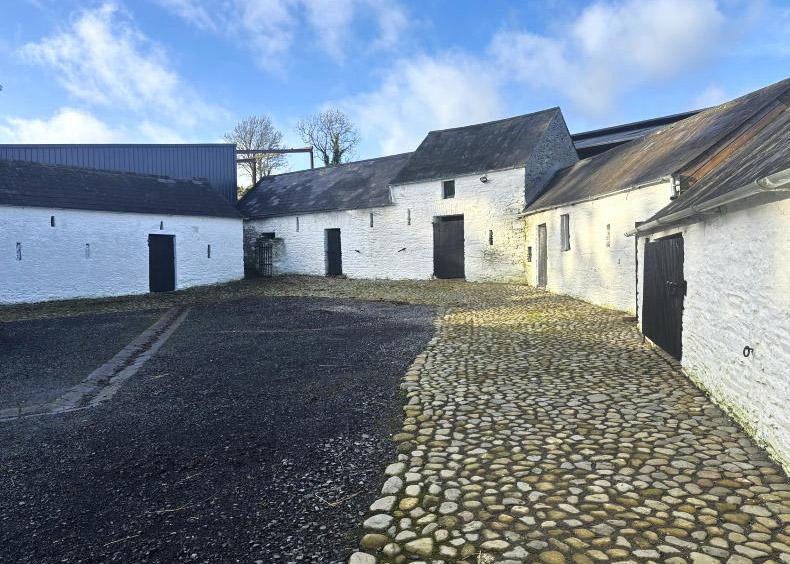
A good foundation is the key to anything, and in the case of John Plunkett’s restoration of the courtyard buildings at the rear of his farmhouse in Carnaross, Co Meath, having buildings in relatively good order to begin with paved the way for the successful restoration seen in the photos on these pages.
Looking from the outside, there is little to be seen bar some new guttering that immediately jumps out as being a recent inclusion; all other works have been done in such a way that it is indistinguishable from the original work, with all work completed using the Traditional Farm Buildings grant.
Much of the recent work involved repairing damage done through water ingress from the roofs of one of the buildings, known as ‘the stable’.
Water between it and the adjoining building had gone down through the valley alongside the gable and eaten away the lime mortar inside the shed.
“The timber along the inside of the valley was completely rotten due to the water getting in between the slate and the wall, which washed out the lime mortar,” explained John.

One of the standout features of the yard is the restored cobble border.
After repointing the stone work, which was all intact, a lead soaker was installed in the valley between the two buildings and a lime mortar bell cast was created to prevent damage to the new timber and mortar.
A few new batons in the roof and a small section of new wall plate were also fitted, with water damage being the primary culprit here.
An older low roof was removed from outside what was the former pig shed to create access to the calving shed in the new part of the yard.
Due to the pitch of the roof, rainwater had also washed out the mortar on the outside of the pig shed, which was repointed as part of the works completed.
All the re-pointing work was completed by Rory Galligan of Rocks Road Stone Ltd.
John had a good deal of Blue Bangor slates left over from previous projects he had carried out, but some second-hand slates also had to be sourced locally.
Grading the slates was a time-consuming task, with John noting how big a difference there is between thicker and thinner grading slates, all of which had to be married in to the existing roof structure.
Four lines of older asbestos slates along the ridge of both the ‘north’ and ‘west’ buildings were carefully removed and replaced with the Blue Bangor slates.
The asbestos slates were placed in to sealed bags and removed by Haz Asbestos, Balbriggan, the next day.

A lead soaker and lime mortar bell cast was installed in the gable that had previously been letting in water.
A similar system was done on two other buildings in 2018; four rows of asbestos slates from the ridge were removed, responsibly disposed of and replaced with Blue Bangor slates.
Roofing work was completed by McDonald Roofing, Clogherhead and all their work was done using Blue Bangor slates. Joe McDonald founded the company, with his two sons Ciaran and Paul now continuing on with this traditional work.
Having completed work on the farmhouse for John a number of years ago, they have since worked on all his projects in the courtyard since.
In 2018, roofing was repaired on some of the buildings, involving erection of gutters on many of them to prevent further degradation of the external lime mortar.
As mentioned, everything has been done sympathetically and in the traditional method, with no felt installed under the slates on any building.
“It’s great to be able preserve habitats for the swallows; felt would be completely out of place,” explained John.
Batons, wall plates and collars have all been replaced as needed throughout many of the buildings.
Lime washing is done annually, keeping the yard fresh and clean looking.
Caking of lime washing, where years of layers have built up, have been removed and brought back to nearly bare stone, ready for lime washing again in spring time.

Asbestos slates were removed and Blue Bangor slates installed in the upper four lines.
Galvanised guttering (as per the specifications of the grant) have been fitted to all buildings.
The brackets supporting the gutters are affixed to the wall with galvanised steel pins, driven in between gaps in the stone work.
“There’s no messing with screws or wall plugs. It’s a solid 12” bar beat in between stones.”
One of the standout features of the yard when you walk in to it is the cobbled border linking all the sheds together.
As John explained, all the sheds would have been cleaned out daily and the dung and bedding tipped out in to the dunghill in the middle which was spread in the summer months on pasture.
In 2022, as part of the Traditional Farm Buildings Grant scheme, John sought to restore the traditional cobbled yard, sourcing stone from his own farm (from stones picked off fields after ploughing) as well as neighbouring farms.

Some of the careful repointing work done on the gable of the pig shed.
Again, Rory Galligan was tasked with the job, with John and Rory sorting through the irregular stones by hand, laying them down and beating them into a hardcore bed with a rubber mallet, with fine building sand brushed in, completely mortar free, leaving the cobbled area self-draining.
With John’s ethos being to keep things traditional, bicarbonate of soda is mixed with water and sprayed on with a knapsack to kill weed, with the alkaline solution working well.
John and the tradespeople who have worked on the project have done fantastic work over the course of the years, though – by his own admission – little of this would be possible without the aid of the Traditional Farm Buildings Grant.
Having utilised it to great success several times, he’s a big believer in it and the results speak for themselves, but what really stands out walking around the yard talking to John is his infectious passion for these older buildings.
He is hoping to host a farm open day next year to showcase some of the work completed by the grant which should be a day not to be missed for anyone with a passion for these buildings.

Galvanised guttering has been installed throughout to prevent washing out of the lime mortar.

The 'vegetable' shed as it was known.

Repointing work done on the pig shed which had been washed out due to the roof over the small yard to the front.

Water ingress had washed out the mortar which had to be repointed this year.

The old cow cubicle shed also had it's asbestos slates removed and replaced with Blue Bangor slates.
A good foundation is the key to anything, and in the case of John Plunkett’s restoration of the courtyard buildings at the rear of his farmhouse in Carnaross, Co Meath, having buildings in relatively good order to begin with paved the way for the successful restoration seen in the photos on these pages.
Looking from the outside, there is little to be seen bar some new guttering that immediately jumps out as being a recent inclusion; all other works have been done in such a way that it is indistinguishable from the original work, with all work completed using the Traditional Farm Buildings grant.
Much of the recent work involved repairing damage done through water ingress from the roofs of one of the buildings, known as ‘the stable’.
Water between it and the adjoining building had gone down through the valley alongside the gable and eaten away the lime mortar inside the shed.
“The timber along the inside of the valley was completely rotten due to the water getting in between the slate and the wall, which washed out the lime mortar,” explained John.
One of the standout features of the yard is the restored cobble border.
After repointing the stone work, which was all intact, a lead soaker was installed in the valley between the two buildings and a lime mortar bell cast was created to prevent damage to the new timber and mortar.
A few new batons in the roof and a small section of new wall plate were also fitted, with water damage being the primary culprit here.
An older low roof was removed from outside what was the former pig shed to create access to the calving shed in the new part of the yard.
Due to the pitch of the roof, rainwater had also washed out the mortar on the outside of the pig shed, which was repointed as part of the works completed.
All the re-pointing work was completed by Rory Galligan of Rocks Road Stone Ltd.
John had a good deal of Blue Bangor slates left over from previous projects he had carried out, but some second-hand slates also had to be sourced locally.
Grading the slates was a time-consuming task, with John noting how big a difference there is between thicker and thinner grading slates, all of which had to be married in to the existing roof structure.
Four lines of older asbestos slates along the ridge of both the ‘north’ and ‘west’ buildings were carefully removed and replaced with the Blue Bangor slates.
The asbestos slates were placed in to sealed bags and removed by Haz Asbestos, Balbriggan, the next day.
A lead soaker and lime mortar bell cast was installed in the gable that had previously been letting in water.
A similar system was done on two other buildings in 2018; four rows of asbestos slates from the ridge were removed, responsibly disposed of and replaced with Blue Bangor slates.
Roofing work was completed by McDonald Roofing, Clogherhead and all their work was done using Blue Bangor slates. Joe McDonald founded the company, with his two sons Ciaran and Paul now continuing on with this traditional work.
Having completed work on the farmhouse for John a number of years ago, they have since worked on all his projects in the courtyard since.
In 2018, roofing was repaired on some of the buildings, involving erection of gutters on many of them to prevent further degradation of the external lime mortar.
As mentioned, everything has been done sympathetically and in the traditional method, with no felt installed under the slates on any building.
“It’s great to be able preserve habitats for the swallows; felt would be completely out of place,” explained John.
Batons, wall plates and collars have all been replaced as needed throughout many of the buildings.
Lime washing is done annually, keeping the yard fresh and clean looking.
Caking of lime washing, where years of layers have built up, have been removed and brought back to nearly bare stone, ready for lime washing again in spring time.
Asbestos slates were removed and Blue Bangor slates installed in the upper four lines.
Galvanised guttering (as per the specifications of the grant) have been fitted to all buildings.
The brackets supporting the gutters are affixed to the wall with galvanised steel pins, driven in between gaps in the stone work.
“There’s no messing with screws or wall plugs. It’s a solid 12” bar beat in between stones.”
One of the standout features of the yard when you walk in to it is the cobbled border linking all the sheds together.
As John explained, all the sheds would have been cleaned out daily and the dung and bedding tipped out in to the dunghill in the middle which was spread in the summer months on pasture.
In 2022, as part of the Traditional Farm Buildings Grant scheme, John sought to restore the traditional cobbled yard, sourcing stone from his own farm (from stones picked off fields after ploughing) as well as neighbouring farms.
Some of the careful repointing work done on the gable of the pig shed.
Again, Rory Galligan was tasked with the job, with John and Rory sorting through the irregular stones by hand, laying them down and beating them into a hardcore bed with a rubber mallet, with fine building sand brushed in, completely mortar free, leaving the cobbled area self-draining.
With John’s ethos being to keep things traditional, bicarbonate of soda is mixed with water and sprayed on with a knapsack to kill weed, with the alkaline solution working well.
John and the tradespeople who have worked on the project have done fantastic work over the course of the years, though – by his own admission – little of this would be possible without the aid of the Traditional Farm Buildings Grant.
Having utilised it to great success several times, he’s a big believer in it and the results speak for themselves, but what really stands out walking around the yard talking to John is his infectious passion for these older buildings.
He is hoping to host a farm open day next year to showcase some of the work completed by the grant which should be a day not to be missed for anyone with a passion for these buildings.
Galvanised guttering has been installed throughout to prevent washing out of the lime mortar.
The 'vegetable' shed as it was known.
Repointing work done on the pig shed which had been washed out due to the roof over the small yard to the front.
Water ingress had washed out the mortar which had to be repointed this year.
The old cow cubicle shed also had it's asbestos slates removed and replaced with Blue Bangor slates.





SHARING OPTIONS