


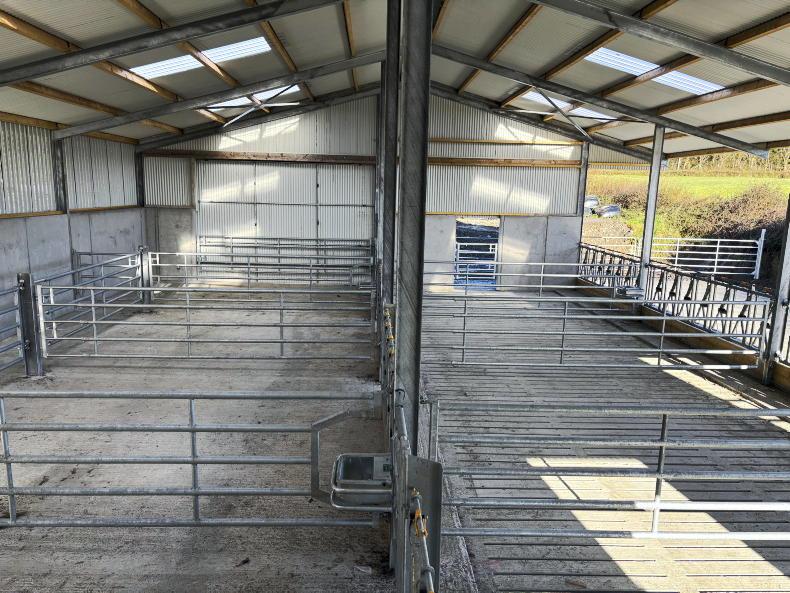
Updated figures from the Department show that 77% of tranche eight applications have been approved to date.
Of the 5,364 applications submitted, 4,133 have been approved as of Monday 15 December (77%). Two hundred and seventy-six applications in tranche 8 (5.1%), which was opened for applicants between 3 April and 8 June, making it one of the shortest tranches so far, were rejected which is at or slightly higher than the figures we have seen in other tranches.
Eighty-seven applications (1.6%) were withdrawn by the applicant, slightly lower than the 2% figure normally seen.
As can be seen from table 1, machinery-led investments have seen the quickest turnaround in approvals. LESS (Low Emission Slurry Spreading) and TCIS (Tillage Capital Investment Scheme) have continued their trend of being approved quickly due to no planning permission or other documentation required, with approval rates there of 97% and 90% respectively.
Typical approval rates across all the schemes sit at 94-97% when rejected and withdrawn applications are accounted for.
Yet again, the SCIS (Solar Capital Investment Scheme) is one of the slowest of the sub-schemes to see farmers receive approvals (55% so far) with this only being bested by the PPIS (Pig and Poultry Investment Scheme) which sits at 50%.
However, with such low volumes of applications in the PPIS we have seen a rapid turnaround in this approval figure in past tranches. With approval rates of circa 200 per week, it would be expected that the majority of approvals will be issued for tranche eight by mid to late January.
Regarding tranches six and seven, which closed for applications on 7 and 28 March, 160 of the 4,930 applications in tranche six remain ‘in progress’ (3.2%) while 49 out of 2,181 applications in the emergency tranche seven are currently still being processed for approval (2.2%).
Tranche nine and 10
Unfortunately for farmers, tranche eight was the final tranche in which no ranking and selection took place.
For tranches nine onwards, ranking and selection of applications will take place and numbers of successful applicants in each tranche will be capped. What this figure is set to be is yet is unknown, with the previous TAMS II capped at 2,000 per tranche. Though with the popularity of TAMS III, there is an expectation that this would be increased – 6,122 applications have been submitted in tranche nine, meaning that even if a cap of 4,000 applications is imposed, a good share of farmers will be disappointed.
In previous iterations of TAMS, approvals were issued within a three-month window of the tranche closing.
The benefit of it was that it allowed farmers who were rejected in the previous tranche to reapply in the tranche immediately proceeding it, eg if a farmer was rejected due to ranking and selection in tranche nine, tranche 10 applications were still open.
Current approval times are between four and six months after the closing of applications, meaning that this system will not work as it did in the past.
Whether ranking and selection will speed up or slow down processing of applications remains to be seen, as does the upper limit for the number of approvals per application.
For farmers wishing to view the ranking and selection criteria for each sub scheme, this is easily done. Go to the TAMS III web page on the DAFM website and from there select the scheme of your choosing, once there click on ‘marking sheet’ to access.
The higher the volume of points accrued, the higher the chance your application will be approved.
Purchasing mobile items before approval
Many applicants under time pressure are considering purchasing mobile items before approval has been granted. As Darren Carty highlighted recently, mobile items are eligible for grant aid where a purchase or deposit has been made after a grant application has been submitted and before full approval has been issued but caution has to be exercised.
The Department of Agriculture is very clear in where the responsibility or risk lies in the case of an application not subsequently receiving approval – that is solely with the applicant.
Any eligible investment submitted for approval has two bites at the cherry before being deemed unsuccessful.
The terms and conditions state: “Where a valid application does not receive approval in the course of the first assessment or tranche which is carried out by the minister after the receipt of the valid application, the application will be carried forward to one subsequent assessment or tranche, unless withdrawn by the applicant. If the application is not successful in the subsequent tranche, it will then be automatically rejected and reset to a draft application.”




SHARING OPTIONS