Many forest owners in Ireland, unlike their European counterparts, rely solely on forestry advisers for information on how to manage their forests, but this is changing.
While expert advice from professional foresters is essential on specialised forest management issues, a growing number of forest owners are taking a more hands-on approach in managing their forests.
They are fortunate in having a wide range of information events at their disposal, all free of charge. Teagasc has just completed its nationwide forestry clinics, while organisations such as the Irish Timber Growers Association (ITGA). Irish Forest Owners (IFO) and the Irish Agroforestry Forum (IAF) are organising field events in March and April (see panels). All events are supported by the Department of Agriculture, Food and the Marine (DAFM).
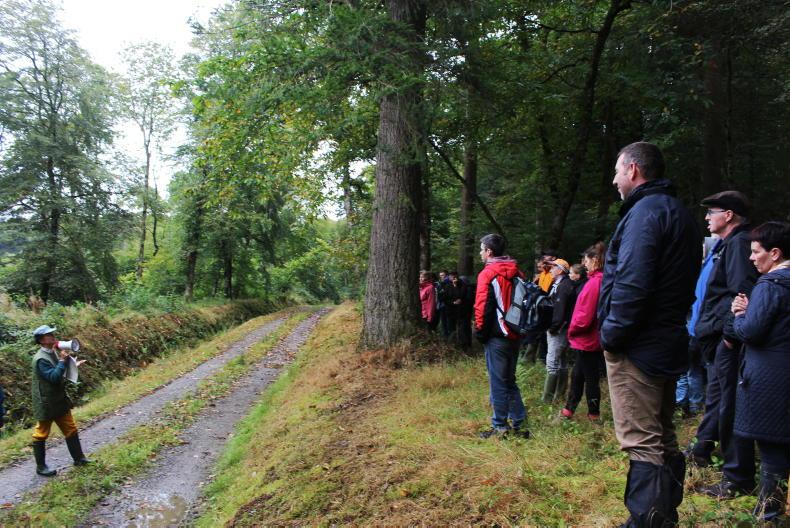
Forestry KTG schemes and field days are essential events for forest owners to increase their knowledge of forest management. The field events are free of charge and KTG participants receive €560 for attending seven meetings. \Donal Magner
KTG forestry scheme
A key initiative in developing greater awareness among forest owners has been the forestry Knowledge Transfer Group (KTG) scheme.
Now in its seventh season, Minister of State Michael Healy-Rae spoke at the recent launch of the 2026 scheme explaining that the KTG programme continues the Government’s “strong investment in practical training, peer learning and active forest management for Ireland’s private forest owners”.
“It gives forest owners practical, hands-on knowledge and the confidence to make informed decisions about their forests,” he added.
The 2026 scheme is broader and more flexible than the previous schemes, with two dedicated focus areas being introduced, to “allow organisers and participants to tailor learning to their specific needs”, added Minister Healy-Rae.
The two focus areas cover:
A. Sustainable forest management, which includes core silviculture, thinning, forest operations, forest health and resilience.B. Forest management plans (FMPs) and forest certification (FC), which support owners to prepare management plans and take steps towards certification and higher management standards.Focus area B is a new addition to the scheme. In order to maximise uptake and adoption of forest management planning and certification, all forest owners will be eligible for focus area B, irrespective of whether they have participated in a forestry KTG in previous years.
This expanded access removes previous participation restrictions and ensures that any owner wishing to develop an FMP or progress towards FC can do so through scheme B. This flexibility is welcome, as is the new guidance on who can attend.
“Where participants are unable to attend KTG meetings, they can nominate family members,” said a DAFM spokesperson. “Nominees can be sons, daughters, spouses, partners or another joint owner [while] other nominee types will be considered on a case-by-case basis.”
This approach was welcomed by the Social, Economic and Environmental Forestry Association (SEEFA) as “it recognises the challenges of managing forests alongside work and family commitments”.
Payment
Each KTG can have a maximum of 20 participants, and each participant will need to attend seven meetings or outdoor events in order to complete the programme. Participants receive €80/meeting for up to seven meetings, or €560 for full attendance (Table 1).
Learning sessions include site visits, demonstrations and peer discussions led by professionals. Completed applications should be emailed to: forestryKTG@agriculture.gov.ie by 5pm on Friday 20 March 2026. Any queries regarding the new scheme can also be sent to this email address.
Timber growers head south and north
The Irish Timber Growers Association (ITGA) 2026 events programme includes field trips to Co Cork and Co Tyrone. Topics include timber prices, storm damage, forest certification and Sitka spruce management.
GP Wood – 27 March
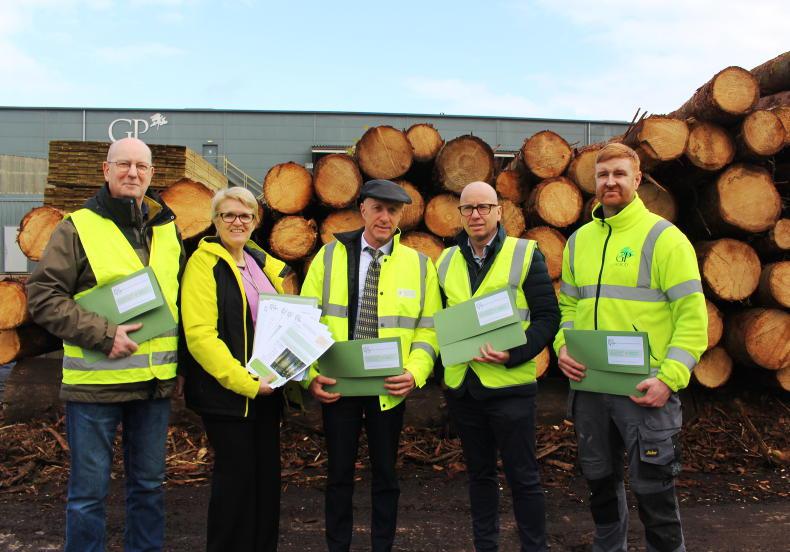
The first ITGA field day is to GP Wood, now a major sawmill in Ireland employing 150 staff directly at the Lissarda and Enniskeane mills, Co Cork, and a further 250 indirect employees. The mills produce timber for construction, fencing, garden products and packaging, while the company’s Eirbloc facility, uses pre-shredded recycled waste timber, wood chip and sawdust for pallet blocks, which are shipped to customers all over Europe.
Topics for discussion at Lissarda on 27 March include current roundwood markets, forest certification, and future requirements in the forestry and forest products sector.
Aughentaine Estate – 17 April
Aughentaine, Fivemiletown, Co Tyrone, includes 390ha of commercial and amenity woodlands, originally planted in the late 1950s and early 1960s.
Approximately 280ha of commercial woodlands were felled and restocked since 2004, while the winter storms of 2024/2025 did serious damage to some of the original plantings.
The field day on Friday 17 April will discuss several issues around the restocking of Aughentaine, as well as the implications of the increasing impact of severe storms. It will also include a visit to a Sitka spruce forest established in 1957.
Booking
Due to safety considerations and available space at both venues, numbers accommodated are limited, so booking is essential.
While ITGA members receive first preference, non-members are accommodated as far as possible. Book by email (info@itga.ie) prior to 23 March for Lissarda and before 31 March for Aughentaine. Field day schedules, meeting points and other details will be forwarded after booking.
Taking the guesswork out of harvesting
This Saturday 7 March, forestry experts will share helpful tips and information on thinning or harvesting timber.
“This free event will focus on helping forest owners understand the harvesting process, timber value, and their options when bringing timber to market,” said Seán Eustace, who owns the forest in Manor Kilbride, Co Wicklow, with his son John, where the field day will take place.
Organised by the Wicklow Private Forestry Owners Group in association with Teagasc and the Irish Forest Owners (IFO), the event is free but pre-registration is required. Contact https://irishforestowners.com/open-forestry-event-wicklow/, or call Kathleen Lucey, IFO, at 086-858-9169 to book and receive further information and the location.
Bridging farming and forestry workshops
The Irish Agroforestry Forum (IAF), in partnership with Trees on the Land, ITGA and Teagasc Forestry, recently announced the Agroforestry Exchange.
“This initiative prioritises ecological health and animal welfare alongside sustainable timber production,” said Maureen Kilgore, IAF manager.
“Even when commercial forestry is not the primary goal, active management is a necessity to maintain the delicate balance between canopy and pasture,” maintained Kilgore.
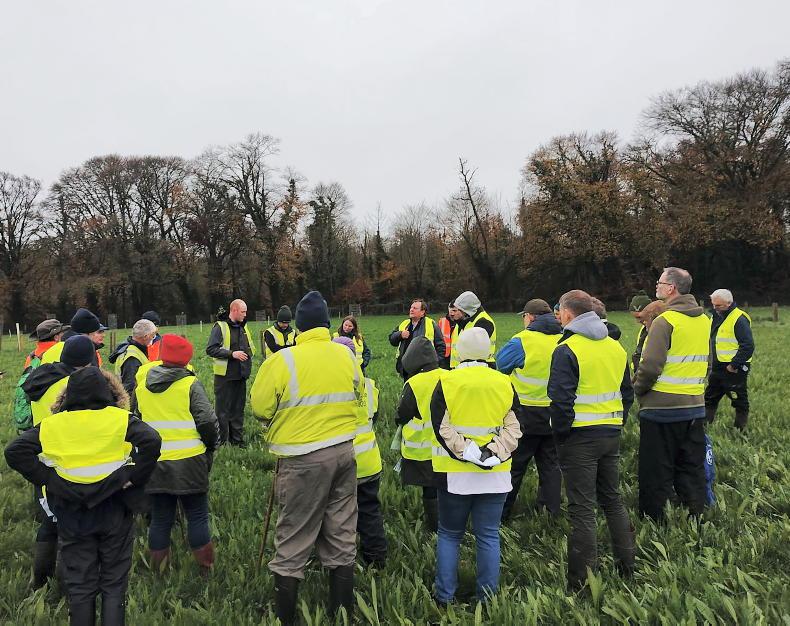
Agroforestry event organised by IAF is scheduled for Brookfield Farm, Coolbawn, Co Tipperary on March 11. \IAF
“Practices such as pruning, pollarding, and thinning are essential to prevent excessive light reduction and keep the agricultural system productive,” she added. “As a result of this necessary maintenance, timber – ranging from firewood and fencing to high-value sawlogs – is inevitably produced.”
Free workshops
The Agroforestry Exchange will host two regional, hands-on workshops, focusing on tree species selection, silviculture, spacing and pruning to achieve both high-quality timber and maximum ecosystem services.
The first workshop – including lunch and guided field event – will be held at Brookfield Farm, Coolbawn, Nenagh, Co Tipperary, on Wednesday 11 March, beginning at 10.30am. There are a few places left, but it is essential to book (contact irishagroforestry.ie/timber).
Many forest owners in Ireland, unlike their European counterparts, rely solely on forestry advisers for information on how to manage their forests, but this is changing.
While expert advice from professional foresters is essential on specialised forest management issues, a growing number of forest owners are taking a more hands-on approach in managing their forests.
They are fortunate in having a wide range of information events at their disposal, all free of charge. Teagasc has just completed its nationwide forestry clinics, while organisations such as the Irish Timber Growers Association (ITGA). Irish Forest Owners (IFO) and the Irish Agroforestry Forum (IAF) are organising field events in March and April (see panels). All events are supported by the Department of Agriculture, Food and the Marine (DAFM).
Forestry KTG schemes and field days are essential events for forest owners to increase their knowledge of forest management. The field events are free of charge and KTG participants receive €560 for attending seven meetings. \Donal Magner
KTG forestry scheme
A key initiative in developing greater awareness among forest owners has been the forestry Knowledge Transfer Group (KTG) scheme.
Now in its seventh season, Minister of State Michael Healy-Rae spoke at the recent launch of the 2026 scheme explaining that the KTG programme continues the Government’s “strong investment in practical training, peer learning and active forest management for Ireland’s private forest owners”.
“It gives forest owners practical, hands-on knowledge and the confidence to make informed decisions about their forests,” he added.
The 2026 scheme is broader and more flexible than the previous schemes, with two dedicated focus areas being introduced, to “allow organisers and participants to tailor learning to their specific needs”, added Minister Healy-Rae.
The two focus areas cover:
A. Sustainable forest management, which includes core silviculture, thinning, forest operations, forest health and resilience.B. Forest management plans (FMPs) and forest certification (FC), which support owners to prepare management plans and take steps towards certification and higher management standards.Focus area B is a new addition to the scheme. In order to maximise uptake and adoption of forest management planning and certification, all forest owners will be eligible for focus area B, irrespective of whether they have participated in a forestry KTG in previous years.
This expanded access removes previous participation restrictions and ensures that any owner wishing to develop an FMP or progress towards FC can do so through scheme B. This flexibility is welcome, as is the new guidance on who can attend.
“Where participants are unable to attend KTG meetings, they can nominate family members,” said a DAFM spokesperson. “Nominees can be sons, daughters, spouses, partners or another joint owner [while] other nominee types will be considered on a case-by-case basis.”
This approach was welcomed by the Social, Economic and Environmental Forestry Association (SEEFA) as “it recognises the challenges of managing forests alongside work and family commitments”.
Payment
Each KTG can have a maximum of 20 participants, and each participant will need to attend seven meetings or outdoor events in order to complete the programme. Participants receive €80/meeting for up to seven meetings, or €560 for full attendance (Table 1).
Learning sessions include site visits, demonstrations and peer discussions led by professionals. Completed applications should be emailed to: forestryKTG@agriculture.gov.ie by 5pm on Friday 20 March 2026. Any queries regarding the new scheme can also be sent to this email address.
Timber growers head south and north
The Irish Timber Growers Association (ITGA) 2026 events programme includes field trips to Co Cork and Co Tyrone. Topics include timber prices, storm damage, forest certification and Sitka spruce management.
GP Wood – 27 March
The first ITGA field day is to GP Wood, now a major sawmill in Ireland employing 150 staff directly at the Lissarda and Enniskeane mills, Co Cork, and a further 250 indirect employees. The mills produce timber for construction, fencing, garden products and packaging, while the company’s Eirbloc facility, uses pre-shredded recycled waste timber, wood chip and sawdust for pallet blocks, which are shipped to customers all over Europe.
Topics for discussion at Lissarda on 27 March include current roundwood markets, forest certification, and future requirements in the forestry and forest products sector.
Aughentaine Estate – 17 April
Aughentaine, Fivemiletown, Co Tyrone, includes 390ha of commercial and amenity woodlands, originally planted in the late 1950s and early 1960s.
Approximately 280ha of commercial woodlands were felled and restocked since 2004, while the winter storms of 2024/2025 did serious damage to some of the original plantings.
The field day on Friday 17 April will discuss several issues around the restocking of Aughentaine, as well as the implications of the increasing impact of severe storms. It will also include a visit to a Sitka spruce forest established in 1957.
Booking
Due to safety considerations and available space at both venues, numbers accommodated are limited, so booking is essential.
While ITGA members receive first preference, non-members are accommodated as far as possible. Book by email (info@itga.ie) prior to 23 March for Lissarda and before 31 March for Aughentaine. Field day schedules, meeting points and other details will be forwarded after booking.
Taking the guesswork out of harvesting
This Saturday 7 March, forestry experts will share helpful tips and information on thinning or harvesting timber.
“This free event will focus on helping forest owners understand the harvesting process, timber value, and their options when bringing timber to market,” said Seán Eustace, who owns the forest in Manor Kilbride, Co Wicklow, with his son John, where the field day will take place.
Organised by the Wicklow Private Forestry Owners Group in association with Teagasc and the Irish Forest Owners (IFO), the event is free but pre-registration is required. Contact https://irishforestowners.com/open-forestry-event-wicklow/, or call Kathleen Lucey, IFO, at 086-858-9169 to book and receive further information and the location.
Bridging farming and forestry workshops
The Irish Agroforestry Forum (IAF), in partnership with Trees on the Land, ITGA and Teagasc Forestry, recently announced the Agroforestry Exchange.
“This initiative prioritises ecological health and animal welfare alongside sustainable timber production,” said Maureen Kilgore, IAF manager.
“Even when commercial forestry is not the primary goal, active management is a necessity to maintain the delicate balance between canopy and pasture,” maintained Kilgore.
Agroforestry event organised by IAF is scheduled for Brookfield Farm, Coolbawn, Co Tipperary on March 11. \IAF
“Practices such as pruning, pollarding, and thinning are essential to prevent excessive light reduction and keep the agricultural system productive,” she added. “As a result of this necessary maintenance, timber – ranging from firewood and fencing to high-value sawlogs – is inevitably produced.”
Free workshops
The Agroforestry Exchange will host two regional, hands-on workshops, focusing on tree species selection, silviculture, spacing and pruning to achieve both high-quality timber and maximum ecosystem services.
The first workshop – including lunch and guided field event – will be held at Brookfield Farm, Coolbawn, Nenagh, Co Tipperary, on Wednesday 11 March, beginning at 10.30am. There are a few places left, but it is essential to book (contact irishagroforestry.ie/timber).







SHARING OPTIONS