Ireland is slowly building up a picture of agroforestry and its compatibility with agriculture, horticulture and forestry as outlined at the Irish Agroforestry Forum national conference in Athenry last week. In what is a new land use, the conference emphasised the importance of maximising information and research findings, from the following sources:
Scientific trials at Loughgall, Co Armagh.Teagasc – field trials and networking with EU partners with agroforestry expertise.Information gathering by pioneering agroforestry farmers and other stakeholders.A common theme among all speakers was the need to share knowledge and experiences.
In her presentation on creative farming with trees Ailbhe Gerrard of Brookfield Farm summed up this approach.
“If others can learn from our successes and our mistakes, that’s value for us,” she said.
Her topic dealt with the integration of crops, livestock, orchards and other aspects of diversification in her family farm, on the shores of Lough Derg, Co Tipperary.
Trees and forestry are also a key part of the Brookfield enterprise, especially in the forest established in 1997. It comprises 80% oak and sycamore, and 20% ash, cherry, birch, beech, walnut, willow and European larch.
Livestock bedding
She told the conference that the thinnings have been utilised for furniture, firewood, cladding and livestock bedding.
Gavin Lynch examined poultry and calf rearing in hazelnut agroforestry system in his presentation.
He planted 1,300 hazel plants on his farm in Donard, Co Wicklow which he combined at different stages with an organic turkey flock and calf rearing.
He outlined the successes and difficulties and is now producing quality hazelnuts as he “extends his customer base beyond the fat crows” who reaped a rich harvest from his crop at one stage.
Speakers such as Una Wycherley of Larkins Farm, Co Tipperary and Thomas O’Connor of Manna Organic Farm, Gleann na nGealt, Co Kerry outlined the multifunctional aspects of agroforestry.
The system had the ability “to transition from our current industrialised and oil dependent agriculture, to natural and biologically based farming systems”, said O’Connor.
Teagasc and agroforestry
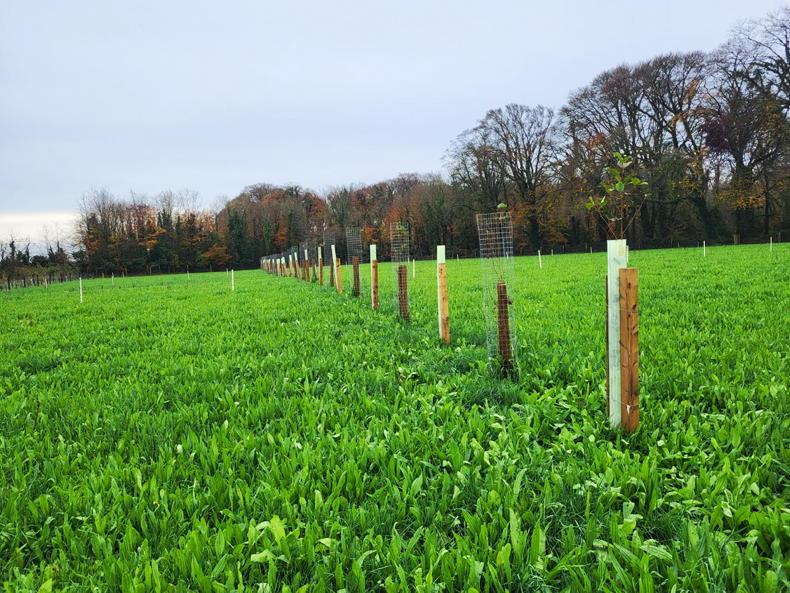
Teagasc had a strong presence at the two-day conference. In his presentation, Dr Ian Short of Teagasc explored tree planting configurations to optimise shelter, minimise water runoff and maximise ammonia mitigation.
He also outlined tree group and line formations, contour planting and use of mixtures, using slow- and fast-growing tree species.
The Teagasc approach is to share knowledge in Ireland and also to introduce best practice from Europe. John Casey outlined the importance of “strengthening agroforestry advisory capacity across Europe” in his role as the Irish representative on the EU Agroforestry Business Model Innovation Network (AF4EU) project.
Innovation
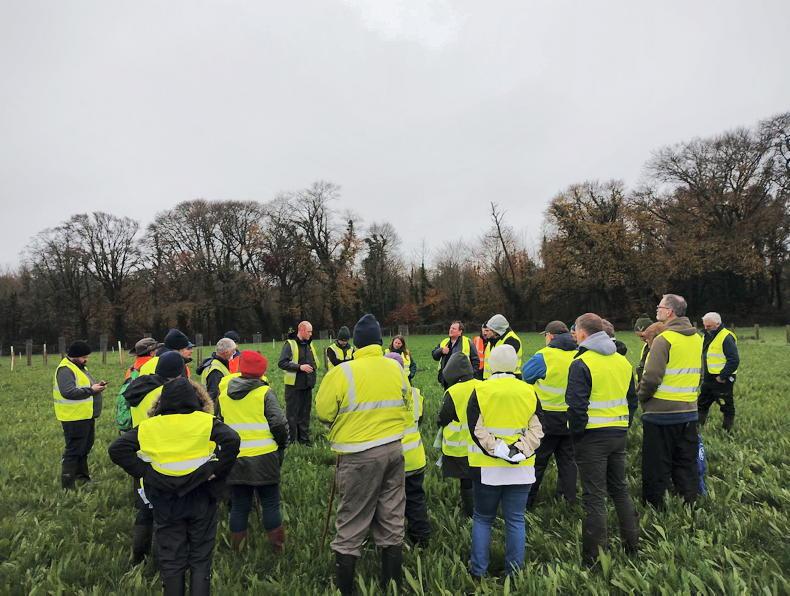
Teagasc’s organisation of the farm walk at its animal and grassland research centre in Athenry played a major role during the opening day at the conference, maintained Maureen Kilgore, Irish Agroforestry Forum manager.
“We welcome Teagasc’s innovative plans for the future in exploring the rewards of agroforestry’s potential benefits in conjunction with sheep farming,” she said.
Explainer: agroforestry for food and wood
“Trees, food and farming together,” was the concise definition of agroforestry as presented by Minister of State, Michael Healy-Rae at the conference, which was supported by the Department of Agriculture, Food and the Marine.
The system combines agricultural activities – crops and pasture – with timber production on the same land, along with food production. The multifunctional benefits of agroforestry are reflected in the three agroforestry schemes funded by the Department:
Silvopastoral – combines grazing by sheep and cattle depending on age of trees and their protection. Silage and hay production is permitted between tree lines or groups.Silvoarable – combines the growing of cereals, fruit and vegetables with trees. Fruit and nut trees can account for 20% of species planted. Forest gardening – small scale pilot scheme with the emphasis on organic forest food production with fruit and nut trees accounting for up to 40% of all species planted. Farmers who are receiving direct payments, such as BISS and CRISS, can also apply for agroforestry funding grants.
Establishment grants up to €8,555/ha are available along with annual premiums up to €975/ha (Table 1) which Minister Healy-Rae said were tax-free.
Ireland is slowly building up a picture of agroforestry and its compatibility with agriculture, horticulture and forestry as outlined at the Irish Agroforestry Forum national conference in Athenry last week. In what is a new land use, the conference emphasised the importance of maximising information and research findings, from the following sources:
Scientific trials at Loughgall, Co Armagh.Teagasc – field trials and networking with EU partners with agroforestry expertise.Information gathering by pioneering agroforestry farmers and other stakeholders.A common theme among all speakers was the need to share knowledge and experiences.
In her presentation on creative farming with trees Ailbhe Gerrard of Brookfield Farm summed up this approach.
“If others can learn from our successes and our mistakes, that’s value for us,” she said.
Her topic dealt with the integration of crops, livestock, orchards and other aspects of diversification in her family farm, on the shores of Lough Derg, Co Tipperary.
Trees and forestry are also a key part of the Brookfield enterprise, especially in the forest established in 1997. It comprises 80% oak and sycamore, and 20% ash, cherry, birch, beech, walnut, willow and European larch.
Livestock bedding
She told the conference that the thinnings have been utilised for furniture, firewood, cladding and livestock bedding.
Gavin Lynch examined poultry and calf rearing in hazelnut agroforestry system in his presentation.
He planted 1,300 hazel plants on his farm in Donard, Co Wicklow which he combined at different stages with an organic turkey flock and calf rearing.
He outlined the successes and difficulties and is now producing quality hazelnuts as he “extends his customer base beyond the fat crows” who reaped a rich harvest from his crop at one stage.
Speakers such as Una Wycherley of Larkins Farm, Co Tipperary and Thomas O’Connor of Manna Organic Farm, Gleann na nGealt, Co Kerry outlined the multifunctional aspects of agroforestry.
The system had the ability “to transition from our current industrialised and oil dependent agriculture, to natural and biologically based farming systems”, said O’Connor.
Teagasc and agroforestry
Teagasc had a strong presence at the two-day conference. In his presentation, Dr Ian Short of Teagasc explored tree planting configurations to optimise shelter, minimise water runoff and maximise ammonia mitigation.
He also outlined tree group and line formations, contour planting and use of mixtures, using slow- and fast-growing tree species.
The Teagasc approach is to share knowledge in Ireland and also to introduce best practice from Europe. John Casey outlined the importance of “strengthening agroforestry advisory capacity across Europe” in his role as the Irish representative on the EU Agroforestry Business Model Innovation Network (AF4EU) project.
Innovation
Teagasc’s organisation of the farm walk at its animal and grassland research centre in Athenry played a major role during the opening day at the conference, maintained Maureen Kilgore, Irish Agroforestry Forum manager.
“We welcome Teagasc’s innovative plans for the future in exploring the rewards of agroforestry’s potential benefits in conjunction with sheep farming,” she said.
Explainer: agroforestry for food and wood
“Trees, food and farming together,” was the concise definition of agroforestry as presented by Minister of State, Michael Healy-Rae at the conference, which was supported by the Department of Agriculture, Food and the Marine.
The system combines agricultural activities – crops and pasture – with timber production on the same land, along with food production. The multifunctional benefits of agroforestry are reflected in the three agroforestry schemes funded by the Department:
Silvopastoral – combines grazing by sheep and cattle depending on age of trees and their protection. Silage and hay production is permitted between tree lines or groups.Silvoarable – combines the growing of cereals, fruit and vegetables with trees. Fruit and nut trees can account for 20% of species planted. Forest gardening – small scale pilot scheme with the emphasis on organic forest food production with fruit and nut trees accounting for up to 40% of all species planted. Farmers who are receiving direct payments, such as BISS and CRISS, can also apply for agroforestry funding grants.
Establishment grants up to €8,555/ha are available along with annual premiums up to €975/ha (Table 1) which Minister Healy-Rae said were tax-free.







SHARING OPTIONS