The area planted during 2025 represents the best performance since 2019, according to the yearend dashboard report issued by the Forest Service, Department of Agriculture, Food and the Marine (DAFM). Total planted area was 2,527ha, which is over 60% higher than the 2024 performance of 1,574ha (Table 1).
Road completions were also up at 84km, while felling licences issued were marginally down. Thinning and clearfell licences were issued for an area of 20,495ha, compared with 21,850ha in 2024 (Table 2).
The DAFM dashboard report provides a weekly breakdown of planting, felling and roading licences as well as data on native tree area (NTA), ash reconstitution and woodland improvement schemes.
Afforestation
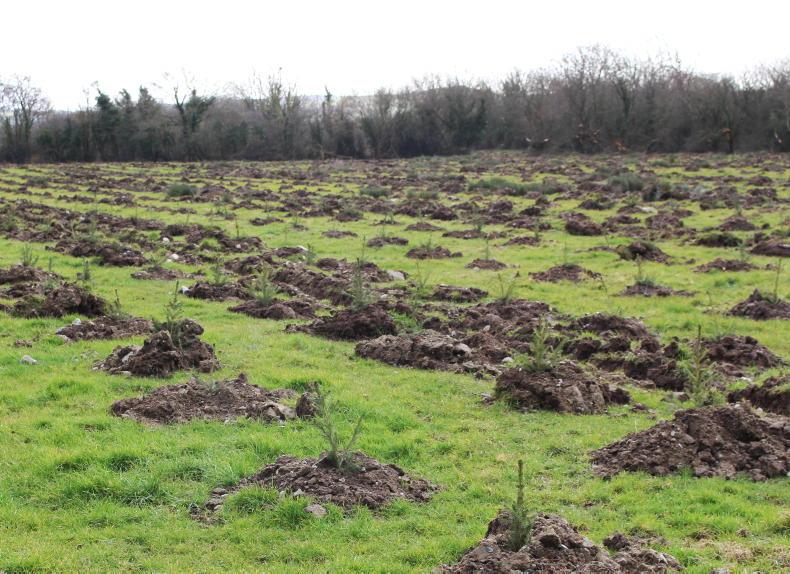
The most positive performance during the year was in afforestation. While 12-month returns failed to reach the 3,000ha predicted by Minister Michael Healy-Rae earlier this year, 2,527ha represents the best afforestation performance since 2019.
The minister’s optimism was justified at the time, based on average monthly returns of 280ha from March to September, but monthly performance fell dramatically to 90ha during the final quarter.
This trend needs to be arrested, especially in the first quarter, if an afforestation target of at least 3,000ha is to be achieved this year. Planting performance is dependent on the number of licences issued, which needs to increase from the disappointing approvals in 2025 (see panel).
We will feature a breakdown of the different Forest Types (FTs), including species planted when available along with data for agroforestry. There have been 59 NTA approvals processed to date amounting to 650ha.
Felling licences
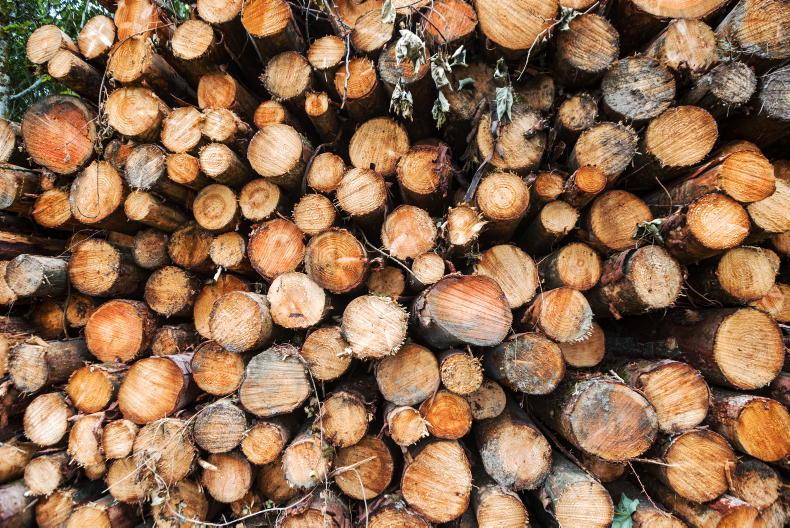
Felling licences for thinnings and clearfells were marginally down in 2025 both in area (20,495ha) and volume (6.26m m3) compared with 21,850ha in 2024 which translated into 6.45m m3 (Table 2). However, the performance is down on the previous annual five-year average of 25,942ha capable of yielding 7.7m m3.
All forestry company spokespersons contacted praised the minister and his staff for fast-tracking felling licences, which is also appreciated by beleaguered forest owners with windblown crops. Apart from suffering major financial losses, further misery has been poured on some of these owners, as a significant number of storm damaged sites have been targeted for appeal. This will further delay access where roads are required, regardless of the verdict of the Forestry Appeals Committee (FAC).
Ireland is unique in Europe, in having to go through a licensing process when harvesting timber damaged by natural causes, but now timber removal and replanting may be delayed indefinitely due to the appeals system.
While the storm hit forests over a wide range of age classes, in some cases it served as a reminder of the need to activate clearfell licences when the crop is ready for final harvest, rather than prolonging rotations and risking windblow.
Forest roads
Road completions increased to 84km in 2025 compared with an average of 77km for the previous two years. Road completions over the 10-year period 2016-2025 averaged 79km.
There is an ample supply of licensed roads in the system with 262km approved last year, divided between an estimated 136km from Coillte and 126km from private forest owners. However, as in felling and planting, road licences are also subject to appeal.
Other schemes
Reconstitution of Ash Dieback (RAD): some 1,516 approvals, representing 5,274 ha have been issued under the RAD scheme. It is likely that almost all ash plantations and woodlands covering an area of 24,350ha have ash dieback at this stage. These include 15,824ha established by approximately 6,500 – mainly farmers – from 1990 to 2012 under the State backed “Grow Ash for Profit” scheme. Based on dashboard data, most ash owners still have to engage with the RAD scheme, 14 years after the introduction of ash dieback. Climate Resilient Reforestation (CRR): during the year 64 approvals were issued representing 417ha under the CRR scheme The overall objective of this scheme is to increase the climate resilience of the national forest estate by expanding the proportion of forest land managed under permanent forest cover or continuous cover forestry (CCF). Woodland Improvement (WI) and Native Woodland Conservation (NWC) schemes: both schemes are designed to protect and restore native woodlands under the current forestry programme. In 2025, there were 359 Woodland Improvement (WI) scheme approvals amounting to 1989ha and 19 Native Woodland Conservation (NWC) scheme approvals representing 162ha. Exploring reasons why afforestation licences are not activated
The challenge for the sector, after the relatively high planting last year, is to build on this performance and to get back to 2019 planting levels (3,550ha) at least. This will be difficult as licences issued during 2025 amounted to 3,569ha which is 26% down on 2024.
If 2023 performance is excluded – the Forestry Programme had not been finalised that year – licences issued in 2025 represented the lowest outturn for 10 years (Table 1).
The reasons for this downturn needs to be analysed during the current mid-term review of the forestry programme. For example, in the 10-year period 2016-2025, 55,485ha received planting licences but this only translated into 32,087ha of actual planting. At its simplest, this means that a potential 23,398ha of future forests have either been lost or delayed.
Based on an average forest size of 7ha, some 3,340 land owners have not activated their afforestation licences.
Why have they declined or possibly delayed their decision to plant especially after going through the onerous and costly licence application system with their forestry advisor. The ratio of licences issued to actual planting needs examination.
All forestry companies interviewed said licensing had improved since Minister Healy-Rae assumed office, but all were equally adamant that delays in licence approvals remain a major issue. They estimate that a significant area of applications are awaiting decisions for 10 months and longer. They say that land owners lose interest when licences are inordinately delayed.
Also, they maintain some licences issued differ from original applications because of changes by DAFM. For example, the tree species mix may be altered or pockets of land are excluded for a variety of reasons as unsuitable for planting.
There needs to be a process to allow consultation between landowner/forestry advisor and Forest Service to discuss the final approval when altered Until this dialogue takes place, an altered licence issued by DAFM that is unacceptable to the landowner should not be classed in the dashboard under the section “licences issued”.
On a more positive note, some landowners with licences may have delayed the decision to plant.
Either way, surely there is a mechanism within the Forest Service to at least follow up these once potential forest owners – and their advisers – to ask them why they have delayed planting or dropped out of the system altogether.
A letter or phone call, from a Forest Service liaison co-ordinator, explaining the new grants and tax-free annual premiums along with information, if relevant, on how planting would not negatively impact on current State supports.
Do prospective farmer forest owners know they can claim entitlements (BISS) and forestry on the same ground?
Farmers in the organic farming scheme can also plant agroforestry or native woodland and stack payments on the same land. Farmers in ACRES can split land parcels and can move from this scheme to forestry without penalty after two years.
Individual circumstances change for farmers so there may be good reasons why the planting option no longer applies but the main objective should be to follow through and keep afforestation licences alive.
The area planted during 2025 represents the best performance since 2019, according to the yearend dashboard report issued by the Forest Service, Department of Agriculture, Food and the Marine (DAFM). Total planted area was 2,527ha, which is over 60% higher than the 2024 performance of 1,574ha (Table 1).
Road completions were also up at 84km, while felling licences issued were marginally down. Thinning and clearfell licences were issued for an area of 20,495ha, compared with 21,850ha in 2024 (Table 2).
The DAFM dashboard report provides a weekly breakdown of planting, felling and roading licences as well as data on native tree area (NTA), ash reconstitution and woodland improvement schemes.
Afforestation
The most positive performance during the year was in afforestation. While 12-month returns failed to reach the 3,000ha predicted by Minister Michael Healy-Rae earlier this year, 2,527ha represents the best afforestation performance since 2019.
The minister’s optimism was justified at the time, based on average monthly returns of 280ha from March to September, but monthly performance fell dramatically to 90ha during the final quarter.
This trend needs to be arrested, especially in the first quarter, if an afforestation target of at least 3,000ha is to be achieved this year. Planting performance is dependent on the number of licences issued, which needs to increase from the disappointing approvals in 2025 (see panel).
We will feature a breakdown of the different Forest Types (FTs), including species planted when available along with data for agroforestry. There have been 59 NTA approvals processed to date amounting to 650ha.
Felling licences
Felling licences for thinnings and clearfells were marginally down in 2025 both in area (20,495ha) and volume (6.26m m3) compared with 21,850ha in 2024 which translated into 6.45m m3 (Table 2). However, the performance is down on the previous annual five-year average of 25,942ha capable of yielding 7.7m m3.
All forestry company spokespersons contacted praised the minister and his staff for fast-tracking felling licences, which is also appreciated by beleaguered forest owners with windblown crops. Apart from suffering major financial losses, further misery has been poured on some of these owners, as a significant number of storm damaged sites have been targeted for appeal. This will further delay access where roads are required, regardless of the verdict of the Forestry Appeals Committee (FAC).
Ireland is unique in Europe, in having to go through a licensing process when harvesting timber damaged by natural causes, but now timber removal and replanting may be delayed indefinitely due to the appeals system.
While the storm hit forests over a wide range of age classes, in some cases it served as a reminder of the need to activate clearfell licences when the crop is ready for final harvest, rather than prolonging rotations and risking windblow.
Forest roads
Road completions increased to 84km in 2025 compared with an average of 77km for the previous two years. Road completions over the 10-year period 2016-2025 averaged 79km.
There is an ample supply of licensed roads in the system with 262km approved last year, divided between an estimated 136km from Coillte and 126km from private forest owners. However, as in felling and planting, road licences are also subject to appeal.
Other schemes
Reconstitution of Ash Dieback (RAD): some 1,516 approvals, representing 5,274 ha have been issued under the RAD scheme. It is likely that almost all ash plantations and woodlands covering an area of 24,350ha have ash dieback at this stage. These include 15,824ha established by approximately 6,500 – mainly farmers – from 1990 to 2012 under the State backed “Grow Ash for Profit” scheme. Based on dashboard data, most ash owners still have to engage with the RAD scheme, 14 years after the introduction of ash dieback. Climate Resilient Reforestation (CRR): during the year 64 approvals were issued representing 417ha under the CRR scheme The overall objective of this scheme is to increase the climate resilience of the national forest estate by expanding the proportion of forest land managed under permanent forest cover or continuous cover forestry (CCF). Woodland Improvement (WI) and Native Woodland Conservation (NWC) schemes: both schemes are designed to protect and restore native woodlands under the current forestry programme. In 2025, there were 359 Woodland Improvement (WI) scheme approvals amounting to 1989ha and 19 Native Woodland Conservation (NWC) scheme approvals representing 162ha. Exploring reasons why afforestation licences are not activated
The challenge for the sector, after the relatively high planting last year, is to build on this performance and to get back to 2019 planting levels (3,550ha) at least. This will be difficult as licences issued during 2025 amounted to 3,569ha which is 26% down on 2024.
If 2023 performance is excluded – the Forestry Programme had not been finalised that year – licences issued in 2025 represented the lowest outturn for 10 years (Table 1).
The reasons for this downturn needs to be analysed during the current mid-term review of the forestry programme. For example, in the 10-year period 2016-2025, 55,485ha received planting licences but this only translated into 32,087ha of actual planting. At its simplest, this means that a potential 23,398ha of future forests have either been lost or delayed.
Based on an average forest size of 7ha, some 3,340 land owners have not activated their afforestation licences.
Why have they declined or possibly delayed their decision to plant especially after going through the onerous and costly licence application system with their forestry advisor. The ratio of licences issued to actual planting needs examination.
All forestry companies interviewed said licensing had improved since Minister Healy-Rae assumed office, but all were equally adamant that delays in licence approvals remain a major issue. They estimate that a significant area of applications are awaiting decisions for 10 months and longer. They say that land owners lose interest when licences are inordinately delayed.
Also, they maintain some licences issued differ from original applications because of changes by DAFM. For example, the tree species mix may be altered or pockets of land are excluded for a variety of reasons as unsuitable for planting.
There needs to be a process to allow consultation between landowner/forestry advisor and Forest Service to discuss the final approval when altered Until this dialogue takes place, an altered licence issued by DAFM that is unacceptable to the landowner should not be classed in the dashboard under the section “licences issued”.
On a more positive note, some landowners with licences may have delayed the decision to plant.
Either way, surely there is a mechanism within the Forest Service to at least follow up these once potential forest owners – and their advisers – to ask them why they have delayed planting or dropped out of the system altogether.
A letter or phone call, from a Forest Service liaison co-ordinator, explaining the new grants and tax-free annual premiums along with information, if relevant, on how planting would not negatively impact on current State supports.
Do prospective farmer forest owners know they can claim entitlements (BISS) and forestry on the same ground?
Farmers in the organic farming scheme can also plant agroforestry or native woodland and stack payments on the same land. Farmers in ACRES can split land parcels and can move from this scheme to forestry without penalty after two years.
Individual circumstances change for farmers so there may be good reasons why the planting option no longer applies but the main objective should be to follow through and keep afforestation licences alive.





SHARING OPTIONS