


NI farmers are entering a new compliance era as DAERA’s Farm Sustainability Standards (FSS) took full effect on 1 January 2026.
The seven-part framework sets the baseline for securing key payments. Meeting these is now mandatory for schemes including the Farm Sustainability Payment (FSP) and Environmental Farming Scheme (EFS), with inspections and a sliding penalty scale enforcing compliance.
FSS1 – Water Protection
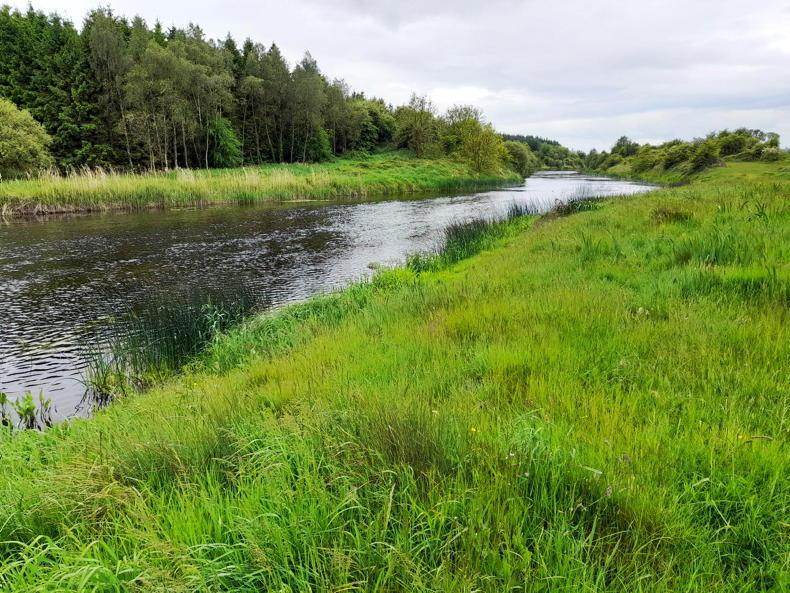
This first standard is designed to tackle long-standing pressures on NI’s waterways by tightening controls around slurry, fertiliser and farmyard run-off.
All new slurry tanks built after 31 December 2019 must meet strict requirements: above-ground tanks must be at least 50 metres from waterways and covered, while below-ground tanks must be 10 metres away. Farmers are required to notify NIEA 28 days before first use.
Minimum slurry storage capacity remains at 22 weeks for cattle and 26 weeks for pigs and poultry.
Spreading restrictions are also still in place, with closed periods for chemical fertiliser from 15 September to 1 February, while for organic manure (slurry) it is from 15 October to 1 February, and farmyard manure from 31 October to 1 February.
Buffer zones apply and slurry should not be spread within 20m of lakes and 10m of other waterways, although this can be reduced to 3m when using low emission slurry spreading equipment (LESSE). Wider buffers are in place from 30 September to 15 October and during February.
For chemical fertiliser, the minimum is 2m from waterways and 10m from lakes.
Outdoor storage rules require silage bales to be at least 10m from waterways. Farmyard manure must be stored at least 20m from waterways, 50m from lakes or boreholes, and 250m from public water supply boreholes.
Under FSS1, farms are expected to keep records of all fertilisers and farm manures and stay within the stocking rate limit of 170kg manure nitrogen per hectare.
Derogated farms
Derogated farms can operate at up to 250kg manure nitrogen per hectare, but they must abide by additional requirements, including submitting a fertilisation account to DAERA online by 1 March of the following calendar year.
At least 50% of slurry produced on a derogated farm must be applied on or before 15 June, with LESSE to be used for any slurry applications after 15 June.
However, in practice, most derogated farms should be using LESSE year-round, given that all farms with 200 or more cattle livestock units (and larger pig units) are all required to utilise the equipment.
FSS2 – Protect habitats and biodiversity.
Designated sites such as Areas of Special Scientific Interest (ASSI), Special Protection Areas (SPA), and Special Areas of Conservation (SAC) require extra care. Any activity that damages these sites or disturbs wildlife is prohibited
Written consent from the Northern Ireland Environment Agency (NIEA) is essential before carrying out operations that could impact protected areas.
However, across all farms, hedge, tree, or scrub cutting is banned between March 1 and August 31 to safeguard nesting birds – the main exception to that is roadside hedges, where health and safety is an issue.
Burning scrub, heather, gorse, or fern is similarly restricted from April 15 to August 31.
Plant Protection Products (PPPs) are tightly regulated. Farmers must register as pesticide operators, use only products authorised for NI and keep detailed records for three years.
Invasive alien species such as Japanese Knotweed, Giant Hogweed, and Himalayan Balsam must be controlled or eradicated in line with management notices.
Noxious weeds including thistle, dock, ragwort, and wild oat must be tackled before flowering to prevent spread.




SHARING OPTIONS