


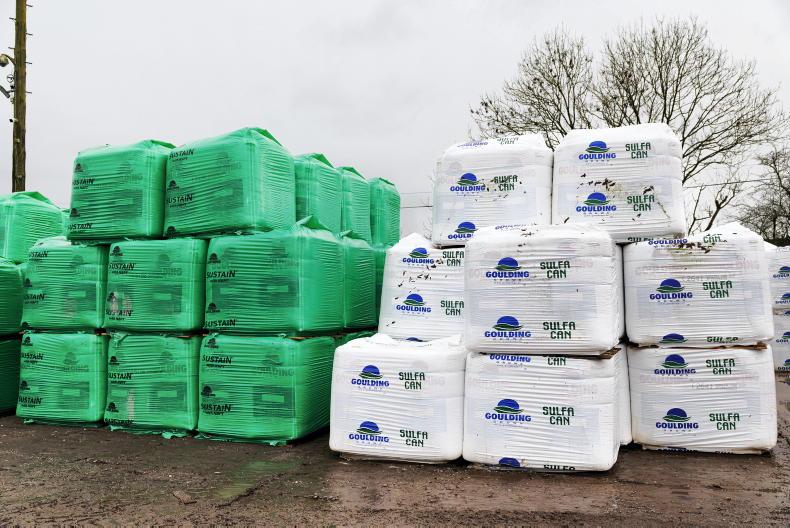
Official fertiliser statistics published by DAERA show there was over 340,000t of product delivered into NI during 2025, up 31% on the 2024 total and 54% ahead of the same figure from 2023.
The unprecedented spike in fertiliser deliveries is at odds with the recent downward trend seen in NI, when the total dropped to a record low of just 220,200t in 2023.
The recent increase coincides with the introduction of a National Fertiliser Database in the Republic of Ireland (ROI) in late 2023. It requires farmers and merchants to record all fertiliser transactions on the database, with the aim to help ensure compliance with voluntary schemes or regulatory limits, including the nitrates derogation.
However, with the database in place, there is the temptation to buy fertiliser from a NI merchant to keep this transaction off official records, although sources also maintain that lower prices in NI have also been a significant driver of trade from north to south.
The problem for NI farming is that the DAERA figures are used to calculate the likes of agriculture’s contribution to greenhouse gas emissions and nutrient loads, including from fertiliser containing phosphorus (P).
It is inevitable that 2025 agriculture emissions and P loads will look worse than they actually are.
On enquiry, a DAERA spokesperson confirmed that NI fertiliser data solely relates to deliveries by fertiliser companies into the NI marketplace for agriculture and horticulture use. The spokesperson clarified that “there is no attempt at present” to record actual deliveries by local merchants onto NI farms or deliveries by NI merchants to farms in ROI.
NI database
While there remains significant opposition to a fertiliser database being introduced in NI, there is no other obvious solution at present. “Once the south put in place a database, it was only a matter of time that NI has to do the same,” said one source in the trade.
The introduction of a NI database was one of the key recommendations made in an action plan to accompany a 2024 DAERA report in response to blue-green algae in Lough Neagh.
“Scoping work is well developed and there will be further engagement with stakeholders as the database is developed,” confirmed the DAERA spokesperson.
Prices
Meanwhile, the latest price lists from fertiliser merchants now put CAN around the £455 to £470/t mark, with products containing sulphur at £470 to £480/t.
Despite some recent concerns around supply, there are sufficient stocks available to meet needs, although merchants maintain that there is little prospect of prices easing in the short to medium term.
However, fertiliser companies have been concentrating on bagging straight nitrogen products, so compounds are more difficult to source and some options are not available. The likes of 24.5.5 is priced around the £510/t mark.
Prices are generally up by over £110/t on this time last year.




SHARING OPTIONS