The Health and Safety Authority (HSA) has updated its Code of Practice for the Safe Use of Industrial Trucks, a category in which farm applications now fall under.
Technically in effect since September last, the new code of practice requires that all users of rider-operated telescopic handlers/loaders, must undertake adequate training and have in their possession a valid training certificate or ‘ticket’ as its more commonly referred to if lifting ‘unit’ loads.
Until now, this had been standard procedure for telescopic loaders and telehandlers only used in industrial applications, of which agricultural applications were exempt.
With the steady growth of telehandlers and loaders working on Irish farms over the years, this change in the HSA code of practice is set to have massive financial and logistical implications at farm level.
What machines does the code of practice apply to?
With a number of anomalies to the updated code of practice, the HSA has exclusively informed the Irish Farmers Journal regarding the terms of the new code of practice: Safe Use of Industrial Trucks.
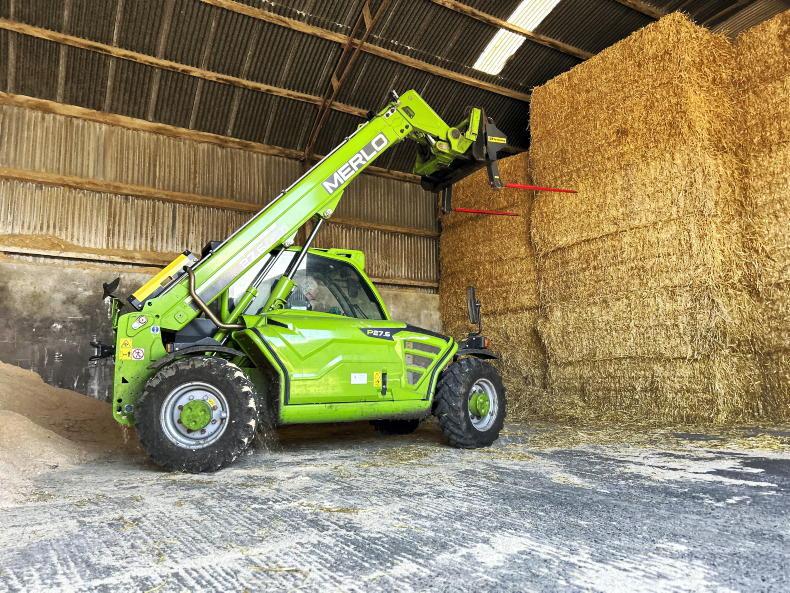
It has said that, training only strictly applies to machines of telescopic nature (rigid chassis or pivot steer) or those fitted with a telescopic mast such as a traditional rough terrain forklift and when they are configured for stacking, eg, fitted with an attachment for the purpose of lifting a “unit load”, such as pallet forks or a bale grab.
The above machines do not fall under the updated code of practice, when handling ‘loose’ material ie bulk feed stuffs, such as pit silage, beet etc with a bucket or shear grab.
Therefore, meaning training and certification is only applicable when the machine is configured for ‘unit’ loading, ie pallet forks or bale spikes etc.
However, this tends to affect most farms, tillage and livestock where there is a telehandler or telescopic loader present.
The HSA has said that the terms of the code of practice: Safe Use of Industrial Trucks, in respect of training do not strictly apply to skid-steer loaders and non-telescopic, parallel and Z-bar linkage fixed boom machine.
In a situation where the updated code of practice does not apply, the general requirements for training under the 2005 Act and the relevant statutory provisions apply, and this was always the case since 2005.
It would be considered good practice to use the terms of the code of practice to inform the extent of this training.
Rider-operated industrial trucks
Rough-terrain forklift truck
Wheeled counterbalanced truck, intended primarily for operation on unimproved natural terrain and on the disturbed terrain of, for example, construction sites.
Variable-reach truck telescopic handler
Lift truck fitted with one or more articulated arms, telescopic or not, non-slewing or having a slewing movement of not more than 5° either side of the longitudinal axis of the truck used for stacking loads.
Rough-terrain variable-reach truck
telescopic handler
Variable-reach truck intended primarily for operation on unimproved natural terrain and on the disturbed terrain of, for example, construction sites.
Appropriate training
The updated code of practice specifies that anyone operating a telescopic loader/telehandler for ‘stacking purposes’ on a farm or as part of a farming application, then they must have received appropriate training and possess a certificate or ticket, to prove it.
HSA inspectors visiting farms this week, during the latest farm safety initiative, will now require evidence that any person operating the telescopic loader on a farm, has completed the necessary training in the safe use of telescopic loaders.
Industrial trucks are considered to be wheeled vehicles having at least three wheels with a powered or non-powered driving mechanism which are designed either to carry, tow, push, lift, stack or tier in racks any kind of load, and which are controlled either by an operator or by driverless automation.
This updated code of practice states that you as the owner and operator of a telescopic loader, should be familiar with and use this code of practice if you own, hire, lease, handle, operate, store, transport, maintain or manage the use of a rider-operated industrial lift truck in the workplace. This is provided against the background of the Safety, Health and Welfare at Work Act 2005 (No. 10 of 2005) which applies to employers and employees in all employments and to the self-employed, including in agriculture.
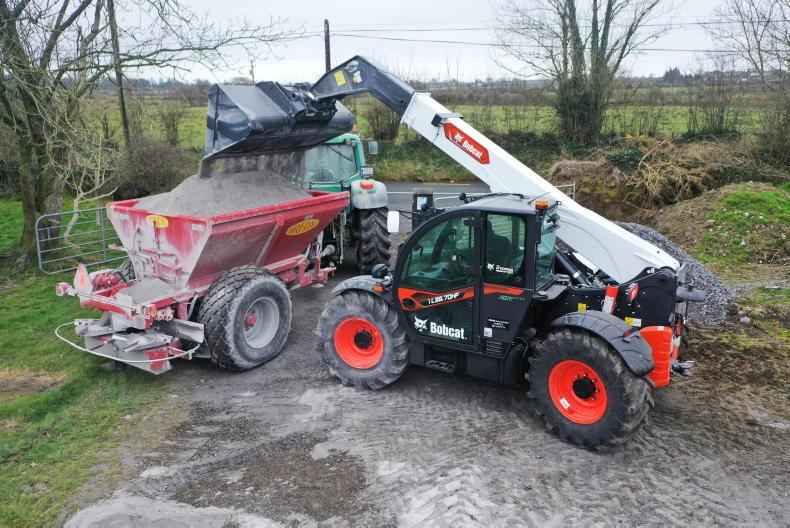
The loading of 'loose' materials with a telehandler or telescopic loader in a farm application do not fall under the updated Code of Practice.
This new code of practice states that self-employed industrial truck operators, including farmers and agricultural contractors, have responsibilities under Section 7 of the Safety, Health and Welfare at Work Act 2005 to ensure that they undergo the same type of training and achieve the same level of competence as employers are required to provide for their employees.
The code states that training programmes should include training for all work activities that an operator will be required to perform in the course of their work and for reasonably foreseeable situations that may arise in the workplace.
In order to achieve this, training programmes should consist of all three stages of training, namely basic training, function-specific job training, and training on the job under supervision.
Five-day training
The code states that the duration of training may vary depending on the objectives to be covered, the trainee/instructor ratio and the trainees’ ability and experience.
The normal duration of a course for novice operators is 32.5 hours over five days (based on an assumption of 6.5 contact hours per working day).
In certain circumstances, the duration of a training course may be reduced to three or four days. In such circumstances, the reduction should be justified in writing by the training provider, in consultation with the employer.
The justification to reduce a training course must take account of the operator’s previous experience and their current level of skill in operating the industrial truck for loading and lifting operations in the workplace. In all cases, the time devoted to training needs to be sufficient to ensure that the basic training objectives and assessments of operator skills and learning outcomes can be achieved.
Telescopic loaders on Irish farms
The use of telescopic loaders has become popular on Irish farms in recent years. Registration data shows that 4,237 new telescopic loaders were registered in Ireland in the past 10 years. A similar number of used imported machines came into Ireland during that period.
It can be estimated that close to half of these machines are currently in use in agriculture, meaning that operators of around 4,000 machines are now required to have completed either a training course or a training assessment to legally operate these machines on farms.
Why is this happening now?
There is some anecdotal evidence of an increased number of non-fatal accidents relating to the use of telescopic loaders on Irish farms. These machines have different operation and stability characteristics to standard tractor loaders.
The updated Code of practice is designed to include training in the use of telescopic loaders in order to prevent further accidents with these machines.
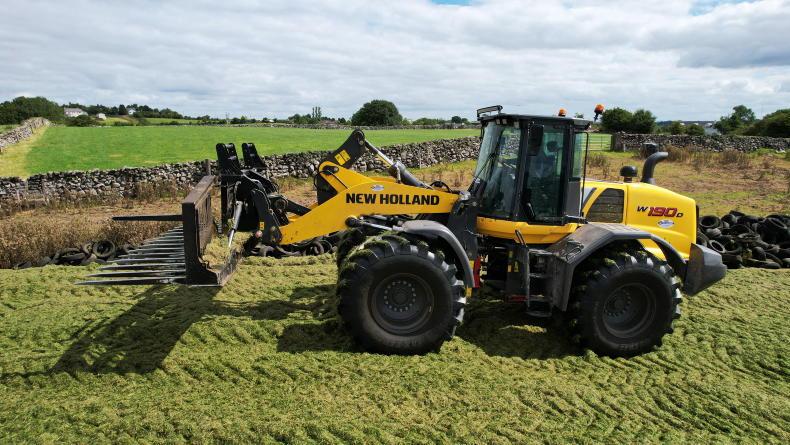
Wheeled loaders that have fixed non-telescopic booms do not fall under the updated Code of Practice.
In the 10-year period from 2010 to 2019, there were 490 reported work-related deaths in the Republic of Ireland. Of these, 217 (44%) involved vehicles, of which loaders/telehandlers accounted for 20 (9%) and forklifts accounted for 13 (6%).
An analysis of 11,510 fatal and non-fatal incidents that were reported to the Health and Safety Authority between 2013 and 2022 and that involved a vehicle or means of transport or handling equipment shows that 17.64% were associated with mobile handling devices, handling trucks, barrows, pallet trucks.
HSA Q&A
IFJ: If I am the farm owner with no employees and with general machinery use experience, do I have to complete a training course if I want to use my telescopic loader?
HSA: Yes, as a self-employed operator of an item of work equipment there is a legal requirement that you are trained to operate that equipment. The recent publication of the new code of practice: Safe Use of Industrial Trucks does not change this requirement in any way.
Under the Safety, Health and Welfare at Work Act 2005, every employer has a duty to provide the training necessary to ensure, so far as is reasonably practicable, the safety, health, and welfare at work of his or her employees. Occupational safety and health legislation applies, where appropriate, to a self-employed person as they apply to an employer and as if that self-employed person was an employer and his or her own employee. A reference in the relevant statutory provisions to an employer shall be read as references to a self-employed person.
Assuming the term “telescopic loader” is referring to a telescopic handler fitted with an attachment such as a shovel (bucket) or silage forks, ie, for moving loose bulk material, it does not strictly fall under the scope of the new code of practice: Safe Use of Industrial Trucks. However, it is an item of mobile work equipment and the general requirement under the Safety Health and Welfare at Work Act 2005 to ensure that the operator of such work equipment in any workplace is trained applies. If an employer is deciding on the extent of training required for an operator of such a machine, they should appreciate that recognised training for this type of machine is legislated for in other industries, such as quarrying and construction. Those training schemes could be used to inform the fundamentals of training to be provided to an operator operating this type of machine in all other work sectors.
If the telescopic handler is configured for stacking, eg, fitted with an attachment for the purpose of lifting a “unit load”, such as pallet forks or a bale grab, it falls into the category of machine type that is covered by the new code of practice : Safe Use of Industrial Trucks. In this scenario, the code of practice provides guidance on compliance with the legal requirement to provide training.
IFJ: If I am the owner of the agricultural contracting business and with general machinery use experience, do I have to complete a training course if I want to use my telescopic loader?
HSA: The requirements outlined in the question above apply equally to the owner of an agricultural contracting business as they do to any other employer.
IFJ: Who will decide on the level of existing experience the operator may have for a five day or three-day training course?
HSA: In this case, the code of practice specifies that the normal duration of a course for novice operators is 32.5 hours over five days (based on an assumption of 6.5 contact hours per working day). However, the duration of training may vary depending on the objectives to be covered, the trainee: instructor ratio, and the trainees’ ability and previous experience.
In certain circumstances, the duration of a training course may be reduced to three or four days. In such circumstances, the reduction should be justified in writing by the training provider, in consultation with the employer.
The justification to reduce a training course must take account of the operator’s previous experience and their current level of skill in operating the industrial truck for loading and lifting operations in the workplace. In all cases, the time devoted to training needs to be sufficient to ensure that the basic training objectives and assessments of operator skills and learning outcomes can be achieved.
Three days is the minimum course duration for a novice operator. Justification of a reduced training time may come under scrutiny during an inspection by the Health and Safety Authority or by a judge in the event of an incident leading to injury of an employee.
IFJ: Is there a list of training centres that specialise in the training of telescopic loaders for use in agricultural applications?
HSA: No, there is no definitive list of Training Centres. Advice may be obtained by referring to the Further Education and Training Course Hub or by contacting training bodies such as Solas or the Educational Training Boards.
The Health and Safety Authority (HSA) has updated its Code of Practice for the Safe Use of Industrial Trucks, a category in which farm applications now fall under.
Technically in effect since September last, the new code of practice requires that all users of rider-operated telescopic handlers/loaders, must undertake adequate training and have in their possession a valid training certificate or ‘ticket’ as its more commonly referred to if lifting ‘unit’ loads.
Until now, this had been standard procedure for telescopic loaders and telehandlers only used in industrial applications, of which agricultural applications were exempt.
With the steady growth of telehandlers and loaders working on Irish farms over the years, this change in the HSA code of practice is set to have massive financial and logistical implications at farm level.
What machines does the code of practice apply to?
With a number of anomalies to the updated code of practice, the HSA has exclusively informed the Irish Farmers Journal regarding the terms of the new code of practice: Safe Use of Industrial Trucks.
It has said that, training only strictly applies to machines of telescopic nature (rigid chassis or pivot steer) or those fitted with a telescopic mast such as a traditional rough terrain forklift and when they are configured for stacking, eg, fitted with an attachment for the purpose of lifting a “unit load”, such as pallet forks or a bale grab.
The above machines do not fall under the updated code of practice, when handling ‘loose’ material ie bulk feed stuffs, such as pit silage, beet etc with a bucket or shear grab.
Therefore, meaning training and certification is only applicable when the machine is configured for ‘unit’ loading, ie pallet forks or bale spikes etc.
However, this tends to affect most farms, tillage and livestock where there is a telehandler or telescopic loader present.
The HSA has said that the terms of the code of practice: Safe Use of Industrial Trucks, in respect of training do not strictly apply to skid-steer loaders and non-telescopic, parallel and Z-bar linkage fixed boom machine.
In a situation where the updated code of practice does not apply, the general requirements for training under the 2005 Act and the relevant statutory provisions apply, and this was always the case since 2005.
It would be considered good practice to use the terms of the code of practice to inform the extent of this training.
Rider-operated industrial trucks
Rough-terrain forklift truck
Wheeled counterbalanced truck, intended primarily for operation on unimproved natural terrain and on the disturbed terrain of, for example, construction sites.
Variable-reach truck telescopic handler
Lift truck fitted with one or more articulated arms, telescopic or not, non-slewing or having a slewing movement of not more than 5° either side of the longitudinal axis of the truck used for stacking loads.
Rough-terrain variable-reach truck
telescopic handler
Variable-reach truck intended primarily for operation on unimproved natural terrain and on the disturbed terrain of, for example, construction sites.
Appropriate training
The updated code of practice specifies that anyone operating a telescopic loader/telehandler for ‘stacking purposes’ on a farm or as part of a farming application, then they must have received appropriate training and possess a certificate or ticket, to prove it.
HSA inspectors visiting farms this week, during the latest farm safety initiative, will now require evidence that any person operating the telescopic loader on a farm, has completed the necessary training in the safe use of telescopic loaders.
Industrial trucks are considered to be wheeled vehicles having at least three wheels with a powered or non-powered driving mechanism which are designed either to carry, tow, push, lift, stack or tier in racks any kind of load, and which are controlled either by an operator or by driverless automation.
This updated code of practice states that you as the owner and operator of a telescopic loader, should be familiar with and use this code of practice if you own, hire, lease, handle, operate, store, transport, maintain or manage the use of a rider-operated industrial lift truck in the workplace. This is provided against the background of the Safety, Health and Welfare at Work Act 2005 (No. 10 of 2005) which applies to employers and employees in all employments and to the self-employed, including in agriculture.
The loading of 'loose' materials with a telehandler or telescopic loader in a farm application do not fall under the updated Code of Practice.
This new code of practice states that self-employed industrial truck operators, including farmers and agricultural contractors, have responsibilities under Section 7 of the Safety, Health and Welfare at Work Act 2005 to ensure that they undergo the same type of training and achieve the same level of competence as employers are required to provide for their employees.
The code states that training programmes should include training for all work activities that an operator will be required to perform in the course of their work and for reasonably foreseeable situations that may arise in the workplace.
In order to achieve this, training programmes should consist of all three stages of training, namely basic training, function-specific job training, and training on the job under supervision.
Five-day training
The code states that the duration of training may vary depending on the objectives to be covered, the trainee/instructor ratio and the trainees’ ability and experience.
The normal duration of a course for novice operators is 32.5 hours over five days (based on an assumption of 6.5 contact hours per working day).
In certain circumstances, the duration of a training course may be reduced to three or four days. In such circumstances, the reduction should be justified in writing by the training provider, in consultation with the employer.
The justification to reduce a training course must take account of the operator’s previous experience and their current level of skill in operating the industrial truck for loading and lifting operations in the workplace. In all cases, the time devoted to training needs to be sufficient to ensure that the basic training objectives and assessments of operator skills and learning outcomes can be achieved.
Telescopic loaders on Irish farms
The use of telescopic loaders has become popular on Irish farms in recent years. Registration data shows that 4,237 new telescopic loaders were registered in Ireland in the past 10 years. A similar number of used imported machines came into Ireland during that period.
It can be estimated that close to half of these machines are currently in use in agriculture, meaning that operators of around 4,000 machines are now required to have completed either a training course or a training assessment to legally operate these machines on farms.
Why is this happening now?
There is some anecdotal evidence of an increased number of non-fatal accidents relating to the use of telescopic loaders on Irish farms. These machines have different operation and stability characteristics to standard tractor loaders.
The updated Code of practice is designed to include training in the use of telescopic loaders in order to prevent further accidents with these machines.
Wheeled loaders that have fixed non-telescopic booms do not fall under the updated Code of Practice.
In the 10-year period from 2010 to 2019, there were 490 reported work-related deaths in the Republic of Ireland. Of these, 217 (44%) involved vehicles, of which loaders/telehandlers accounted for 20 (9%) and forklifts accounted for 13 (6%).
An analysis of 11,510 fatal and non-fatal incidents that were reported to the Health and Safety Authority between 2013 and 2022 and that involved a vehicle or means of transport or handling equipment shows that 17.64% were associated with mobile handling devices, handling trucks, barrows, pallet trucks.
HSA Q&A
IFJ: If I am the farm owner with no employees and with general machinery use experience, do I have to complete a training course if I want to use my telescopic loader?
HSA: Yes, as a self-employed operator of an item of work equipment there is a legal requirement that you are trained to operate that equipment. The recent publication of the new code of practice: Safe Use of Industrial Trucks does not change this requirement in any way.
Under the Safety, Health and Welfare at Work Act 2005, every employer has a duty to provide the training necessary to ensure, so far as is reasonably practicable, the safety, health, and welfare at work of his or her employees. Occupational safety and health legislation applies, where appropriate, to a self-employed person as they apply to an employer and as if that self-employed person was an employer and his or her own employee. A reference in the relevant statutory provisions to an employer shall be read as references to a self-employed person.
Assuming the term “telescopic loader” is referring to a telescopic handler fitted with an attachment such as a shovel (bucket) or silage forks, ie, for moving loose bulk material, it does not strictly fall under the scope of the new code of practice: Safe Use of Industrial Trucks. However, it is an item of mobile work equipment and the general requirement under the Safety Health and Welfare at Work Act 2005 to ensure that the operator of such work equipment in any workplace is trained applies. If an employer is deciding on the extent of training required for an operator of such a machine, they should appreciate that recognised training for this type of machine is legislated for in other industries, such as quarrying and construction. Those training schemes could be used to inform the fundamentals of training to be provided to an operator operating this type of machine in all other work sectors.
If the telescopic handler is configured for stacking, eg, fitted with an attachment for the purpose of lifting a “unit load”, such as pallet forks or a bale grab, it falls into the category of machine type that is covered by the new code of practice : Safe Use of Industrial Trucks. In this scenario, the code of practice provides guidance on compliance with the legal requirement to provide training.
IFJ: If I am the owner of the agricultural contracting business and with general machinery use experience, do I have to complete a training course if I want to use my telescopic loader?
HSA: The requirements outlined in the question above apply equally to the owner of an agricultural contracting business as they do to any other employer.
IFJ: Who will decide on the level of existing experience the operator may have for a five day or three-day training course?
HSA: In this case, the code of practice specifies that the normal duration of a course for novice operators is 32.5 hours over five days (based on an assumption of 6.5 contact hours per working day). However, the duration of training may vary depending on the objectives to be covered, the trainee: instructor ratio, and the trainees’ ability and previous experience.
In certain circumstances, the duration of a training course may be reduced to three or four days. In such circumstances, the reduction should be justified in writing by the training provider, in consultation with the employer.
The justification to reduce a training course must take account of the operator’s previous experience and their current level of skill in operating the industrial truck for loading and lifting operations in the workplace. In all cases, the time devoted to training needs to be sufficient to ensure that the basic training objectives and assessments of operator skills and learning outcomes can be achieved.
Three days is the minimum course duration for a novice operator. Justification of a reduced training time may come under scrutiny during an inspection by the Health and Safety Authority or by a judge in the event of an incident leading to injury of an employee.
IFJ: Is there a list of training centres that specialise in the training of telescopic loaders for use in agricultural applications?
HSA: No, there is no definitive list of Training Centres. Advice may be obtained by referring to the Further Education and Training Course Hub or by contacting training bodies such as Solas or the Educational Training Boards.






SHARING OPTIONS