


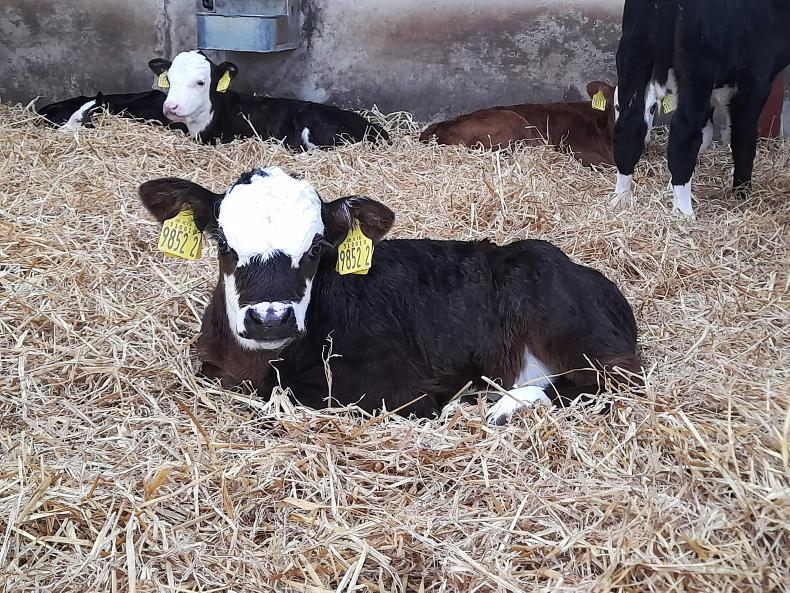
Keep calves on transition milk, says NI vet
Dairy farmers who go to the expense and effort to vaccinate their cows to help prevent calf scour should ensure transition milk is effectively utilised post-calving, a local vet has said.
Addressing a meeting in Omagh last Thursday, Alise Callaghan from MSD Animal Health said a newborn calf should receive 10% to 12% of its bodyweight as colostrum as soon as possible after calving and at worst, within the first three to six hours.
That first feed is vital as calves have minimal natural immunity, so are reliant on the passive transfer of antibodies in colostrum, mainly within the first six hours of life.
However, after that, transition milk should be offered for a further five days.
“The first feed of colostrum contains 25% of antibody output. Our other 75% of antibody output is in our transition milk – our next five or six feeds thereafter. We need to be taking full benefit of that vaccination,” said Callaghan.
Death
Data from the Agri-Food and Biosciences Institute (AFBI) shows that scour is the main cause of death among calves up to one month of age, with cryptosporidium, followed by rotavirus, being the two most important sources of a scour infection.
Other work has shown that calves which get scour are 17 times more likely to develop pneumonia later in life.
“The problem of calf scour doesn’t stop when the visible signs of scour stop,” said Callaghan.
The scour vaccines available from MSD (Bovillis Cryptium and Bovillis Rotavec Corona) should be given to pregnant cattle within a three- to 12-week window pre-calving.
Rotavec is a single shot each year. However, Cryptium is a two-shot programme in the first year, given four to five weeks apart.
After that, an annual booster is required. Both vaccines can be administered on the same day, explained Callaghan.


SHARING OPTIONS