


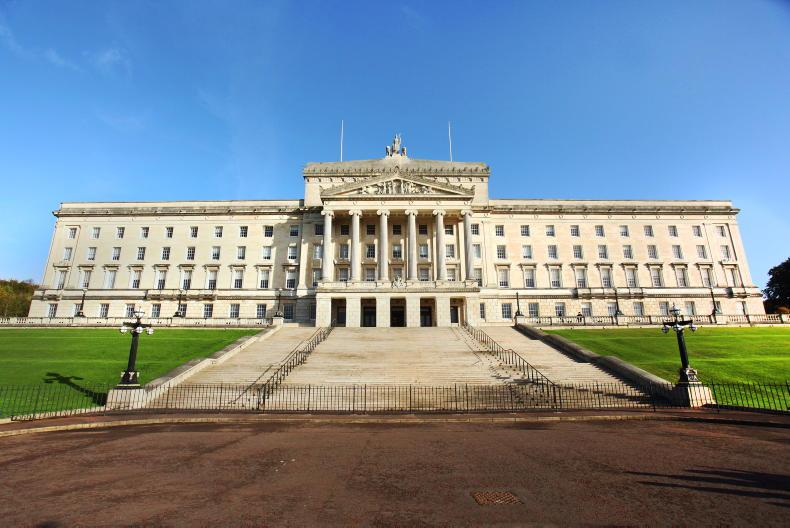
It will be up to the next agriculture minister to pass legislation on wildlife intervention measures for TB control across NI, the current minister Andrew Muir has said.
During an evidence session with the Stormont Agriculture committee, Minister Muir said a public consultation on wildlife intervention will take place in the spring.
However, the Alliance MLA acknowledged that it will be after the next Assembly election, which is expected in May 2027, before legislation is passed at Stormont.
“We will consider the responses (to the consultation) and then there will be legislation. Unfortunately, it will be in the next mandate because we lost two years of this mandate,” he said.
Legal
When pressed about the slow pace of addressing the disease reservoir in wildlife, Minister Muir suggested DAERA was wary of a potential legal challenge.
He pointed to a High Court ruling from November 2023 when the process that DAERA followed for setting out a previous badger cull plan was deemed unlawful.
“I understand the frustration in terms of the pace of which we are going out to consult on wildlife intervention options, but the reason we are doing that is we are trying to do it right,” he said.
TVR pilot
However, Minister Muir indicated a new pilot scheme on a Test, Vaccinate and Remove (TVR) approach to wildlife intervention can take place now.
This involves trapping badgers and testing them for TB, with positive cases culled and negative animals vaccinated for TB then released.
It is understood that a cross-border area near Derry and Strabane has been selected for the first phase of the project.
“In relation to regionalised approach, we are ready to go. We are moving on this. We have put resources to this,” he said.
Minister Muir said the new project is being supported with €6.4m of funding from the Irish government as part of its Shared Island initiative.
There has been some criticism that the selected area has lower TB rates than the NI average, although Minister Muir dismissed that argument in his session with MLAs.
He said incidence rate in the area is around 10% and the latest figures from DAERA show the NI average is 10.6%.
“The area in question has been selected because of the geographical nature of it. It is ideal for us to be able to move in in terms of regionalised approach,” he said.



SHARING OPTIONS