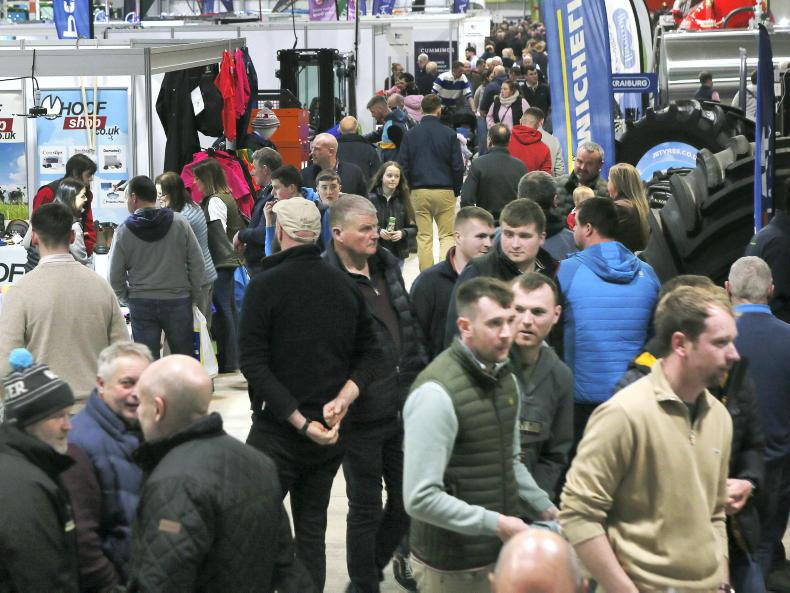
Despite the warnings around global over-supply leading to extremely weak commodity markets, dairy farmers in NI don’t intend producing less milk in 2026, the results of our annual survey of dairy farmers at the Royal Ulster Winter Fair shows.
Running for over 15 years, the survey asks dairy farmers about their current intentions in the sector.
The response to that question in each of the last five years is shown in Figure 1. What we found this year is similar to the responses made in 2022, 2023 and 2024, with around 30% indicating they intend expanding output in the year ahead and about twice that number suggesting they will keep output the same.
Normally that would translate into growth in production in the year ahead. In 2023 output went up very slightly, and in 2024 there was 3.6% growth.
However, to September 2025 NI milk output is up by a remarkable 8.5% year-on-year, with farmers responding to a favourable milk price to feed price ratio, as well as excellent spring and summer weather.
With lots of good silage in yards and relatively stable feed prices, it is likely that production will continue to grow in the New Year. It is also worth remembering that in previous downturns, the initial response by farmers was to produce more milk in an attempt to maintain cashflow.
However, there is one caveat in our survey results this year and that relates to the number of farmers who indicated they intend reducing output (4%) or exiting the industry (6%).
The total of 10% is higher than in previous years, although it does include a couple of farmers who said they would be negatively impacted if the A5 road goes ahead.
Others said they did not want to go through another period when returns are below cost of production.
We also asked farmers what price they expect to receive in the year ahead.
In our experience, the response to this question is often fairly accurate. In last year’s survey, the majority (58%) said they expected prices of between 40 and 45p/l.
To the end of September 2025, the prices paid have averaged 43.60p/l, although given current trends, that average might drop back towards 42p/l by the year-end.
This year, there is probably more of a spread than seen in other years. Under half (44%) expect prices of 30 to 35p/l, with 21% thinking the market will deliver between 36 and 40p/l. A few farmers, some of whom produce very high solids milk, expect prices over 40p.
However, that leaves nearly one quarter (24%) expecting to receive average prices in 2026 below 30p/l. Listening to processors at the event, that price could become a reality from early next year.
Majority of farms can manage their slurry
The second part of our 2025 survey asked dairy farmers about their ability to manage the slurry produced on their farms.
Most respondents indicated that they are able to operate within the annual stocking rate limit of 170kg manure nitrogen (N) per hectare, with just 35% having to export slurry each year to stay within this legal requirement.
It is these higher-stocked farms which are potentially negatively impacted by rules proposed by DAERA within the draft nutrients action programme (NAP) published in May 2025. As well as putting a new system in place to record slurry movements off farm, the department proposed new phosphorus (P) limits per hectare for farms stocked above 150kg manure N/ha, starting at 10kg P/ha by 2027, falling to 8kg P/ha by 2029.
We asked respondents whether they knew the actual P balance on their farms. Most (75%) said they didn’t.
However, among those who said they had calculated the figure, there was a wide range of responses, with some as low as 3kg P/ha and even down to 1kg.
That probably reflects the fact that lower-input, grass-based systems will actually have little problem complying with proposed new P limits – it is primarily an issue for high input, high output dairy systems, intensive beef finishing and the pig and poultry sector – in other words, farms where output is dependent on high levels of concentrate feed.
Export
One potential solution for these farms is to find someone willing to take in their excess slurry.
We asked farmers how easy it currently is within their area to find an outlet for slurry. Just over one-third (37%) said it isn’t a problem, while 48% indicated it can be difficult during the closed period. Just 15% said it was difficult all year around.
The fourth question asked dairy farmers for their views on who should stand the costs associated with exporting slurry to another farm.
As shown in Figure 3, over half (53%) think the importing farm should get the slurry for free, while 28% thought the importer should cover the cost of haulage.
Only a small number of respondents (5%) thought the importing farm should pay for the slurry, while also covering the cost of haulage.
On the other side of the argument, 14% thought the importing farm should get paid by the exporter for taking in slurry.
Caveat
There is an important caveat to the responses around slurry.
In the original NAP proposals published in May 2025, the department suggested that farms which import slurry will have to notify DAERA within four days of the movement taking place.
In addition, if slurry imports push a farm’s manure N load above 150kg N/ha, then it will have to comply with P balance requirements.
If enacted in future years, these requirements could change the dynamic around slurry exports in NI.
Most farmers have taken advice on IHT
The final part of our 2025 survey asked dairy farmers about proposed reforms of UK inheritance tax coming into place from April 2026, which set a new £1m threshold for agricultural and business property relief.
Nearly three-quarters (73%) of respondents said they have spoken to a professional person, such as a lawyer or accountant, about the changes.
When asked about what steps they might take to avoid a future inheritance tax charge, most (59%) said they intend passing on assets to the next generation during their lifetime, in the hope that they live for a further seven years (thereby utilising the seven-year rule).
Only 6% said they intend taking out a life insurance policy to cover potential inheritance tax liabilities.
That leaves 35% of respondents who said they intend waiting for a change of government, in the hope that the policy is reversed after the next general election in 2029 – all the other major UK political parties have said they would re-instate 100% relief.
Despite the warnings around global over-supply leading to extremely weak commodity markets, dairy farmers in NI don’t intend producing less milk in 2026, the results of our annual survey of dairy farmers at the Royal Ulster Winter Fair shows.
Running for over 15 years, the survey asks dairy farmers about their current intentions in the sector.
The response to that question in each of the last five years is shown in Figure 1. What we found this year is similar to the responses made in 2022, 2023 and 2024, with around 30% indicating they intend expanding output in the year ahead and about twice that number suggesting they will keep output the same.
Normally that would translate into growth in production in the year ahead. In 2023 output went up very slightly, and in 2024 there was 3.6% growth.
However, to September 2025 NI milk output is up by a remarkable 8.5% year-on-year, with farmers responding to a favourable milk price to feed price ratio, as well as excellent spring and summer weather.
With lots of good silage in yards and relatively stable feed prices, it is likely that production will continue to grow in the New Year. It is also worth remembering that in previous downturns, the initial response by farmers was to produce more milk in an attempt to maintain cashflow.
However, there is one caveat in our survey results this year and that relates to the number of farmers who indicated they intend reducing output (4%) or exiting the industry (6%).
The total of 10% is higher than in previous years, although it does include a couple of farmers who said they would be negatively impacted if the A5 road goes ahead.
Others said they did not want to go through another period when returns are below cost of production.
We also asked farmers what price they expect to receive in the year ahead.
In our experience, the response to this question is often fairly accurate. In last year’s survey, the majority (58%) said they expected prices of between 40 and 45p/l.
To the end of September 2025, the prices paid have averaged 43.60p/l, although given current trends, that average might drop back towards 42p/l by the year-end.
This year, there is probably more of a spread than seen in other years. Under half (44%) expect prices of 30 to 35p/l, with 21% thinking the market will deliver between 36 and 40p/l. A few farmers, some of whom produce very high solids milk, expect prices over 40p.
However, that leaves nearly one quarter (24%) expecting to receive average prices in 2026 below 30p/l. Listening to processors at the event, that price could become a reality from early next year.
Majority of farms can manage their slurry
The second part of our 2025 survey asked dairy farmers about their ability to manage the slurry produced on their farms.
Most respondents indicated that they are able to operate within the annual stocking rate limit of 170kg manure nitrogen (N) per hectare, with just 35% having to export slurry each year to stay within this legal requirement.
It is these higher-stocked farms which are potentially negatively impacted by rules proposed by DAERA within the draft nutrients action programme (NAP) published in May 2025. As well as putting a new system in place to record slurry movements off farm, the department proposed new phosphorus (P) limits per hectare for farms stocked above 150kg manure N/ha, starting at 10kg P/ha by 2027, falling to 8kg P/ha by 2029.
We asked respondents whether they knew the actual P balance on their farms. Most (75%) said they didn’t.
However, among those who said they had calculated the figure, there was a wide range of responses, with some as low as 3kg P/ha and even down to 1kg.
That probably reflects the fact that lower-input, grass-based systems will actually have little problem complying with proposed new P limits – it is primarily an issue for high input, high output dairy systems, intensive beef finishing and the pig and poultry sector – in other words, farms where output is dependent on high levels of concentrate feed.
Export
One potential solution for these farms is to find someone willing to take in their excess slurry.
We asked farmers how easy it currently is within their area to find an outlet for slurry. Just over one-third (37%) said it isn’t a problem, while 48% indicated it can be difficult during the closed period. Just 15% said it was difficult all year around.
The fourth question asked dairy farmers for their views on who should stand the costs associated with exporting slurry to another farm.
As shown in Figure 3, over half (53%) think the importing farm should get the slurry for free, while 28% thought the importer should cover the cost of haulage.
Only a small number of respondents (5%) thought the importing farm should pay for the slurry, while also covering the cost of haulage.
On the other side of the argument, 14% thought the importing farm should get paid by the exporter for taking in slurry.
Caveat
There is an important caveat to the responses around slurry.
In the original NAP proposals published in May 2025, the department suggested that farms which import slurry will have to notify DAERA within four days of the movement taking place.
In addition, if slurry imports push a farm’s manure N load above 150kg N/ha, then it will have to comply with P balance requirements.
If enacted in future years, these requirements could change the dynamic around slurry exports in NI.
Most farmers have taken advice on IHT
The final part of our 2025 survey asked dairy farmers about proposed reforms of UK inheritance tax coming into place from April 2026, which set a new £1m threshold for agricultural and business property relief.
Nearly three-quarters (73%) of respondents said they have spoken to a professional person, such as a lawyer or accountant, about the changes.
When asked about what steps they might take to avoid a future inheritance tax charge, most (59%) said they intend passing on assets to the next generation during their lifetime, in the hope that they live for a further seven years (thereby utilising the seven-year rule).
Only 6% said they intend taking out a life insurance policy to cover potential inheritance tax liabilities.
That leaves 35% of respondents who said they intend waiting for a change of government, in the hope that the policy is reversed after the next general election in 2029 – all the other major UK political parties have said they would re-instate 100% relief.






SHARING OPTIONS