


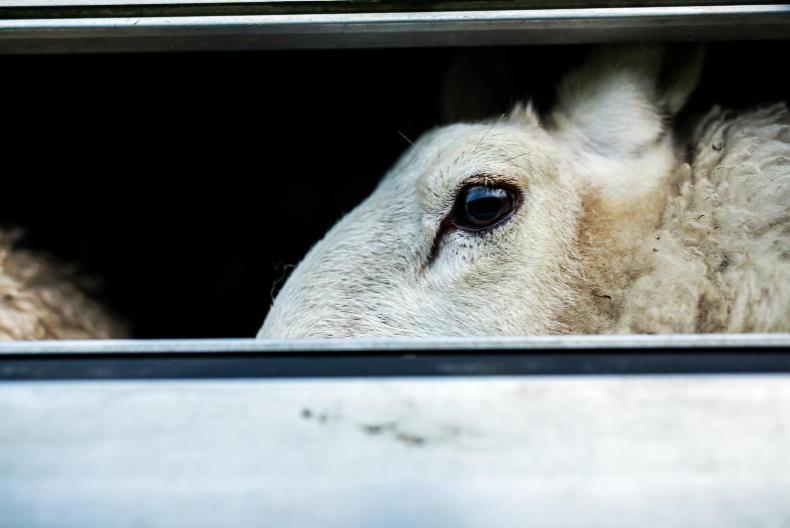
Sheep output in Northern Ireland fell by a significant 17.1% or over 175,000 head in 2025.
There were reductions across all market outlets, including sheep slaughtered in Northern Ireland, sheep exported from Northern Ireland for direct slaughter and sheep exported under the breeding and production certificate.
As detailed in Table 1, the number of sheep slaughtered in Department of Agriculture, Environment and Rural Affairs-approved (DAERA) slaughter plants was recorded at 404,578 head, equating to a reduction of 52,308 sheep or 11% compared with 2025 throughput.
The number of hoggets and lambs slaughtered reduced by over 55,000 head or 13%, while the ewe and ram kill of 23,344 head fell by 8% or 2,081 head.
The reduction comes on the back of a combination of reduced numbers in the market and factories at times focusing on beef throughput. However, the kill figure did not fall to the same extent as live exports.
Direct slaughter exports
The number of sheep exported live for direct slaughter to Ireland fell by a high figure of 87,830 head or 27.4% on 2024 levels.
The figure of 231,726 sheep exported live to factories in Ireland for direct slaughter is at the lowest level since Foyle Meats ceased slaughtering sheep in 2010.
The reduction in exports to Ireland contributed to about 25% of the reduction in throughput in Irish slaughter plants in 2025.
In contrast, the number of sheep exported for direct slaughter to Britain increased by 28,907 head or 155%, to reach 47,537 head.
Exports took place mainly from May 2025, with a significant differential between prices in Northern Ireland and Britain opening up the opportunity for exporters to operate and generate a margin.
Exports for direct slaughter to other countries reduced as a consequence of higher exports to Britain for direct slaughter, with numbers exported falling from 19,610 head in 2024 to 10,687 head in 2025.
The combined effect of exports to these three destinations was a fall in export volumes for direct slaughter of 52,308 head or 11.4%.
Exports to farms
Exports under the breeding or production health certificate generally described as exports to farms also varied greatly on the 12 months previous. Exports to farms in Ireland fell by over 18,000 head to 31,228 or by over one third on the previous year.
Exports to Britain also recorded a sharp fall, reducing by 38,581 head or over 25% to 114,224. A high percentage of such exports are top-quality cull ewes destined for livestock sales in Britain.
Exports were much lower in the period April through August, coinciding with lower numbers in the market.
The final destination – exports to other countries - typically covers exports to the Netherlands and to a lesser extent Belgium and France. Numbers exported increased by 1,330 head or 20.8% and would have finished the year higher were it not for restrictions on exports introduced in response to the outbreak of bluetongue virus.
2026 forecasts
Sheep availability looks set to tighten further in 2026 on the back of a reduced breeding flock. The bluetongue virus curtailed exports for a period at the end of 2025 and the virus could have a say again in 2026 depending on its prevalence.
With throughput under massive pressure in Ireland, there will be continued demand for sheep from Northern Ireland, while demand from Britain will be dominated by the price differential and the supply-demand balance across the water.
It is expected that numbers will remain tight and, in recent weeks, a wider differential has emerged between prices which is supporting trade.



SHARING OPTIONS