


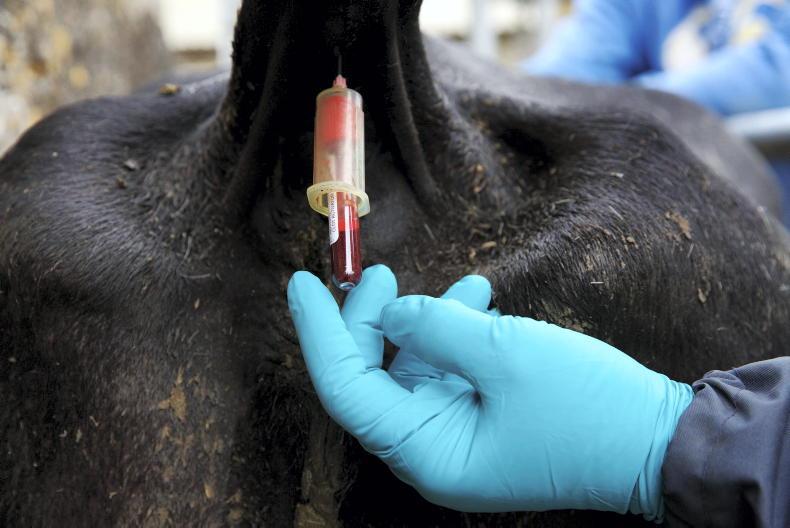
A DAERA spokesperson has confirmed there have been no more animals found with bluetongue virus (BTV) in NI since the case on a Co Down farm which was reported on 16 December 2025.
In total, BTV has been found on four NI farms, on which a total of 52 animals have been confirmed as having the virus. It is understood that the disease has only been discovered in cattle and there have been no clinical signs.
The spokesperson also confirmed that by the end of last week, over 5,500 animals across NI have been tested for BTV since the first case in Co Down at the end of November.
Despite the drop off in rates of BTV, a temporary control zone (TCZ) remains in place across much of Co Down and into south Antrim.
In the TCZ, high-risk animals such as pregnant cattle and breeding males are only allowed to move to another farm under a specific licence issued by DAERA and when various conditions are met. In most cases, pre-movement testing of high-risk animals is required.
Last Thursday, Agriculture Minister Andrew Muir confirmed he had directed his officials to put in place arrangements for his department to meet the laboratory costs of any pre-movement tests.
“This is a unique situation based on current circumstances and is short term in nature to provide targeted sector specific support,” said the Minister. Farmers who want pre-movement testing done, should contact their private vet – the cost associated with collecting the blood sample rests with the farmer.
Spring
In the meantime, it increasingly looks as though the TCZ might remain in place into the spring.
“Any decision on its removal will be based on veterinary advice and will consider a range of factors, including the risk of BTV spread from high-risk animals to areas outside the TCZ, the wider NI BTV position and potential spread within NI due to increased midge activity or other factors,” said the DAERA spokesperson.
Speaking on Monday, UFU President William Irvine said the industry is holding its breath in case the disease marches across NI in the coming months. “The potential is there and that is what we are afraid of,” he said.
Irvine said he hasn’t taken the decision to vaccinate his own cattle and would wait to see what happens into the spring. He also called on the department to simplify the approval process to use the vaccines.
Despite the drop-off in cases in NI and the extremely low risks involved, Irish Cattle and Sheep Farmers Association (ICSA) president Seán McNamara has again called on Republic of Ireland factories to stop importing animals from NI for direct slaughter.



SHARING OPTIONS