


Cattle farmers who decide to get their herd genotyped under the Bovine Genetics Project (BGP) run by Sustainable Ruminant Genetics (SRG), will effectively have two full winters to get the process completed.
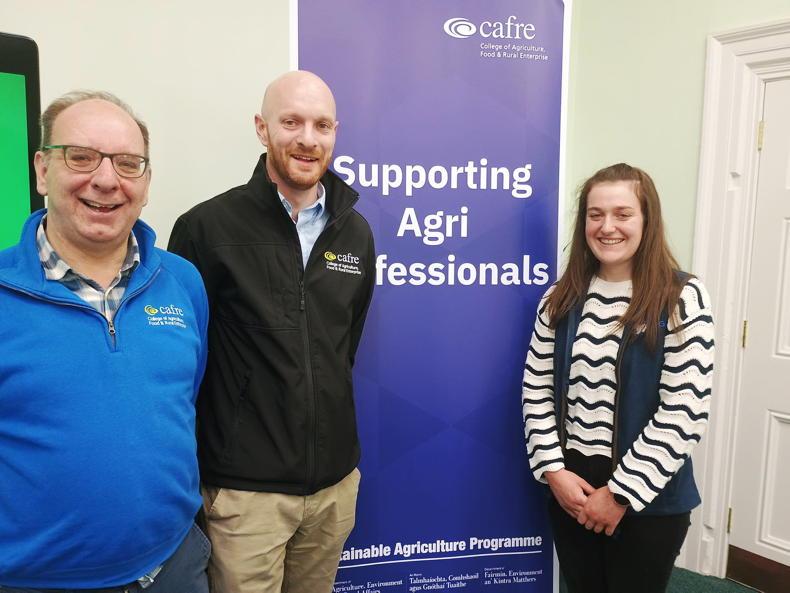
Explaining the timeline at a training event run at CAFRE Greenmount, Darryl Boyd from the department confirmed that the genotyping scheme will open from 1 September 2026 and will run through until the middle of May 2028.
In practice, farmers will be able to genotype (DNA) their breeding animals (cows, heifers and stock bulls) from the September start date, with the scheme also covering the cost of a genotype sample of the 2027 calf crop. To allow time to get late 2027-born calves and any other breeding animals sampled, final submissions will be accepted up until 15 May 2028.
To receive payment, animals must be in the herd between 1 September 2026 and 31 December 2027. The scheme will not cover the cost of genotyping males between September and December 2026, so farmers should check that their sires are recorded as bulls (B) on NIFAIS. In 2027, the entire calf crop can be genotyped, including both males and females.
The genotyping scheme is due to launch at the Balmoral Show and from then onwards, farmers can register via the SRG website and access their information via a user portal.
On the portal, all breeding animals will be auto-selected for genotyping, although farmers will be able to unselect animals before ordering tags - for example, there is little point genotyping cull cows or heifers that are close to slaughter.
The sampling process involves inserting a tissue tag into the ear. This will be an official tag, so it can compensate for a situation where an animal has lost (or loses) one of its existing tags.
For the 2027 calf crop, they will be tagged using two tissue tags – one for the BVD scheme (white or clear vial) and one for the DNA sample (a pink vial). The colour coding has been done to help ensure the samples are kept separate and sent to the correct lab.
Payment
Farmers in the genotyping scheme must send samples to an approved lab and a list of these will be shown on the SRG user portal. The whole process of ordering tags and getting samples tested will be paid for by the farmer, with costs reimbursed by DAERA at a later date.
According to Darryl Boyd, the current plan is that the department will issue money to farmers every four months, with a payment of £13 made for every eligible DNA sample received by a lab.
“SRG are confident, from the labs it is negotiating with, that the whole process will cost under £13. Hopefully farmers will see the benefits and continue to do testing [post 2027],” he said.
Conditions attached to Farm Sustainability Payment
To avoid penalties on future payments, cattle farmers must have registered for the Bovine Genetics Project (via the SRG online portal) and completed associated training by 15 May 2028.
That training will be available from September 2026 and will be delivered either online or face-to-face (similar to the soil nutrient health scheme).
Those farmers who fail to meet requirements around registration and training, will have 10% deducted from their Farm Sustainability Payment in 2028 and 15% thereafter.
However, while farmers must sign up to the scheme, they don’t have to genotype their animals – that part of the scheme is voluntary.
“We are keen to encourage farmers to genotype and get the full benefit of the scheme,” said Darryl Boyd from CAFRE.
Between 2010 and 2023, analysis of CAFRE benchmarking results shows that the average herd in NI has increased output from 6,500l to 8,000l per cow.
Over that period, both butterfat and protein percentages are also up, resulting in a 25% increase in milk solids from 475kg to 600kg per cow in 2023.
“Gains have been made, but genotyping has the potential to accelerate that. It will help to identify cows to breed from,” said David Mackey from CAFRE.
The Bovine Genetics Project will continue to use the Profitable Lifetime Index (PLI) developed by the Agriculture and Horticulture Development Board (AHDB) as the main index for NI dairy farmers.
The PLI comprises traits (production, fertility, feed efficiency, survival, udder health, etc.), weighted by economic importance, which are then combined into a single overall rating. Each main dairy breed has its own PLI base, updated every five years.
“PLI is set on the basis of a cheese contract in Britain. It is very relevant to here. It is very suitable to use in NI,” said Mackey.
Reliable
Perhaps the main benefit from genotyping breeding animals is that it will generate accurate information on which to base decisions.
To illustrate, Mackey quoted the example of two dairy heifers at Greenmount, which had PLIs (based on their parental average) of £236 and £351 respectively. But when these heifers were genomically tested, their PLIs came back as £336 and £272.
That reflects the fact that individual animals have their own genetic merit and even in the case of siblings, variability in semen cells and eggs ensures that no two calves are exactly the same.
“That’s where genotyping really comes into its own. It will determine the genetic ability right away. We have a more informed breeding decision,” said Mackey.
Other benefits
As well as faster genetic progress in a herd, genotyping will identify the correct parents for each animal and will have a role in monitoring levels of inbreeding, especially in pedigree dairy herds, said Mackey.
Other indexes
There will also be much more information provided to dairy farmers, beyond PLI. A dairy beef index will help dairy farmers select beef bulls that are easy-calving, have a short gestation, but produce calves with good carcase traits.
Suckler herd
In the suckler herd, the plan is that each breeding animal will have a maternal and a terminal index, helping to identify those best suited for breeding replacements or cattle for slaughter.
The other main index is a commercial beef value for non-breeding cattle, to be measured in pounds (£) which will provide information on an animal’s genetic capability across key beef traits.
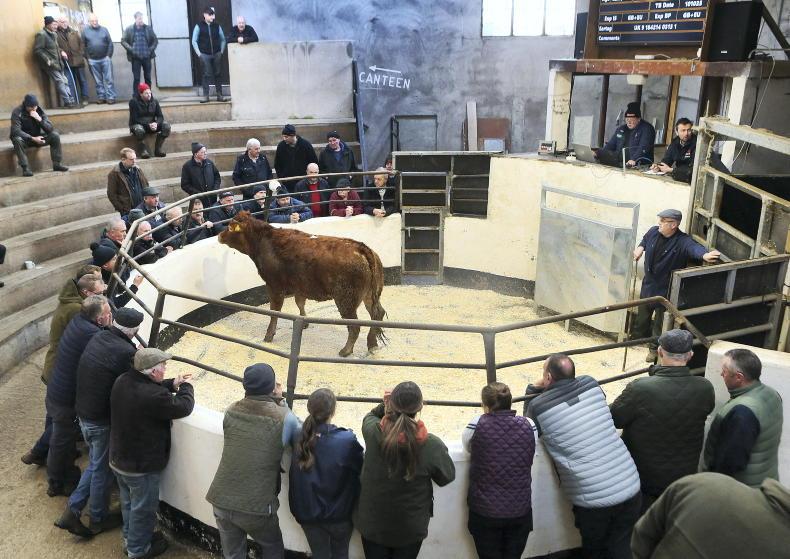
It is hoped that this information will be displayed on mart boards in the future, probably using a star rating system across three categories of pure dairy, dairy x beef and suckler beef.




SHARING OPTIONS