With anaerobic digestion (AD) moving into its development stage, a question often arises as to whether farmers actually want this industry or not. Some see it as an opportunity, while others view it as a new farming sector that could pose a threat to their existing enterprises.
However, the Farm Level Economic, Environmental and Transport (FLEET) study, published by Teagasc late last year, found significant interest from farmers in supplying feedstock to AD plants.
Using data from the Teagasc National Farm Survey, the study estimates that farmers would be willing to supply a total weighted grass silage area of approximately 420,000 acres, equivalent to around 175,000 hectares
This level of willingness exceeds the estimated land requirement needed to meet Ireland’s national biomethane target. The report calculates that achieving the 5.7 terawatt-hour (TWh) biomethane target by 2030 would require between 110,000 and 130,000 hectares of grassland, depending on yield and system assumptions. This implies that farmer interest and potential feedstock availability are not limiting factors at national level.
Survey results also show that many farmers would consider dedicating 10 to 20 acres per farm to AD feedstock production. Preferred supply arrangements include contract-based agreements with local AD plants.
Feedstocks potential
The report focuses on grass silage and animal slurry as the primary agricultural feedstocks for AD plants. In practice, these feedstocks may form only a proportion of the total feedstock mix used in many AD plants currently in development. Where grass silage represents a smaller share of the overall feedstock mix, the level of farmer willingness to supply silage identified in the report could, in principle, support a greater number of AD plants than those modelled in the study.
Silage and slurry, however, are suitable AD feedstocks. Grass silage has a substantially higher energy density, producing between seven and 10 times more biomethane than cattle slurry on a fresh-weight basis. Slurry, while lower in energy yield, is environmentally significant because 20% to 50% of its methane potential can be emitted during storage before land application.
Livestock housing periods generate substantial slurry volumes, with dairy cows and bulls housed for an average of 121 days, and other livestock housed for 147 to 150 days annually. AD offers a means of capturing methane that would otherwise be released during storage and spreading the report outlines.
The report states that, under the EU Renewable Energy Directive II, grass silage qualifies as an advanced biofuel, and when used in the transport sector its energy contribution is counted as double its actual energy content for the purposes of renewable energy targets. No reference is made in the report to eligibility criteria under the subsequent Renewable Energy Directive III.
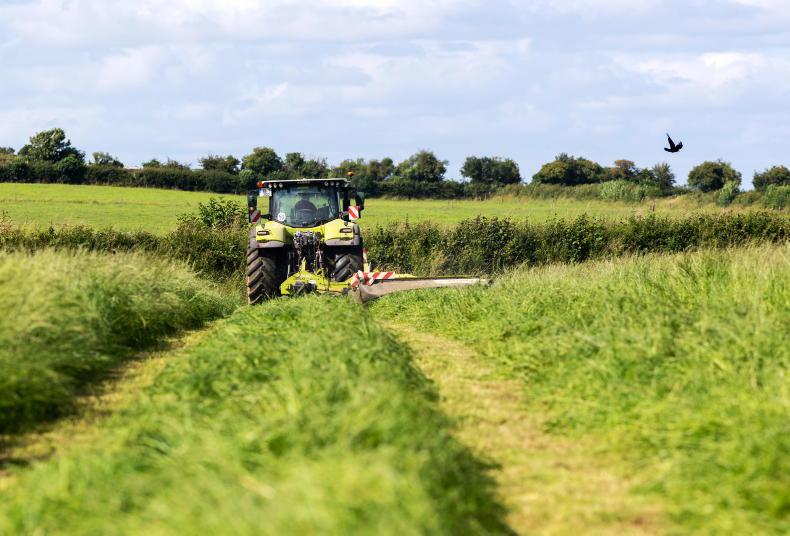
Is €35 per tonne of silage enough for farmers to consider supplying an AD plant?
Farm-level economics
Farm-level economic modelling in the FLEET report is based on discounted cash flow analysis using Teagasc National Farm Survey data for the period 2018-2020. The results show that producing grass silage for off-farm AD can be economically competitive with specialist cattle rearing, cattle “other” systems, and specialist sheep enterprises when the silage price exceeds €35/t.
The analysis includes nutrient opportunity costs, recognising the value of nutrients removed from the farm, but excludes the capital cost of land and silage storage infrastructure.
It is worth noting that these results are based on historical data and that significant volatility in farm input and output prices has occurred since this period. It is very unlikely that prices as low as €35/t will be attractive to farmers or offered by AD developers.
Environmental impacts
In scenarios where animal slurry alone is used as an AD feedstock and livestock remain on the farm, GHG emissions are reduced by 6.5% to 11.6%. These reductions result from avoiding emissions associated with slurry storage and land application rather than changes in livestock numbers.
Ammonia emissions show similarly variable outcomes. Where slurry is diverted to AD, ammonia emissions fall by between 58% and 78%, as emissions from housing, storage and spreading are largely avoided.
However, the report notes that digestate has a higher ammonium content than raw slurry, meaning that digestate-heavy systems can increase ammonia emissions if not properly managed. Scenarios relying on biological nitrogen sources deliver the greatest reductions in both GHG and ammonia emissions.
Environmental modelling shows that where grass production for AD replaces livestock on a per-hectare basis, greenhouse gas emissions fall by 50-98%, mainly due to the elimination of enteric methane and manure management emissions.
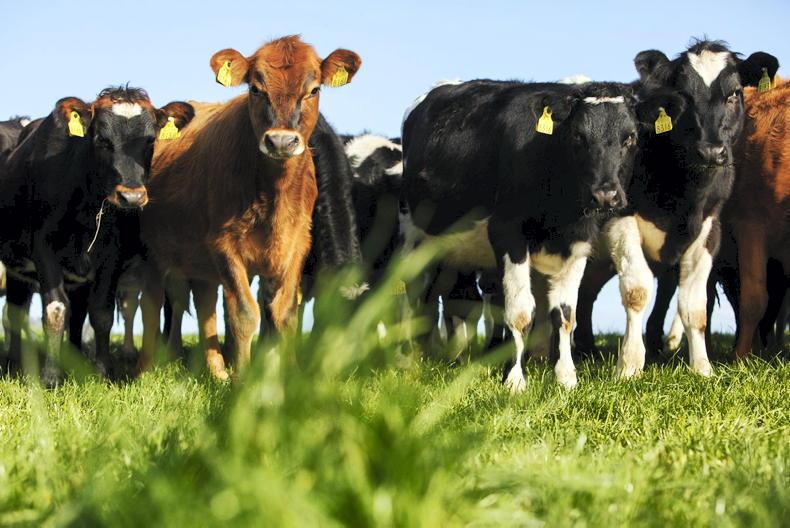
Where animal slurry alone is used as an AD feedstock, GHG emissions are reduced by 6.5% to 11.6%.
Transport and spatial feasibility
Transport modelling in the FLEET report uses geographic information systems and real road network data to assess feedstock supply distances. The modelling assumes a system of 140 biomethane plants, each with a capacity of 40 gigawatt-hours (GWh).
In a “middle optimistic” scenario, where surplus grass is available, feedstocks can be supplied largely from within an average 10km road distance, allowing many plants to operate at full capacity with relatively low transport emissions and costs. In a more pessimistic scenario, where only 15% of grassland is made available, average transport distances increase to around 15km or more, reducing economic and environmental performance.
Impact
At national level, the FLEET report found that meeting the biomethane target using grass silage and slurry would increase agricultural sector income by €49-€53 million per year, equivalent to a 1.2-1.3% increase relative to the baseline. This corresponds to an income of approximately €425/ha on land used for AD feedstock production. Again, it needs to be noted that these figures are largely out of date.
Total agricultural greenhouse gas emissions are projected to be 2.3% lower than the baseline by 2030. Methane emissions decline by 1.8%, while nitrous oxide emissions fall by 4%.

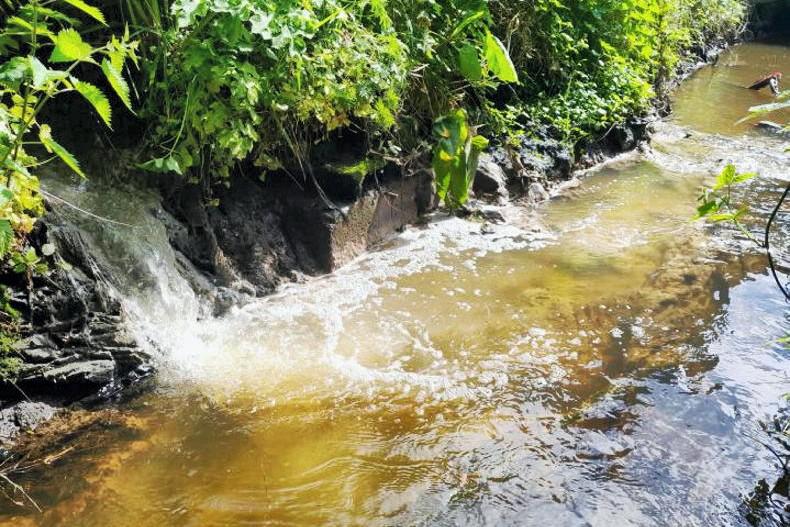
Digestate has a higher ammonium content than raw slurry, meaning that digestate-heavy systems can increase ammonia emissions if not properly managed
Options for farmers
For farmers, the report presents an AD feedstock supply as an additional enterprise option. Options include supplying grass silage under contract, providing slurry as a co-feedstock, and recycling digestate as a fertiliser. The uptake and success depend on silage prices, distance to AD plants, nutrient management practices, and the balance between livestock and feedstock production.
The author Stephen Robb is currently involved in a family/community proposal for an anaerobic digestion facility in Co Donegal.
With anaerobic digestion (AD) moving into its development stage, a question often arises as to whether farmers actually want this industry or not. Some see it as an opportunity, while others view it as a new farming sector that could pose a threat to their existing enterprises.
However, the Farm Level Economic, Environmental and Transport (FLEET) study, published by Teagasc late last year, found significant interest from farmers in supplying feedstock to AD plants.
Using data from the Teagasc National Farm Survey, the study estimates that farmers would be willing to supply a total weighted grass silage area of approximately 420,000 acres, equivalent to around 175,000 hectares
This level of willingness exceeds the estimated land requirement needed to meet Ireland’s national biomethane target. The report calculates that achieving the 5.7 terawatt-hour (TWh) biomethane target by 2030 would require between 110,000 and 130,000 hectares of grassland, depending on yield and system assumptions. This implies that farmer interest and potential feedstock availability are not limiting factors at national level.
Survey results also show that many farmers would consider dedicating 10 to 20 acres per farm to AD feedstock production. Preferred supply arrangements include contract-based agreements with local AD plants.
Feedstocks potential
The report focuses on grass silage and animal slurry as the primary agricultural feedstocks for AD plants. In practice, these feedstocks may form only a proportion of the total feedstock mix used in many AD plants currently in development. Where grass silage represents a smaller share of the overall feedstock mix, the level of farmer willingness to supply silage identified in the report could, in principle, support a greater number of AD plants than those modelled in the study.
Silage and slurry, however, are suitable AD feedstocks. Grass silage has a substantially higher energy density, producing between seven and 10 times more biomethane than cattle slurry on a fresh-weight basis. Slurry, while lower in energy yield, is environmentally significant because 20% to 50% of its methane potential can be emitted during storage before land application.
Livestock housing periods generate substantial slurry volumes, with dairy cows and bulls housed for an average of 121 days, and other livestock housed for 147 to 150 days annually. AD offers a means of capturing methane that would otherwise be released during storage and spreading the report outlines.
The report states that, under the EU Renewable Energy Directive II, grass silage qualifies as an advanced biofuel, and when used in the transport sector its energy contribution is counted as double its actual energy content for the purposes of renewable energy targets. No reference is made in the report to eligibility criteria under the subsequent Renewable Energy Directive III.
Is €35 per tonne of silage enough for farmers to consider supplying an AD plant?
Farm-level economics
Farm-level economic modelling in the FLEET report is based on discounted cash flow analysis using Teagasc National Farm Survey data for the period 2018-2020. The results show that producing grass silage for off-farm AD can be economically competitive with specialist cattle rearing, cattle “other” systems, and specialist sheep enterprises when the silage price exceeds €35/t.
The analysis includes nutrient opportunity costs, recognising the value of nutrients removed from the farm, but excludes the capital cost of land and silage storage infrastructure.
It is worth noting that these results are based on historical data and that significant volatility in farm input and output prices has occurred since this period. It is very unlikely that prices as low as €35/t will be attractive to farmers or offered by AD developers.
Environmental impacts
In scenarios where animal slurry alone is used as an AD feedstock and livestock remain on the farm, GHG emissions are reduced by 6.5% to 11.6%. These reductions result from avoiding emissions associated with slurry storage and land application rather than changes in livestock numbers.
Ammonia emissions show similarly variable outcomes. Where slurry is diverted to AD, ammonia emissions fall by between 58% and 78%, as emissions from housing, storage and spreading are largely avoided.
However, the report notes that digestate has a higher ammonium content than raw slurry, meaning that digestate-heavy systems can increase ammonia emissions if not properly managed. Scenarios relying on biological nitrogen sources deliver the greatest reductions in both GHG and ammonia emissions.
Environmental modelling shows that where grass production for AD replaces livestock on a per-hectare basis, greenhouse gas emissions fall by 50-98%, mainly due to the elimination of enteric methane and manure management emissions.
Where animal slurry alone is used as an AD feedstock, GHG emissions are reduced by 6.5% to 11.6%.
Transport and spatial feasibility
Transport modelling in the FLEET report uses geographic information systems and real road network data to assess feedstock supply distances. The modelling assumes a system of 140 biomethane plants, each with a capacity of 40 gigawatt-hours (GWh).
In a “middle optimistic” scenario, where surplus grass is available, feedstocks can be supplied largely from within an average 10km road distance, allowing many plants to operate at full capacity with relatively low transport emissions and costs. In a more pessimistic scenario, where only 15% of grassland is made available, average transport distances increase to around 15km or more, reducing economic and environmental performance.
Impact
At national level, the FLEET report found that meeting the biomethane target using grass silage and slurry would increase agricultural sector income by €49-€53 million per year, equivalent to a 1.2-1.3% increase relative to the baseline. This corresponds to an income of approximately €425/ha on land used for AD feedstock production. Again, it needs to be noted that these figures are largely out of date.
Total agricultural greenhouse gas emissions are projected to be 2.3% lower than the baseline by 2030. Methane emissions decline by 1.8%, while nitrous oxide emissions fall by 4%.
Digestate has a higher ammonium content than raw slurry, meaning that digestate-heavy systems can increase ammonia emissions if not properly managed
Options for farmers
For farmers, the report presents an AD feedstock supply as an additional enterprise option. Options include supplying grass silage under contract, providing slurry as a co-feedstock, and recycling digestate as a fertiliser. The uptake and success depend on silage prices, distance to AD plants, nutrient management practices, and the balance between livestock and feedstock production.
The author Stephen Robb is currently involved in a family/community proposal for an anaerobic digestion facility in Co Donegal.






SHARING OPTIONS