A new report states that renewable electricity saved up to €13 million per day in gas costs during peak price periods in 2025. However, electricity bills remain stubbornly high, with little prospect of these decreasing.
The report, produced by consultants Baringa for Wind Energy Ireland, shows that 13.8 terawatt-hours (TWh) of wind generation across the all-island Single Electricity Market (SEM) displaced more than €1.4 billion worth of gas and carbon costs in 2025. Around 1.1 TWh of solar generation in the SEM displaced over €115 million in gas and carbon costs during the same period, approximately 8% of the costs avoided by wind.
The premise of the report is straightforward, for every kilowatt-hour of renewable electricity produced in Ireland from wind and solar, less natural gas needs to be purchased to generate electricity. Currently, roughly half of the Republic of Ireland’s electricity is produced using gas. As a result, the push towards renewables is no longer solely about lowering carbon emissions, it is increasingly about energy security.
Around 80% of Ireland’s energy is imported, leaving the country in a precariously weak security position.
However, this report and its figures may offer little comfort to consumers and farmers.
While expensive gas has been displaced, renewable electricity is not without cost. Furthermore, due to Ireland’s complex and opaque electricity market, electricity prices remain among the highest in Europe, with few signs that this situation will improve in the near future.
Why are energy prices so high?
Irish electricity prices are among the highest in Europe. Analysis from the Nevin Economic Research Institute (NERI) has revealed that Irish electricity price growth has dramatically outpaced both general inflation and the energy price trajectories of almost all other EU states.
International Energy Agency (IEA) analysis published in late 2025 found that Irish retail electricity prices are three times higher than wholesale prices and that overall EU residential electricity prices are highest in Ireland (along with Germany).
There isn’t one reason why Irish electricity prices are among the highest in Europe, but rather several interconnected ones.
A major factor is Ireland’s heavy reliance on imported natural gas, with wholesale electricity prices closely tied to volatile global fuel markets.
So when gas prices spike, electricity costs rise too.
Ireland’s electricity market is relatively small and isolated with limited grid interconnection to other countries, preventing cheaper power imports and reducing competitive pressure on prices.
The cost of delivering electricity is also comparatively high, Ireland’s dispersed population and rural infrastructure mean more transmission and distribution wires per customer, increasing network charges that make up a significant part of household bills.
Beyond generation and grid costs, taxes and levies, including VAT, the PSO and carbon-related charges, add to the final price consumers pay.
Furthermore, because suppliers often hedge by purchasing electricity months or years in advance to avoid market volatility, retail prices can remain high even if current wholesale prices fall.
And of course, suppliers of electricity, being commercial companies, will charge accordingly to ensure their own margin, which is resulting in healthy profits.
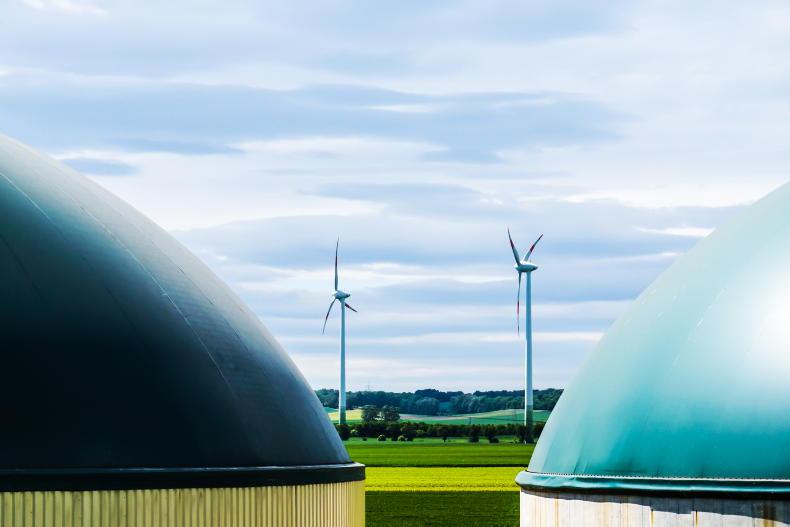
With more renewable gas coming on stream, prices will remain high.
Taken together, these structural, market, and policy factors help explain why Irish electricity bills are consistently higher than those in many other European countries.
As we transition towards greater use of renewable electricity, prices should become less volatile.
However, gas will remain part of the energy mix for the foreseeable future, very likely for the rest of our lifetimes.
As renewable heat obligations come into force, and higher levels of renewable gas are blended into the system, the cost of gas itself may increase rather than fall.
Cut your costs
High energy prices are here to stay. While this wasn’t as much of an issue when sectors were performing well, the pressure is now really beginning to bite, particularly for dairy, tillage and sheep farmers.
As margins tighten, looking at costs within the farm gate is the first place to start.
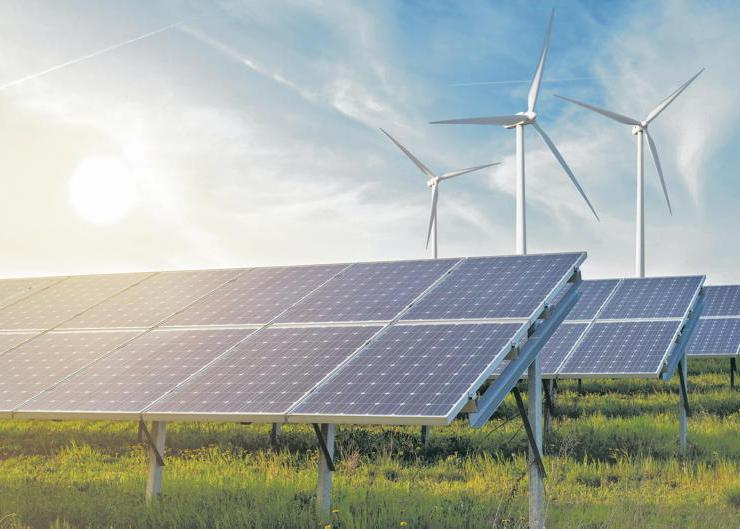
One of the most effective ways farmers can reduce electricity costs is by investing in solar panels.
Once the initial investment has been paid off, you are essentially generating electricity for free.
Whether this scale of investment is feasible or appropriate will depend on the individual farm, and for some, there may be more pressing priorities, such as additional slurry storage.
Despite a strong push from the previous Minister for Agriculture to get solar panels on farm roofs, recent figures suggest that momentum is slowing. Commitments to zero-carbon, low-cost power on Irish farms appear to be weakening.
The latest TAMS figures show that just 25% of TAMS solar applications have been approved, and there remains uncertainty around future funding commitments. At the end of the day, the basics still matter: control the costs within your farm business.
The author is currently involved in a family/community proposal for an anaerobic digestion facility in Co Donegal.
Renewables saved up to €13m per day in gas costs in 2025, cutting over €1.5bn in gas and carbon costs.Electricity bills remain very high, among the highest in Europe, despite these savings.High prices are driven by gas dependence, grid costs, taxes, and market structure.Costs are unlikely to fall, making on-farm solar and tighter cost control increasingly important.
A new report states that renewable electricity saved up to €13 million per day in gas costs during peak price periods in 2025. However, electricity bills remain stubbornly high, with little prospect of these decreasing.
The report, produced by consultants Baringa for Wind Energy Ireland, shows that 13.8 terawatt-hours (TWh) of wind generation across the all-island Single Electricity Market (SEM) displaced more than €1.4 billion worth of gas and carbon costs in 2025. Around 1.1 TWh of solar generation in the SEM displaced over €115 million in gas and carbon costs during the same period, approximately 8% of the costs avoided by wind.
The premise of the report is straightforward, for every kilowatt-hour of renewable electricity produced in Ireland from wind and solar, less natural gas needs to be purchased to generate electricity. Currently, roughly half of the Republic of Ireland’s electricity is produced using gas. As a result, the push towards renewables is no longer solely about lowering carbon emissions, it is increasingly about energy security.
Around 80% of Ireland’s energy is imported, leaving the country in a precariously weak security position.
However, this report and its figures may offer little comfort to consumers and farmers.
While expensive gas has been displaced, renewable electricity is not without cost. Furthermore, due to Ireland’s complex and opaque electricity market, electricity prices remain among the highest in Europe, with few signs that this situation will improve in the near future.
Why are energy prices so high?
Irish electricity prices are among the highest in Europe. Analysis from the Nevin Economic Research Institute (NERI) has revealed that Irish electricity price growth has dramatically outpaced both general inflation and the energy price trajectories of almost all other EU states.
International Energy Agency (IEA) analysis published in late 2025 found that Irish retail electricity prices are three times higher than wholesale prices and that overall EU residential electricity prices are highest in Ireland (along with Germany).
There isn’t one reason why Irish electricity prices are among the highest in Europe, but rather several interconnected ones.
A major factor is Ireland’s heavy reliance on imported natural gas, with wholesale electricity prices closely tied to volatile global fuel markets.
So when gas prices spike, electricity costs rise too.
Ireland’s electricity market is relatively small and isolated with limited grid interconnection to other countries, preventing cheaper power imports and reducing competitive pressure on prices.
The cost of delivering electricity is also comparatively high, Ireland’s dispersed population and rural infrastructure mean more transmission and distribution wires per customer, increasing network charges that make up a significant part of household bills.
Beyond generation and grid costs, taxes and levies, including VAT, the PSO and carbon-related charges, add to the final price consumers pay.
Furthermore, because suppliers often hedge by purchasing electricity months or years in advance to avoid market volatility, retail prices can remain high even if current wholesale prices fall.
And of course, suppliers of electricity, being commercial companies, will charge accordingly to ensure their own margin, which is resulting in healthy profits.
With more renewable gas coming on stream, prices will remain high.
Taken together, these structural, market, and policy factors help explain why Irish electricity bills are consistently higher than those in many other European countries.
As we transition towards greater use of renewable electricity, prices should become less volatile.
However, gas will remain part of the energy mix for the foreseeable future, very likely for the rest of our lifetimes.
As renewable heat obligations come into force, and higher levels of renewable gas are blended into the system, the cost of gas itself may increase rather than fall.
Cut your costs
High energy prices are here to stay. While this wasn’t as much of an issue when sectors were performing well, the pressure is now really beginning to bite, particularly for dairy, tillage and sheep farmers.
As margins tighten, looking at costs within the farm gate is the first place to start.
One of the most effective ways farmers can reduce electricity costs is by investing in solar panels.
Once the initial investment has been paid off, you are essentially generating electricity for free.
Whether this scale of investment is feasible or appropriate will depend on the individual farm, and for some, there may be more pressing priorities, such as additional slurry storage.
Despite a strong push from the previous Minister for Agriculture to get solar panels on farm roofs, recent figures suggest that momentum is slowing. Commitments to zero-carbon, low-cost power on Irish farms appear to be weakening.
The latest TAMS figures show that just 25% of TAMS solar applications have been approved, and there remains uncertainty around future funding commitments. At the end of the day, the basics still matter: control the costs within your farm business.
The author is currently involved in a family/community proposal for an anaerobic digestion facility in Co Donegal.
Renewables saved up to €13m per day in gas costs in 2025, cutting over €1.5bn in gas and carbon costs.Electricity bills remain very high, among the highest in Europe, despite these savings.High prices are driven by gas dependence, grid costs, taxes, and market structure.Costs are unlikely to fall, making on-farm solar and tighter cost control increasingly important. 







SHARING OPTIONS