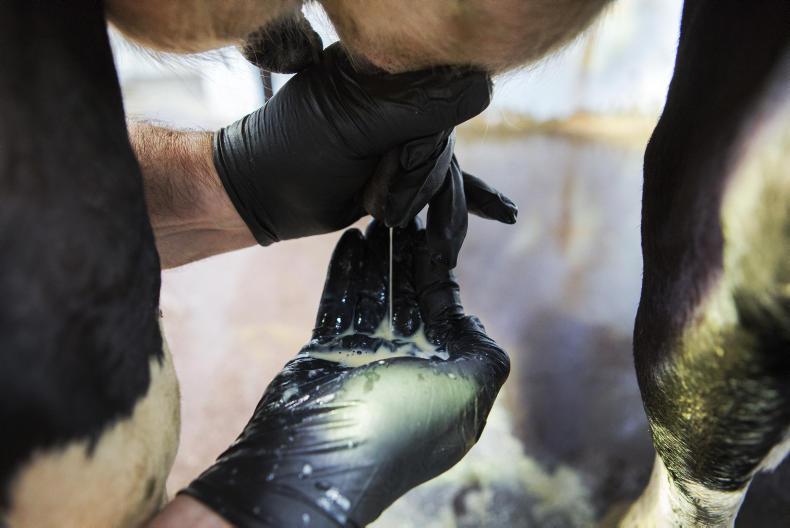
Reports of large numbers of mastitis cases this year means farmers need to be on the look-out for early signs in cows.
The good grass growth this year has meant an increase in fly numbers, which are the carriers of summer mastitis.
Early signs for the disease are:
ADVERTISEMENT
Animals away from the main group.
Hungry calves.
Swollen teats and udders.
Animals most at risk are dry cows, but with levels of infection so high this year, cases are occurring in heifers and even the occasional stock bull and steers.
Further cows within two to three months of calving cows will start to dry themselves off by preventing the calf suckling, increasing the risk of mastitis.
Keep a closer eye on cattle grazing next to water and wooded areas.
Basil Lowman from SAC gives some tips for dealing with mastitis.
Teat sealants: these are squeezed into the teat canal – similar to tubes of antibiotics, but longer-lasting and cheaper. It is essential the end of the teat is carefully cleaned and disinfected before the tube is inserted. They are supplied by vets who will explain how to use them.
Stockholm tar: an old-fashioned remedy, with the tar forming a physical barrier over the end of the teat. However, it is difficult to apply and to be effective, needs replacing weekly. An alternative is to use polyurethane varnish as a teat dip.
Spray: use one of a number of products on the market aimed at deterring or killing flies.
Insecticide ear tags: for best effect, they need to be applied in early spring to kill as many flies as possible while numbers are relatively low.
Garlic: naturally occurring sulphur compounds in the ingredient seep out through pores and sweat glands, acting as a repellent to flies and other biting insects.
Register for free to read this story and our free stories.
This content is available to digital subscribers and loyalty code users only. Sign in to your account, use the code or subscribe to get unlimited access.
The reader loyalty code gives you full access to the site from when you enter it until the following Wednesday at 9pm. Find your unique code on the back page of Irish Country Living every week.
CODE ACCEPTED
You have full access to the site until next Wednesday at 9pm.
CODE NOT VALID
Please try again or contact support.
Reports of large numbers of mastitis cases this year means farmers need to be on the look-out for early signs in cows.
The good grass growth this year has meant an increase in fly numbers, which are the carriers of summer mastitis.
Early signs for the disease are:
Animals away from the main group.
Hungry calves.
Swollen teats and udders.
Animals most at risk are dry cows, but with levels of infection so high this year, cases are occurring in heifers and even the occasional stock bull and steers.
Further cows within two to three months of calving cows will start to dry themselves off by preventing the calf suckling, increasing the risk of mastitis.
Keep a closer eye on cattle grazing next to water and wooded areas.
Basil Lowman from SAC gives some tips for dealing with mastitis.
Teat sealants: these are squeezed into the teat canal – similar to tubes of antibiotics, but longer-lasting and cheaper. It is essential the end of the teat is carefully cleaned and disinfected before the tube is inserted. They are supplied by vets who will explain how to use them.
Stockholm tar: an old-fashioned remedy, with the tar forming a physical barrier over the end of the teat. However, it is difficult to apply and to be effective, needs replacing weekly. An alternative is to use polyurethane varnish as a teat dip.
Spray: use one of a number of products on the market aimed at deterring or killing flies.
Insecticide ear tags: for best effect, they need to be applied in early spring to kill as many flies as possible while numbers are relatively low.
Garlic: naturally occurring sulphur compounds in the ingredient seep out through pores and sweat glands, acting as a repellent to flies and other biting insects.
If you would like to speak to a member of our team, please call us on 01-4199525.
Link sent to your email address
We have sent an email to your address. Please click on the link in this email to reset your password. If you can't find it in your inbox, please check your spam folder. If you can't find the email, please call us on 01-4199525.
ENTER YOUR LOYALTY CODE:
The reader loyalty code gives you full access to the site from when you enter it until the following Wednesday at 9pm. Find your unique code on the back page of Irish Country Living every week.








SHARING OPTIONS