




Although, weather wise, it has been quite a miserable month, thankfully we have not had as much rainfall as many other parts of the country.
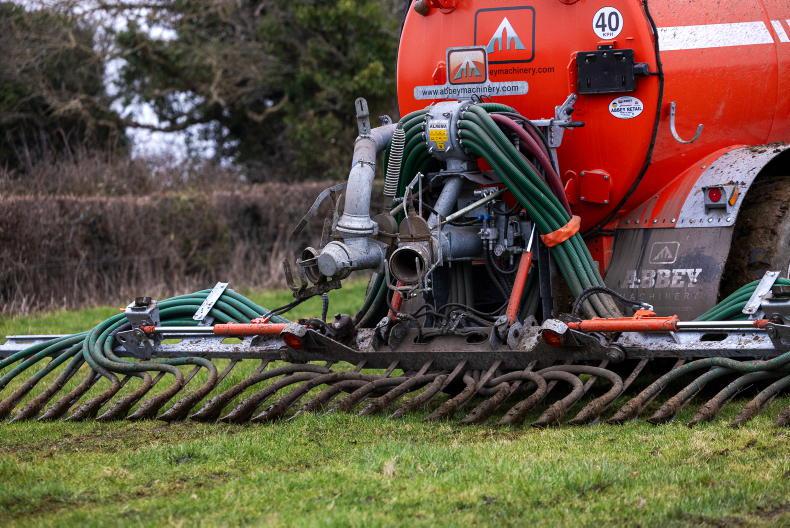
We managed to get some slurry out on the grazing and silage ground around the farm using the contractor’s dribble bar and pipe system. This has left us in a good position, as we are not under pressure with tanks filling up.
However, ground conditions are beginning to deteriorate again and at the moment grazing still feels quite a long way off.
Once again, this year has highlighted how closed periods and strict calendar farming simply do not align with our current climate.
The weather patterns are too variable and flexibility is becoming more important than ever.
That said, the noticeable stretch in day length has been a real boost around the farm.
Brighter mornings, combined with starting the evening milking while it is still light outside, lifts everyone’s mood and makes the workload feel that bit easier.
There is also plenty of grass on farm this spring and it has greened up well over the past week, so hopefully growth will kick on soon.
Spring calving
It has been a busy start to the calving season within the spring herd. We have over 20 calves on the ground already and thankfully everything is going well so far.
Calf prices have held at similar levels to the autumn, which is encouraging. The autumn-calving cows are currently averaging 31 litres per cow per day at 4.3% butterfat and 3.5% protein at an average of 102 days in milk. We carried out our first scan of the year, which confirmed pregnancies within the first three weeks of breeding.
Overall conception rate across the milking herd was 48.7%. While this is respectable, it is back on the previous two years, when we achieved between 55% and 56%.
On closer inspection, the figures do tell a story. Cows in their second lactation and above, achieved a conception rate of 55%, which is in line with previous years.
However, first lactation heifers had a conception rate of just 28%. Although we were delighted these animals are milking better than in previous years, the lower conception rate potentially indicates that these heifers were under too much pressure in early lactation.
Although they are currently being fed through the parlour at a higher rate (0.5kg per litre), compared to mature cows (0.45kg per litre), it might not have been enough given their increased production.
It is something we will need to look into further, to ensure it does not become an issue this spring or in future seasons. On a positive note, conception rates in the maiden heifers were excellent at 79%.
Fertiliser
We purchased fertiliser at the beginning of the month. I usually would buy more in the autumn, but held off in the hope markets would ease given lower gas prices.
However, with the recent increase in gas prices and with spring approaching, we decided it was better to have fertiliser in the shed.
In hindsight, we probably should have bought more in the autumn. But as the saying goes, “hindsight is what makes the millionaire so scarce”.
With the urea purchased this month, combined with other fertiliser carried over from last year, we should have enough to see us through until after first cut silage, whenever that may be.






SHARING OPTIONS