


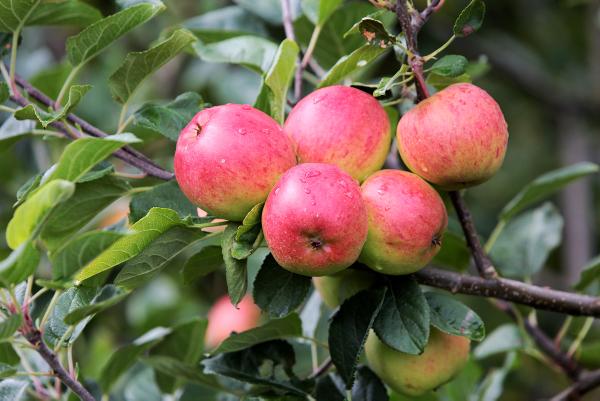
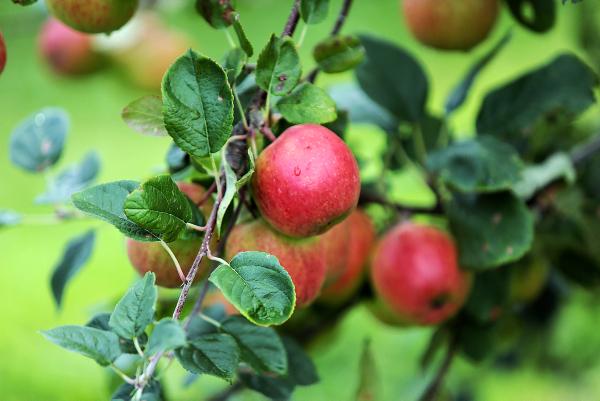
I farm: "40 cows, mainly British Friesian along with a two acre apple orchard. The orchard contains 1,000 apple trees, with Elstar, John O Gold, Bramley and Ceveal varieties. I run a Hereford bull, and have three purebred Kerry cows also. We also rear turkeys and chickens."
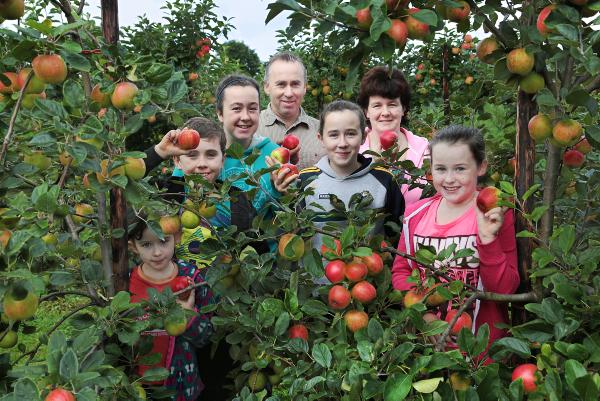
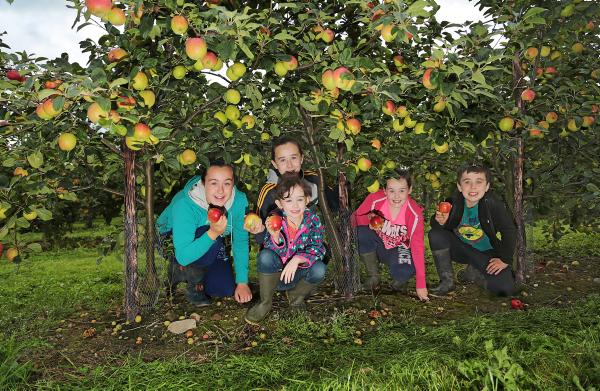
Family: "I am married to Sandra, and we have five children, Katie (14), Louise (13), Michelle (12), Garrett (10) and Sharon (7). The children all enjoy helping out; they love the animals and the idea of their own apple juice."
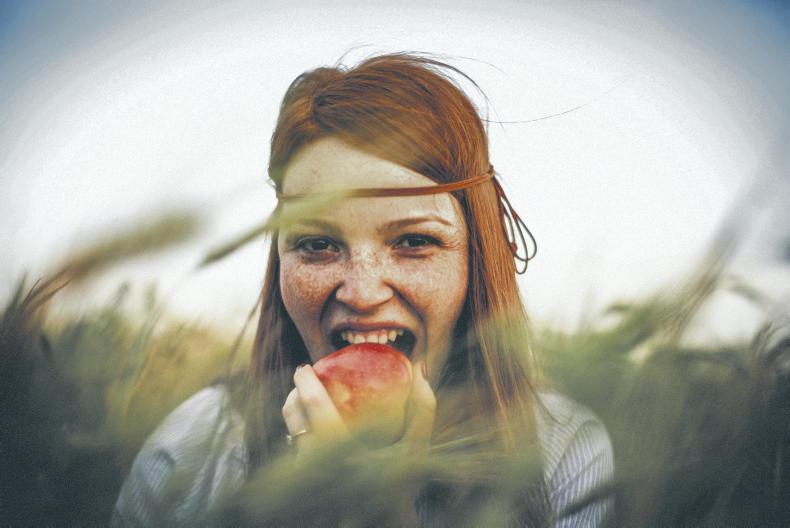
Apples: "There was an old 4×4 foot limestone that was used for apple pressing centuries ago on our farm as there was an old monastery. The fact that apples used to be grown there, and that it was difficult to get nice apples around here, made me decide to investigate apple production. I planted the orchard five years ago with the aim of producing a high quality, sweet apple juice. My first intention was to grow for juicing only, but the VAT is very high at 23.5%, so I produce for eating also. About three-quarters of the apples go for eating, and one quarter for pressing. Our apple juice is labelled Ring of Kerry Apple Farm. Our juice is sold for €4/750ml glass bottle; we would get €1 of this by the time the costs are met and there are 2kg of apples per bottle. The margin is very tight."
Demand: "The demand for apples and juice is very high. We were sold out of apples by December last year. We supply to SuperValu and other local supermarkets and shops, and also to local food fairs. The problem is that a lot of the shows are too early as the apples are not ripe. Our juice is loved by those with diabetes as there is no added sugar-which a lot of people cannot believe! We sell one tonne of apples a week to supermarkets."
Trees: "I start pruning after Christmas, this can take up to two months to complete. I spray for scab from March until June/July. Maintaining the stakes is hard. We get a lot of storms and some of the land is wet, so adjusting ties and replacing stakes takes a lot of work all year."
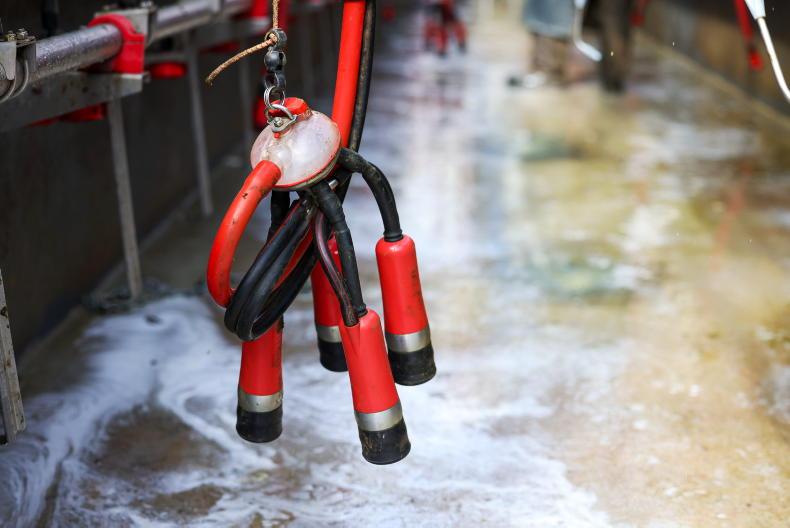
Dairy: "I have a spring calving herd, calving down the end of February/March. We increased from 25 cows in the last two years. Some of our land is heavy soil and we get a high rain fall in this part of the country, so we are at full stocking capacity with 40 cows. This year with the dry weather we could have 80, but a wet year clears us out. I sell the calves at three weeks and buy in replacement heifers."
This week: "This week we are harvesting our apples. Last year’s apple ripened in November which was very late. These are all handpicked as the apples must not be bruised. Any fallen apples are fed to the cows. The apples are then hauled to Clonmel to be pressed. The intention would be to press my own juice in the future -I have a press I bought a few years back but I don’t have all the facilities required yet.
Quotable Quote: "There is a lot of work with apples that people often don’t realise. We are extremely weather dependent - a bad season or storm could knock our apples, break trees, as well as make the orchard incredibly hard to navigate.


SHARING OPTIONS