


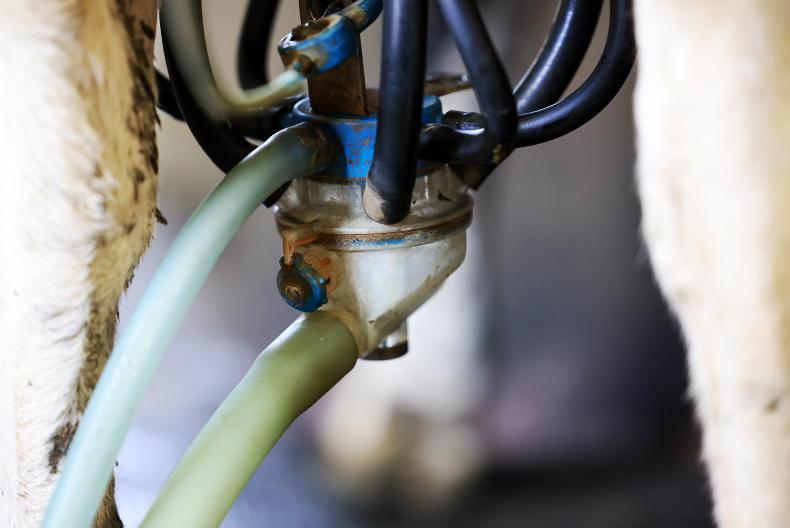
Milk supply growth will slow significantly this year and contract slightly in the first half of 2027 as tighter margins begin to bite, Rabobank has predicted.
The bank’s global dairy quarterly report for Q1 of 2026 has forecast that global milk supplies will increase by 0.2% relative to 2025.
However, the report predicts that supplies will ease by 0.1% in the first half of 2027 as higher farm-level costs – primarily fertiliser – hit margins and output.
Cow slaughtering rates are below average in all the major milk producing regions, the report stated.
“This reflects high livestock prices and limited availability of replacement heifers,” it maintained.
“But there are early signs that this trend may be starting to reverse in the EU,” it added.
Pressure
Rabobank has forecast that dairy farmgate milk prices will remain under pressure through the first half of 2026, as the historically high supply levels keep downward pressure on commodity prices.
However, dairy commodity prices have strengthened on European markets again this week, despite growing turmoil in the wake of the Middle East war.
Dutch spot markets saw butter prices rise to €4,700/t, with skim milk powder (SMP) hitting €2,680 and whole milk powder (WMP) on €3,450/t.
SMP prices have experienced the sharpest lift in price, with the traded values on the Dutch spot market up €580/t since the middle of January – a 22% increase.
Butter prices have risen by €800/t or 17% since January. Meanwhile, WMP has seen a 15% price lift since January.
The sharp lift in SMP quotes is directly linked to the current Middle East conflict, since Iran is one of the top four exporters of the product globally.
However, exports from Iran have virtually stopped due to the closure of the Strait of Hormuz. This has forced buyers to source alternative supplies.
The SMP trade has also benefited from stronger demand across the food spectrum for proteins.
Other factors mentioned in dispatches include increased buying of powders by infant formula manufacturers, the traditional lift in demand around Easter, lower stock levels generally and the surge in oil prices, which invariably gives dairy commodities a lift.





SHARING OPTIONS