Some €205,000 was invested in biodiversity in 2025 through project Refarm.
Refarm channels public and private funding directly to farmers for nature restoration and supported 80 farmers across 21 counties to deliver 139 habitat projects last year
It has attracted over €3m in funding commitments out to 2030, with further investment expected as the project scales.
This money will be used for research and for delivery of biodiversity incentive payments to farmers.
The 139 individual habitat actions, funded by the project, included:
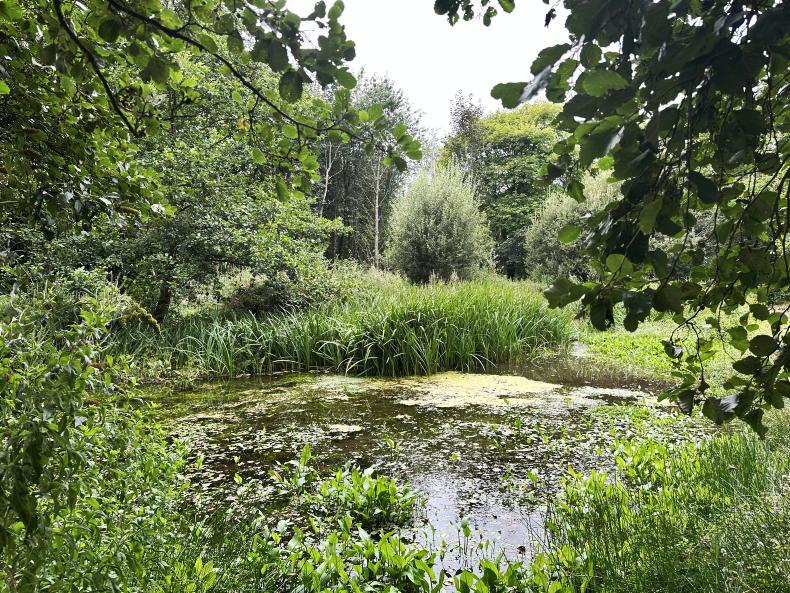
The creation of 1.8ha of new wildlife pond habitat. The planting of 1.9km of new hedgerows. The establishment of 15,500m2 of mini-woodland copses. Support for 49ha of species-rich grassland through result-based payments.Support for additional farmer-nominated, nature-friendly actions. The launch of the organisation’s 2025 impact report took place on Monday 2 March at the RDS in Dublin.
Seed funding
Backed by €1.5m in seed funding over five years, Refarm plans to double its annual farmer-led investment to €400,000 in 2026.
The programme was co-founded by investment professional Anke Heydenreich and conservationist Brendan Dunford of the Burrenbeo Trust.
It combines public and private investments in nature with independent, evidence-based research from the schools of natural sciences and business at Trinity College Dublin, co-led by professors Jane Stout and Martha O’Hagan.
The report notes that while considerable ecosystem-service value can be created by these investments – including carbon drawdown, biodiversity gains, water management and climate resilience – translating that value into investable, credible financial structures remains a key challenge.
Speaking ahead of the launch, Refarm co-founder Brendan Dunford said that Ireland’s farmers manage over 70% of our land.
"They know their farms better than anyone. If we are serious about restoring nature and meeting our climate obligations, we must invest in farmers as partners in delivery.
"Taking a farmer-centred approach is key – minimising paperwork, ensuring prompt payments and offering practical advice are all part of this," he said.
Interest in participation significantly exceeded available funding in 2025, according to Dunford.
Co-founder Anke Heydenreich added that Refarm is one practical way to act and many small, well-designed actions, compounding over time, can deliver meaningful change.
Some €205,000 was invested in biodiversity in 2025 through project Refarm.
Refarm channels public and private funding directly to farmers for nature restoration and supported 80 farmers across 21 counties to deliver 139 habitat projects last year
It has attracted over €3m in funding commitments out to 2030, with further investment expected as the project scales.
This money will be used for research and for delivery of biodiversity incentive payments to farmers.
The 139 individual habitat actions, funded by the project, included:
The creation of 1.8ha of new wildlife pond habitat. The planting of 1.9km of new hedgerows. The establishment of 15,500m2 of mini-woodland copses. Support for 49ha of species-rich grassland through result-based payments.Support for additional farmer-nominated, nature-friendly actions. The launch of the organisation’s 2025 impact report took place on Monday 2 March at the RDS in Dublin.
Seed funding
Backed by €1.5m in seed funding over five years, Refarm plans to double its annual farmer-led investment to €400,000 in 2026.
The programme was co-founded by investment professional Anke Heydenreich and conservationist Brendan Dunford of the Burrenbeo Trust.
It combines public and private investments in nature with independent, evidence-based research from the schools of natural sciences and business at Trinity College Dublin, co-led by professors Jane Stout and Martha O’Hagan.
The report notes that while considerable ecosystem-service value can be created by these investments – including carbon drawdown, biodiversity gains, water management and climate resilience – translating that value into investable, credible financial structures remains a key challenge.
Speaking ahead of the launch, Refarm co-founder Brendan Dunford said that Ireland’s farmers manage over 70% of our land.
"They know their farms better than anyone. If we are serious about restoring nature and meeting our climate obligations, we must invest in farmers as partners in delivery.
"Taking a farmer-centred approach is key – minimising paperwork, ensuring prompt payments and offering practical advice are all part of this," he said.
Interest in participation significantly exceeded available funding in 2025, according to Dunford.
Co-founder Anke Heydenreich added that Refarm is one practical way to act and many small, well-designed actions, compounding over time, can deliver meaningful change.






SHARING OPTIONS