


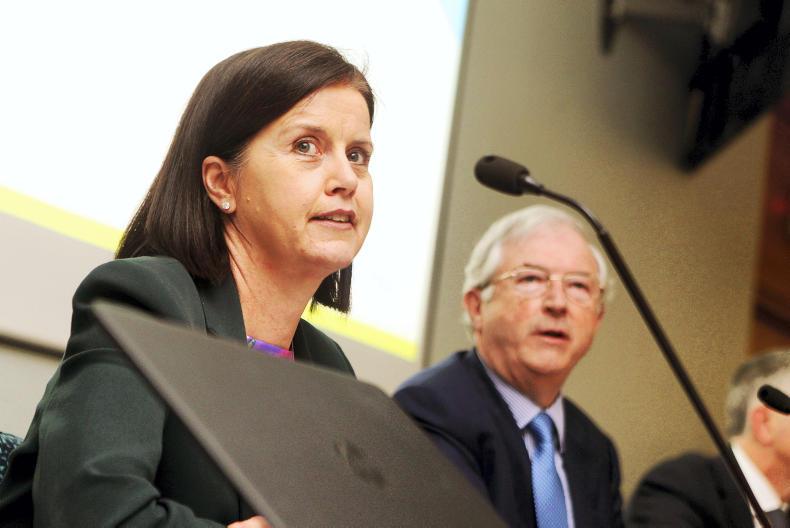
Last week, I was invited to chair the final session of the North / South Farm Safety Conference. The event, held in Monaghan, had a remarkably large attendance, with all the farming organisation leaders in attendance, including Eddie Downey of the IFA, Sean Finan, the new president of Macra, and John Comer, the president of the ICMSA, as well as John McNamara of Teagasc and Tom Murphy of the Association of Farm Contractors in Ireland.
Last year was one of the worst ever for farm accidents in the Republic, though interestingly the trend in the North has, with some exceptional years, been continuously downwards.
There was quite a bit of analysis on what kind of accidents occur on what type of farms. Anyone who was there would have learned a lot.
Accidents
As well as 30 fatal accidents on the Republic’s farms, there were also 3,000 recorded other accidents. I find this an even more horrific figure – that over 2% of the entire farming population are involved in a workplace accident in a single year.
Farming, not just in Ireland but internationally, is by far the most dangerous way of earning a living, but that said, I was still surprised that the main cause of accidents is machinery, followed by animals, then falls, usually from buildings and ladders, and only then slurry.
I had not realised that the awful tragedy in the North where three members of the Spence family died was due to poisonous gas from an effluent tank – not a slurry tank under slats.
Most effluent tanks are almost fully sealed apart from the extraction point, so the gas has really nowhere to go.
In the first analysis of the factors leading to farm accidents, Denis O’Hora of University College Galway made the valid point that being a lone operator and self-employed will always be a problem and inevitably, the urgent will tend to drive out the important.
Dr O’Hora isolated stress as being a key contributor as inevitably, somebody under stress will be less accurate and careful in their approach.
Bureaucracy
What I found particularly interesting was his finding that the two key elements of stress were time pressures and bureaucracy.
For those working alone, the threat of an inspection or a delay in a needed farm payment can ramp up the mental pressures on vulnerable farmers.
I found the whole day a really worthwhile experience. If I took away one message, it was to get an informed, fresh pair of eyes to have a look around the farm to identify possible weaknesses from a safety point of view. They should also have a look at the individual farm insurance policy.
The individual and family tragedies are so real that the more farmers and those servicing farmers are aware of the problem, the more accidents will be avoided. I for one am glad to see the whole issue moving up the agenda.




SHARING OPTIONS