


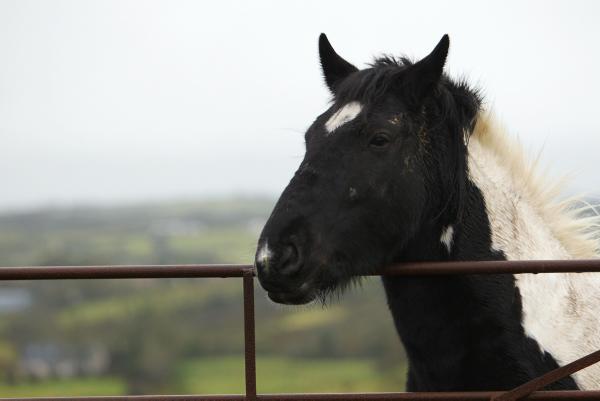
“I have recently found a number of stray horses abandoned on a piece of forestry that I own. I only check the forestry occasionally and consequently do not know who put them there or when they were put there. What should I do?”
The Animal Health and Welfare Act 2013 came into operation on 6 March 2014. The Act makes it an offence for a person to abandon an animal in his or her possession or under his or her control and a person may be fined on summary conviction of an amount up to €5,000 or imprisonment for up to six months, or both.
The Act imposes a duty on persons who have in their possession or control a protected animal to safeguard the health and welfare of the animal. Consequently, landowners or tenants are also responsible for the wellbeing of any animal left on land or at any premises registered to them. If a case of neglect is found on the premises or land on which the animals have been abandoned, the person in occupation of the land is deemed to be the legal guardian of the animals.
The Act specifically provides that in proceedings for an offence under the 2013 Act, the animal is presumed to be owned by the occupier or person in charge of the land or premises on which it was found unless the contrary is shown. Consequently, in cases where ownership of horses cannot be established, landowners and tenants are legally responsible for the wellbeing of animals found on their lands and can be liable for prosecution in circumstances of neglect. Under the Control of Horses Act 1996, all local authorities (city and county councils) are responsible for the control of horses in their areas and relevant bylaws are available from each local authority setting out their functions under the 1996 Act.
What can be done where an animal is found on private land?
There are different requirements set down with regard to animals found on private land. The steps to be taken depend on whether the owner of the animals is known to the occupier or not.
Section 20 of the Summary Jurisdiction (Ireland) Act 1851 provides that where the owner of the animal is known, it shall not be lawful to impound any animal found trespassing upon any land, but the occupier of such land or the person by whom such animal shall be found trespassing shall either deliver up such animal to the owner or someone on his behalf or allow such animal in the act of trespassing to be taken away by such owner or someone on his behalf. The owner of such animal shall be liable to pay to the occupier of such land the rate of trespass. The 1851 Act then proceeds to set out certain so-called rates of trespass. The occupier of the land should check whether the horses found on the land are microchipped. Any horses found without microchips can be seized by local authorities.
Owner unknown
But when the owner of any such animal shall not be known, it shall be lawful for the occupier of such land, or for someone on his behalf, to impound such animal in the nearest pound, specifying in the notice which he is required to give to such pound keeper the nature of the land or crop in which such animals shall have been found trespassing.
The pound keeper shall afterwards deliver up such animal to the owner, if known, or to any person on his behalf, either upon being so authorised by court order for example or upon being paid by such owner or person the amount legally due for the pound fees and rates of sustenance, and also the amount due under the rates of trespass. The pound keeper shall pay over the amount of such rate of trespass to the occupier of the land, unless when required to hold over the amount until any dispute as to same shall have been decided.
You should contact your local authority or the gardaí in relation to the horses. They may seize and detain the horses where they have reason to suspect that they are stray horses or not identifiable or capable of identification, as required by the 1996 Act.
Where horses are seized and detained and the owner or keeper of the horses is not known, notice will be displayed in the office of the Garda Síochána for the area in which the horses were seized and in the pound or place where the horses are detained as soon as possible. If the owner or keeper shall fail to make themselves known to the local authority or cannot be found within a period of five days from the date of seizure and detention, the local authority may dispose of the horses in accordance with the bylaws and the 1996 Act.
Disclaimer: The information in this article is intended as a general guide only. While every care is taken to ensure accuracy of information contained in this article, Aisling Meehan Agricultural Solicitors does not accept responsibility for errors or omissions howsoever arising. Email ameehan@farmersjournal.ie


SHARING OPTIONS