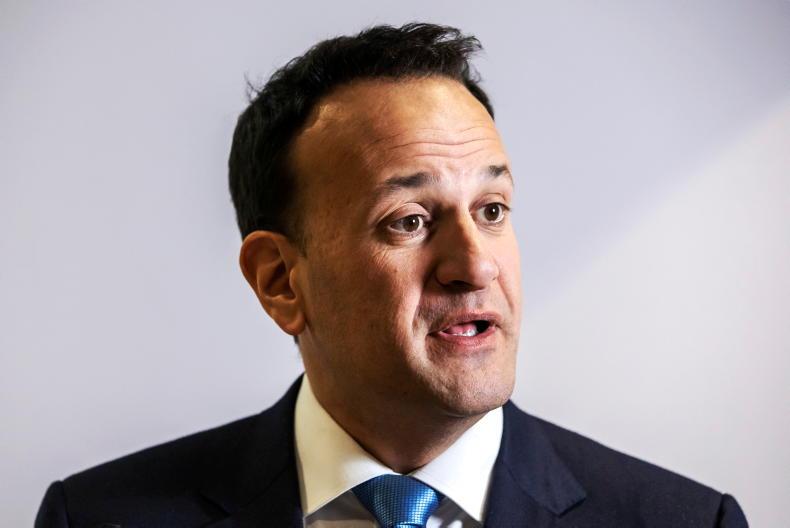
The broadside delivered recently by Leo Varadkar on rural Ireland in general and farming in particular was both telling and worrying – but hardly surprising.
While it would be unfair to describe the former taoiseach’s provocative musings as a diatribe, it skirted the boundaries of such a categorisation on a number of occasions.
Varadkar’s assertions were based on four key points:
1. That the farm sector is no longer a key plank of the Irish economy.2. That Irish farmers import large quantities of fertiliser and feed to keep their livestock and these products contribute to the pollution of the country’s rivers and lakes.3. That workers in urban Ireland pay “all the bills”, while farmers “are in receipt of a lot of subsidies and a lot of tax benefits that other people don’t get”.4. That farmers “bring costs on Ireland”.Let’s address these points one by one.
Varadkar is correct in his observation that the importance of agriculture and food processing to the national economy has waned since Ireland’s entry into the European Economic Community (EEC) over half a century ago.
However, he fails to mention that the sector still employs close to 170,000 people and delivered €17bn in export earnings in 2024 or 7.5% of the country’s total export earnings. That figure increased to €19bn last year.
Crucially, these export earnings were generated predominantly by Irish-owned businesses, right around the country, with the profits largely reinvested in Ireland – unlike the profits generated in the multinational sector.
Imports
The former taoiseach was also correct in pointing out that Ireland imports large quantities of feed and fertiliser each year.
But he neglects to mention that farming is a business, like any other, and it trades on global markets. The country’s pharma industry imports large volumes of raw materials, as does the electronics industry, does Varadkar also have an issue with imports in those sectors?
As to the issue of pollution, the former taoiseach conveniently avoids any mention of sewage treatment plants as a contributory factor in relation to water quality challenges.
But, then, why mention something that highlights the inept performance of successive governments when you can hammer farmers instead.
Meanwhile, Varadkar’s assertion that urban workers pay “all the bills”, while farmers enjoy subsidies and tax benefits denied to others is pure raiméis.
If the former Fine Gael leader wants to talk subsidies, then why not include the level of grants and other supports – including tax breaks – that are provided by the State through the IDA to attract foreign direct investment (FDI) by multinationals.
Varadkar’s assertion that urban workers pay “all the bills”, while farmers enjoy subsidies and tax benefits denied to others is pure raiméis
In 2015, the average figure was estimated to be around €10,500 per job – it’s probably significantly higher at this stage.
Given that FDI-related ventures created 77,000 jobs in 2024, the overall cost to the State was in excess of €800m – if the 2015 figure is used - which isn’t a million miles from the total BISS payment to farmers.
Varadkar’s statement that farmers “bring costs on Ireland” is a deliberately divisive contention. Every sector brings costs, and benefits.
Data centres
For example, data centres are driving up electricity usage nationally to such an extent that practically every morsel of renewable energy is being sucked up by them.
But when Ireland misses its climate targets and massive fines are levied on the State as a result, will the tech companies pay the bills? I doubt it. That tab will be carried by ordinary tax payers, including ordinary tax-paying farmers.
Unsurprisingly, Varadkar never joined the dots on this issue either.
It is obvious that the former taoiseach has a bee in his bonnet after last week’s protests. However, given that it generally takes three to five years for the full impact of policy changes to play out in the economy, maybe Varadkar should be reflecting on decisions taken by successive governments, of which he was a member, and how those decisions contributed to recent events.
He’d also do well to reconsider his dismissing of Ireland’s agribusiness sector. While arguably Dublin has failed to produce a multi-national business of note since Guinness, rural Ireland has been busy churning out success stories.
In the week Varadkar took to pontificating on the airways, Ornua announced that Kerrygold sales in the US had topped $1bn for the first time.
Meanwhile, Kerry Group, Glanbia, ABP, Dawn Meats and Kepak are other operators of some renown within Ireland’s ‘moribund’ food processing sector. Then there’s the agri machinery and equipment sector, where companies like McHale, Abbey and Dairymaster employ 15,000 people directly, another 10,000 indirectly, and generate almost €1bn of exports annually.
Let’s hope the sentiments expressed by Leo Varadkar are his own, and are not indicative of the thinking within the top echelons of Fine Gael, or are not reflective of senior civil servants’ views.
Society is fractured enough; we don’t need more fissures.
The broadside delivered recently by Leo Varadkar on rural Ireland in general and farming in particular was both telling and worrying – but hardly surprising.
While it would be unfair to describe the former taoiseach’s provocative musings as a diatribe, it skirted the boundaries of such a categorisation on a number of occasions.
Varadkar’s assertions were based on four key points:
1. That the farm sector is no longer a key plank of the Irish economy.2. That Irish farmers import large quantities of fertiliser and feed to keep their livestock and these products contribute to the pollution of the country’s rivers and lakes.3. That workers in urban Ireland pay “all the bills”, while farmers “are in receipt of a lot of subsidies and a lot of tax benefits that other people don’t get”.4. That farmers “bring costs on Ireland”.Let’s address these points one by one.
Varadkar is correct in his observation that the importance of agriculture and food processing to the national economy has waned since Ireland’s entry into the European Economic Community (EEC) over half a century ago.
However, he fails to mention that the sector still employs close to 170,000 people and delivered €17bn in export earnings in 2024 or 7.5% of the country’s total export earnings. That figure increased to €19bn last year.
Crucially, these export earnings were generated predominantly by Irish-owned businesses, right around the country, with the profits largely reinvested in Ireland – unlike the profits generated in the multinational sector.
Imports
The former taoiseach was also correct in pointing out that Ireland imports large quantities of feed and fertiliser each year.
But he neglects to mention that farming is a business, like any other, and it trades on global markets. The country’s pharma industry imports large volumes of raw materials, as does the electronics industry, does Varadkar also have an issue with imports in those sectors?
As to the issue of pollution, the former taoiseach conveniently avoids any mention of sewage treatment plants as a contributory factor in relation to water quality challenges.
But, then, why mention something that highlights the inept performance of successive governments when you can hammer farmers instead.
Meanwhile, Varadkar’s assertion that urban workers pay “all the bills”, while farmers enjoy subsidies and tax benefits denied to others is pure raiméis.
If the former Fine Gael leader wants to talk subsidies, then why not include the level of grants and other supports – including tax breaks – that are provided by the State through the IDA to attract foreign direct investment (FDI) by multinationals.
Varadkar’s assertion that urban workers pay “all the bills”, while farmers enjoy subsidies and tax benefits denied to others is pure raiméis
In 2015, the average figure was estimated to be around €10,500 per job – it’s probably significantly higher at this stage.
Given that FDI-related ventures created 77,000 jobs in 2024, the overall cost to the State was in excess of €800m – if the 2015 figure is used - which isn’t a million miles from the total BISS payment to farmers.
Varadkar’s statement that farmers “bring costs on Ireland” is a deliberately divisive contention. Every sector brings costs, and benefits.
Data centres
For example, data centres are driving up electricity usage nationally to such an extent that practically every morsel of renewable energy is being sucked up by them.
But when Ireland misses its climate targets and massive fines are levied on the State as a result, will the tech companies pay the bills? I doubt it. That tab will be carried by ordinary tax payers, including ordinary tax-paying farmers.
Unsurprisingly, Varadkar never joined the dots on this issue either.
It is obvious that the former taoiseach has a bee in his bonnet after last week’s protests. However, given that it generally takes three to five years for the full impact of policy changes to play out in the economy, maybe Varadkar should be reflecting on decisions taken by successive governments, of which he was a member, and how those decisions contributed to recent events.
He’d also do well to reconsider his dismissing of Ireland’s agribusiness sector. While arguably Dublin has failed to produce a multi-national business of note since Guinness, rural Ireland has been busy churning out success stories.
In the week Varadkar took to pontificating on the airways, Ornua announced that Kerrygold sales in the US had topped $1bn for the first time.
Meanwhile, Kerry Group, Glanbia, ABP, Dawn Meats and Kepak are other operators of some renown within Ireland’s ‘moribund’ food processing sector. Then there’s the agri machinery and equipment sector, where companies like McHale, Abbey and Dairymaster employ 15,000 people directly, another 10,000 indirectly, and generate almost €1bn of exports annually.
Let’s hope the sentiments expressed by Leo Varadkar are his own, and are not indicative of the thinking within the top echelons of Fine Gael, or are not reflective of senior civil servants’ views.
Society is fractured enough; we don’t need more fissures.






SHARING OPTIONS