


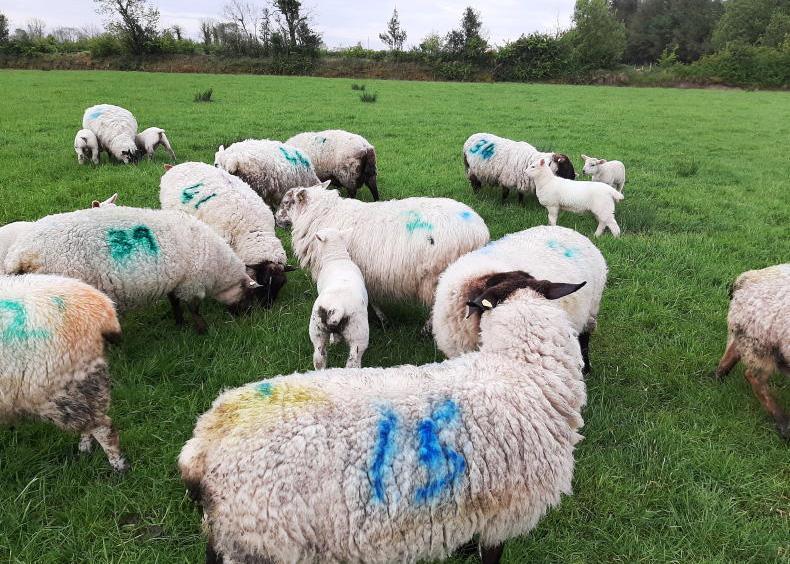
The Department of Agriculture and Agri-Food and Biosciences Institute (AFBI) both released their Nematodirus forecasts in the last week. The forecasts point to peak hatching of Nematodirus eggs on pasture likely to have taken place in the last week of March in coastal region to the first week-to-ten-days of April in all other locations.
Figure 1 details the expected dates of peak Nematodirus egg hatching on pasture in Ireland.
The AFBI warning paints a similar picture with the warning stating: “10% of the annual hatch of Nematodirus eggs would have occurred in the second week of March 2026. The current meteorological readings indicate that peak hatching took place in the first week of April 2026”.
Disease prevalence
Lambs most at risk are those typically aged six to 12 weeks of age and grazing on contaminated pasture.
Contaminated pasture is swards that were grazed last year by lambs or calves and where Nematodirus eggs have remained unhatched until such suitable conditions in 2026. As such, the majority of pasture on sheep farms will pose a risk of infection.
A rapid hatch of eggs leads to a surge in numbers of infective larvae on pasture which grazing lambs ingest.
The Department of Agriculture’s forecast advises that at-risk lambs should be treated approximately two weeks after the peak of Nematodirus egg hatching.
Product choice
AFBI notes that to date only “limited evidence has been found of drug resistance in Nematodirus to any of the available classes of anthelmintic”.
To slow down the rate of roundworm resistance developing to other anthelmintic classes benzimidazoles or white drenches are the recommended treatment of choice for Nematordirus and are effective against larval and adult stages.
The Department’s forecast advises that the use of white drenches will “reduce the exposure of other worms such as Trichostrongylus and Teladorsagia to other anthelmintic classes (eg macrocyclic lactones) at a point in the grazing season when treatment for these may not be necessary.
“This will help to sustain the effectiveness of these drugs and is particularly important on farms with pre-existing issues of benzimidazole resistance in populations of the other common stomach/intestinal roundworms.”
It adds that where “there is a suspicion that the treatment with the wormer used was ineffective, a follow up faecal sample is advised in order to test for the presence of nematodirus eggs, which may indicate wormer resistance, or the presence of other pathogens such as coccidian”.
Greatest risk
Sheep only enterprises run at a high stocking rate face the greatest challenge from the disease. Twin lambs or single lambs suckling ewes off poor milking ability may also be consuming higher quantities of grass and these younger lambs can also face infection.
As such consideration should be given to dosing lambs earlier than recommended on individual farms where clinical signs consistent with nematodirus are observed.
After ingestion, Nematodirus larvae invade the wall of the intestine.
Disease is best characterised by profuse diarrhoea, dehydration and weight loss. In outbreak situations, lambs can be seen congregating around water troughs due to the severe thirst that develops.
Calves may also be affected but this is usually to a lesser degree while adult sheep are unaffected. It is worth noting that other diseases such as coccidiosis may be the cause of symptoms seen and can be present at the same time. A misdiagnosis increases the risk of severe illness.
Repeat treatments
Disease typically occurs in April, May and June with the age profile of lambs and risk profile on farms important to consider.
There is no product that offers any residual protection against the disease and as such retreatment may be necessary.
AFBI and the Department raise the possibility of treatment being required every two to three / four weeks in at-risk lambs.
Batching lambs by age groups allows for more targeted treatment with natural immunity building from 12 weeks of age. This is another reason it is important to monitor lamb performance closely and to be on the lookout for symptoms of disease.
Other threats
It is important to highlight that other parasites that cause diarrhoea in young lambs may be causing the disease or be present at the same time as a Nematodirus infection.
Coccidiosis is likely to be a significant threat on farms this year given the ongoing challenging weather conditions and extended period of feeding creating moist conditions for coccidiosis to spread.
Scour caused by coccidiosis is often a grey or black colour due to blood staining. Your vet should be consulted where there is any doubt to get an accurate diagnosis and appropriate treatment programme.
This is especially the case where there is no improvement in health following treatment for Nematordirus.
It is also highlighted that in the case of lambs ingesting large numbers of larvae they can succumb to the disease and die before exhibiting classical symptoms. It is therefore advised that any lambs that die expectantly are sent for post-mortem examination.
Haemonchus infection
AFBI highlight that farmers need to be on the lookout this summer for the threat of haemonchus contortus or barbers pole worm.
“In the recent years, unprecedented, localised increase in Haemonchus infection in sheep was noted, likely linked to the mild wet climatic conditions. As a result, pasture in affected areas is likely to be contaminated by parasite eggs surviving from last season, and yearling animals are likely to be carrying hypobiotic larvae, which will be a source of infection for growing stock later in the season.
"Haemonchus infection causes profound anaemia in lambs, often with scour which may be blood-stained. Animals succumb rapidly, and numerous losses can occur in affected flocks. Your veterinary surgeon should be consulted at an early stage.”



SHARING OPTIONS