


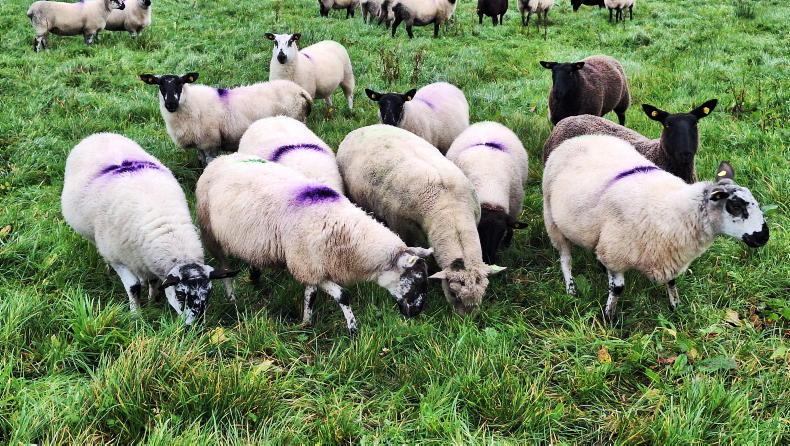
Breeding safeguards: It is important to maintain ewes on a high plane of nutrition for the first month of pregnancy to ensure optimum development of the embryo(s) and attachment to the wall of the uterus.
While a dry spell of weather can help to improve grazing conditions and extend grass supplies at present, there is a risk of grass reserves depleting much sooner than anticipated if ground conditions remain under pressure.
Where grass supplies look vulnerable, then it is important to take steps to try and extend the grazing season, giving priority to ewes. This is particularly important for later breeding flocks.
Reducing demand from competing lambs or cull ewes is an immediate option. Lambs can be housed for indoor finishing, supplemented with higher levels of concentrates outdoors or sold as forward stores. Doing a finishing budget will help in this regard, and a good aid in doing so is the Teagasc store lamb calculator.
For earlier lambing ewes in mid pregnancy, feeding levels should be based on ewe body condition. Research has shown that a small level of weight loss in mid-pregnancy can have a positive impact on placental development and in turn ensure optimum delivery of nutrients to the foetus(es).
However for this to happen, ewes must be in a position that they can afford a reduction in body condition and remain on target to enter late pregnancy in a body condition score of 3 plus.
It is also important to limit weight loss to 5% of body weight, as a period of severe undernourishment and weight loss will have the opposite effect, leading to poor placental development.
SWS genotyped rams: The timeframe for purchasing an eligible genotyped ram to comply with requirements for the Sheep Improvement Scheme is diminishing fast.
If farmers have not satisfied this requirement within the first three years of the scheme, then an applicant will be withdrawn from the scheme with significant penalties also imposed.
Remember, if a participant had opted to purchase a ram in year one or two and didn’t, then the requirement to purchase a ram rolls forward with year three the cut-off.
It is also important to ensure that any documentation relating to the purchase shows that the ram was purchased by your flock and met the eligibility requirements on the date of movement in to your flock.
For farmers who want to double check their actions or the year they opted to complete the genotyped ram action, this can be found on the SIS portal on agfood.ie, while the Sheep Ireland ram search facility can be used to check that a ram was eligible for the scheme on the date of purchase.
Ram management: While on the topic of rams, timely removal of ram lambs or aged rams once breeding has finished will help increase the longevity of rams in a flock.
Increasing the dry matter intake of the diet will help in current weather. A low level of concentrate supplementation of a standard high-energy supplement will suffice, with well-grown rams not having any requirement for a high-protein feed.
The overall cost to protect your investment is low. For example, a 25kg bag of a standard high-energy ration costing €9 to €10 per bag will provide 50 to 60 days feeding at an allocation of 400g to 500g daily. Feed can be cut once rams regain sufficient condition.




SHARING OPTIONS