Housing sheep: this week’s sheep feature on page 37 provides some advice on dealing with the persistent inclement weather from a Teagasc sheep seminar in Cork last week.
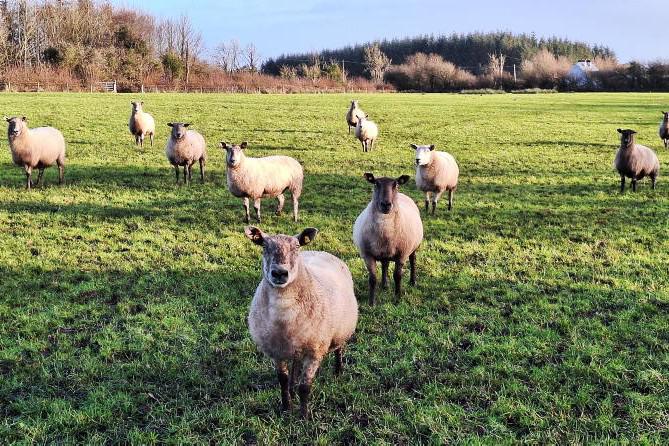
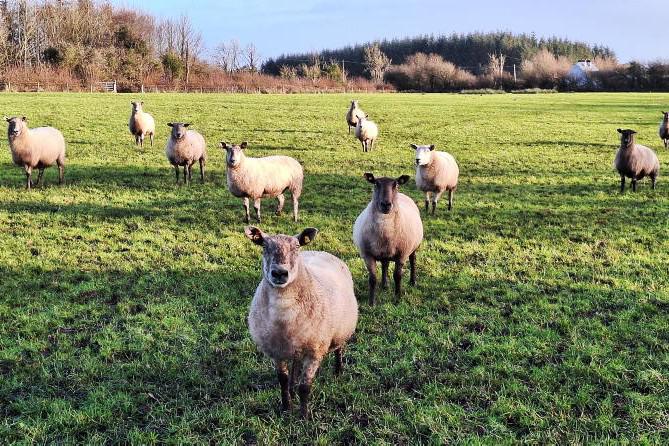
Where a percentage of ewes are being retained outdoors and supplemented with forage, then it is beneficial to select the ewes that should in general be able to better withstand the elements. Ewes in good body condition and younger ewes will typically be able to perform better.
As outlined on page 37, housing or batching aged ewes and those lacking in body condition for preferential treatment will deliver big benefits in reducing issues at lambing and lamb mortality.
It is important to ensure that ewe body condition is monitored regularly to pick up any ewes starting to lose condition quickly.
It is not just ewes that will be under pressure in current weather. Rams should be separated with ewes once breeding has finished, with this especially important for ram lambs and aged rams. For aged rams it is probably beneficial to assess if they have the potential to be retained for another year now.
Where grouping rams that have been separated, then housing them in tight confines for a period where fighting can be limited is helpful.
Ewe lambs being retained for breeding also need to be considered for supplementation where grass supplies are diminishing or utilisation/quality is lacking.
Feed buckets are a more expensive option but may work where labour is limited. Some farmers also employ a system, with such sheep of offering concentrates every second or third day to help sustain condition where lambs have a supply of average quality grass.
Lameness control: at the same meeting, Teagasc’s Jake Delaney highlighted that upwards of 80% to 90% of significant lameness issues on farm start off as an incidence of scald and progress to footrot and possibly CODD where the disease is present on the farm. As such, he said there is huge scope to minimise problems by keeping on top of scald.
The continual wet conditions and moistness around the hoof and interdigital tissue or soft skin is increasing the risk of scald. Jake advised farmers to take every opportunity at present when handling sheep to stand them in a footbath.
Where there are scald problems present, then running sheep through a footbath will not address them. Instead, sheep will need to stand in the footbath for upwards of 20 minutes contact time where using zinc or copper sulphate. If problems have progressed to footrot or CODD, then targeted antibiotic treatment will be required.
Sheep census: there have been some questions about this year’s sheep census date for farmers hoping to record ewes on the census and sell thereafter. The 31 December date remains unchanged, and hard copies of the census return should be sent to farmers imminently.
If the number of breeding ewes recorded on the sheep census is lower than the scheme payment reference number, then the new lower number will become the scheme payment reference number for the coming year.
Remember the reference number of ewes has to be maintained across the calendar year for the Sheep Improvement Scheme, while the payable number of ewes must be present when actions are being completed for the Sheep Welfare Scheme.
Housing sheep: this week’s sheep feature on page 37 provides some advice on dealing with the persistent inclement weather from a Teagasc sheep seminar in Cork last week.
Where a percentage of ewes are being retained outdoors and supplemented with forage, then it is beneficial to select the ewes that should in general be able to better withstand the elements. Ewes in good body condition and younger ewes will typically be able to perform better.
As outlined on page 37, housing or batching aged ewes and those lacking in body condition for preferential treatment will deliver big benefits in reducing issues at lambing and lamb mortality.
It is important to ensure that ewe body condition is monitored regularly to pick up any ewes starting to lose condition quickly.
It is not just ewes that will be under pressure in current weather. Rams should be separated with ewes once breeding has finished, with this especially important for ram lambs and aged rams. For aged rams it is probably beneficial to assess if they have the potential to be retained for another year now.
Where grouping rams that have been separated, then housing them in tight confines for a period where fighting can be limited is helpful.
Ewe lambs being retained for breeding also need to be considered for supplementation where grass supplies are diminishing or utilisation/quality is lacking.
Feed buckets are a more expensive option but may work where labour is limited. Some farmers also employ a system, with such sheep of offering concentrates every second or third day to help sustain condition where lambs have a supply of average quality grass.
Lameness control: at the same meeting, Teagasc’s Jake Delaney highlighted that upwards of 80% to 90% of significant lameness issues on farm start off as an incidence of scald and progress to footrot and possibly CODD where the disease is present on the farm. As such, he said there is huge scope to minimise problems by keeping on top of scald.
The continual wet conditions and moistness around the hoof and interdigital tissue or soft skin is increasing the risk of scald. Jake advised farmers to take every opportunity at present when handling sheep to stand them in a footbath.
Where there are scald problems present, then running sheep through a footbath will not address them. Instead, sheep will need to stand in the footbath for upwards of 20 minutes contact time where using zinc or copper sulphate. If problems have progressed to footrot or CODD, then targeted antibiotic treatment will be required.
Sheep census: there have been some questions about this year’s sheep census date for farmers hoping to record ewes on the census and sell thereafter. The 31 December date remains unchanged, and hard copies of the census return should be sent to farmers imminently.
If the number of breeding ewes recorded on the sheep census is lower than the scheme payment reference number, then the new lower number will become the scheme payment reference number for the coming year.
Remember the reference number of ewes has to be maintained across the calendar year for the Sheep Improvement Scheme, while the payable number of ewes must be present when actions are being completed for the Sheep Welfare Scheme.






SHARING OPTIONS